

Art & Crafts
Fun Fall Crafts!
The leaves are falling, school is in full swing, and the weather is changing! This season brings about a lot of change, including keeping…

Indoor Activities
Written by: E. Pena
I was recently at an event where a child was handed a toy. They asked an adult, “What does it do?” This was a reasonable question when there are so many toys that only seem to do one thing. And when toys only do one thing, children tend to lose interest quickly. More than anything, children require novelty for skill building. So consider offering open-ended toys: items and materials that have nearly unlimited potential for what they can do when the opportunity arrives. In contrast to closed-ended toys, these are more versatile and allow for child-led, creative, and imaginative experiences with no predetermined rules or outcomes.
Ideas for Open-Ended Play
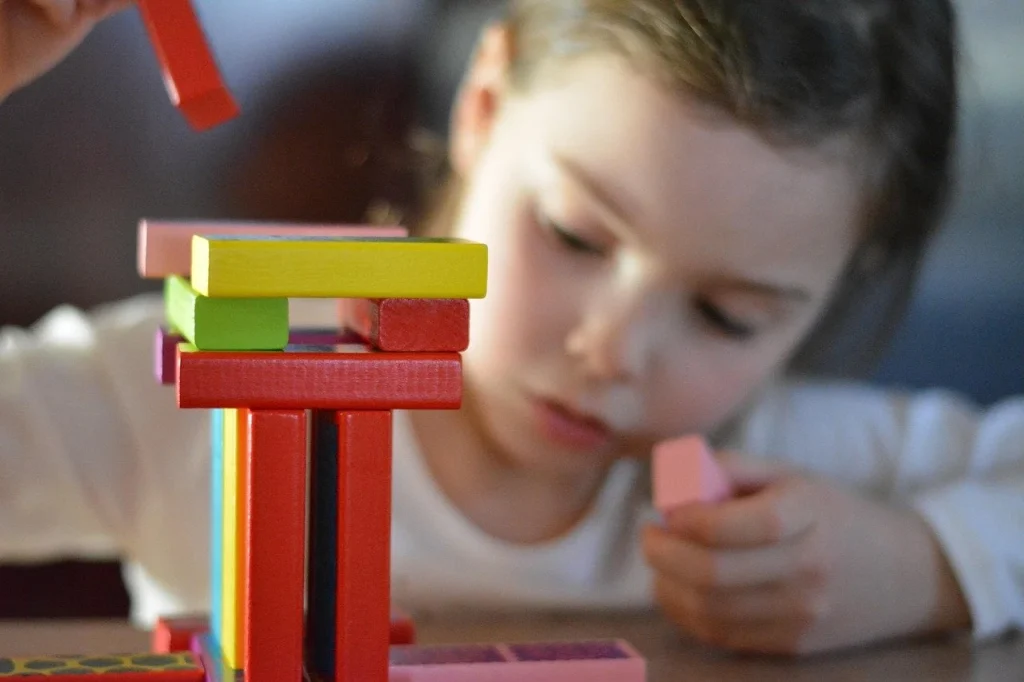
Building and Construction: For children who enjoy building and construction, some great options include wooden blocks, Lego, magnetic tiles or marble runs. What makes these open-ended is that they are reusable and can be configured in different lots of different ways. Keep in mind that purchasing full sets is unnecessary – the building blocks are the essential element for open-ended play. Natural materials and recyclables also make for good building supplies. Cardboard boxes, toilet paper tubes, plastic lids or twigs, stones, shells or large leaves are all excellent choices for loose parts that can be assembled or crafted into something new. It’s helpful to have designated spaces for construction and deconstruction activities.
Imagination and Dramatic Play: Open-ended play isn’t limited to construction sites. It can also come from the imagination or dramatic potential an item has. Can it be used to tell a story? Play kitchens (indoors or outdoors) and play food, dollhouses, small animals or figures, tea sets, play silks, animals, dolls, wooden bowls, spoons, pots and pans, baskets, safe containers, or other materials that can be used to extend the play experience. Role-playing outfits, accessories, and household props can bring in additional elements for dramatic play.
Art Materials and Sensory Supplies: Art supplies and sensory materials offer outlets for creative play, self-expression, and skill development. Playdough or clay and accessories, kinetic sand, paint, sensory bins, natural materials, ribbons, beads, buttons, craft sticks, yarn, paper, markers, and crayons. Keep in mind that children need encouragement to enjoy the process and explore colors, textures, and materials and not be concerned with a specific product. All they need is the space and ability to be messy and express themselves freely.
Games and Activities: Adults can also encourage games and open-ended activities that support movement and fun for children that require few if any materials. These might include Simon says, freeze dance or tag, bubble chase, animal walks, hopscotch, scavenger hunts, bean bag toss, obstacle courses, fort building with blankets and cushions, Red Light Green Light, hide and seek, or I Spy. Also, balls can be used in many ways and are often a hit with children. Feel free to draw from your own experiences and be sure to ask other adults for their ideas.
Through their open-ended play, children learn and develop many physical, emotional, and mental skills that they can build on throughout their lives. More than anything, open-ended play allows children long periods of unstructured time to get bored and shift into discovery mode, bringing forward their creativity and imagination.
Additional Resources
Check out this article by Katy Andewrson, “Loose Parts is the Real Brain Booster That Fancy Toys Pretend to Be” to learn more about the benefits of open-ended play.
This set of books on “Loose Parts” through Redleaf Press offers excellent information and beautiful photography. These can also be purchased separately at other booksellers.
For some examples of open-ended art, please read The Power of Open-Ended Art: Sparking Creativity in Preschoolers by Creative World School or The Best Kids’ Art Ideas for 2025 by Jean Van’t Hul.

Art & Crafts
The leaves are falling, school is in full swing, and the weather is changing! This season brings about a lot of change, including keeping…
Art & Crafts
Guest blog by Kalina Glover Moresi The winter months can be challenging for restless toddlers. The weather has most families inside, which can make…
Our monthly newsletter is packed with seasonal activities, local events, fun, educational resources, and more! Available in English or Spanish.
Sign Up