
The Power of Picture Books

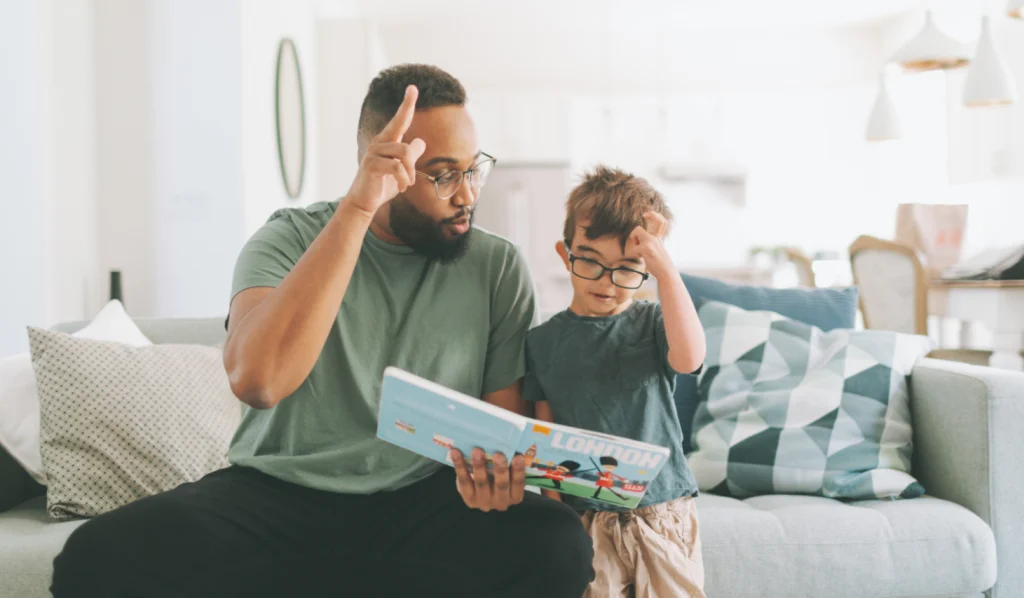
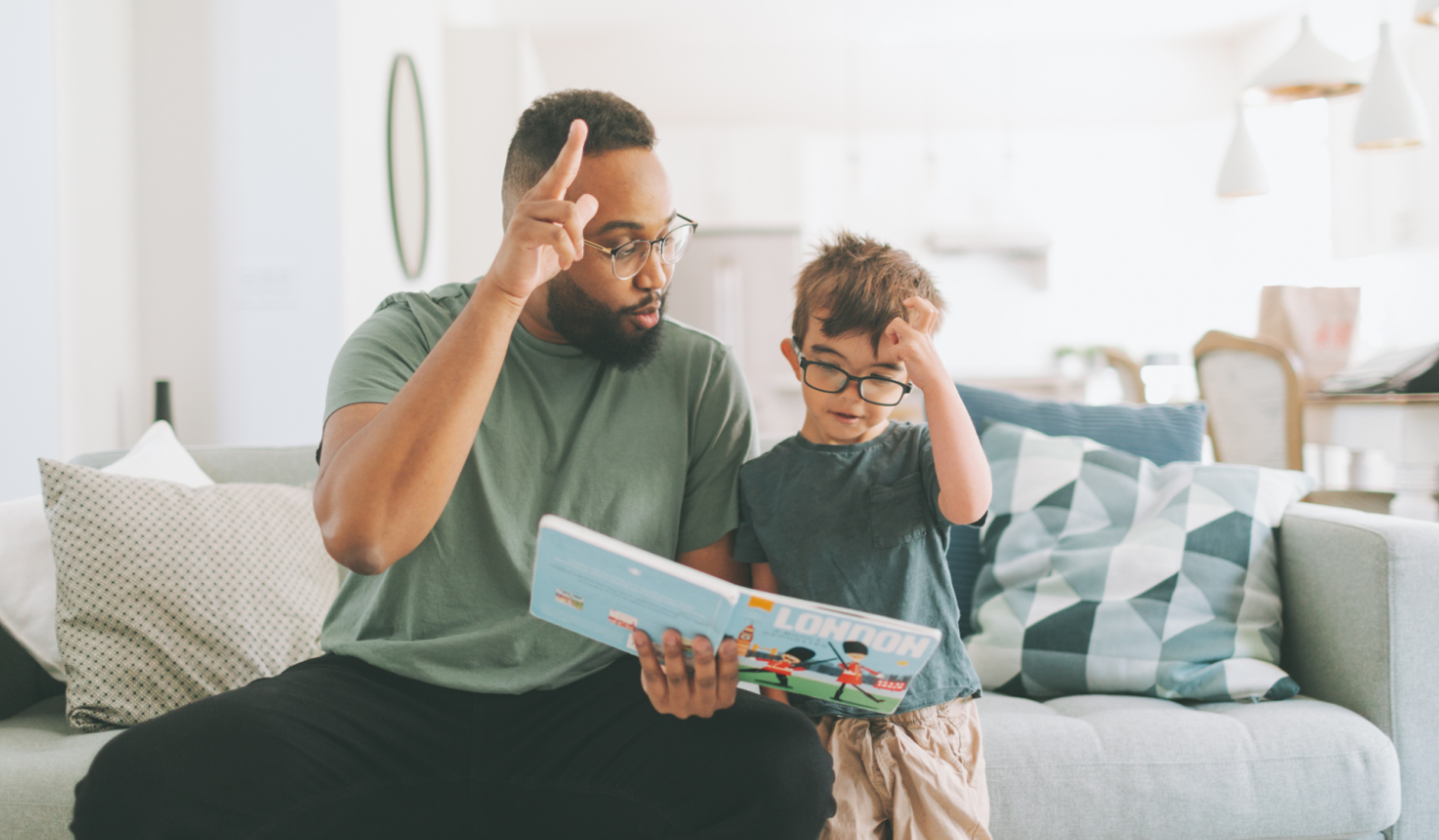
Father reading a picture book with his young son on the couch

My family teases me about my vast collection of picture books. They say I can open a library out of our home. I give picture books as gifts to recipients of all ages.

They are works of art! Literally! I am constantly amazed at the artistic skill of the illustrators. The authors magically make the readers feel inspired, cozy, seen, happy, and mighty in just 32 pages. 

Behold, the Picture Book 

Mac Barnett was recently named the National Ambassador for Young People’s Literature. This prestigious appointment comes with an opportunity to choose a platform on which to focus for the tenure. Barnett named his theme, Behold, the Picture Book! Let’s Celebrate Stories We Can Feel, Hear, and See, to elevate the status of these texts.

When we take a moment to consider the talent required to create a book that makes the reader feel so deeply and to acknowledge the special rituals that often surround snuggled-up book reading time, the word “behold” is perfect. These books have become beloved by children.

As Barnett says in an interview with NPR, “The picture book is my favorite art form. It’s such an incredible, vibrant, exciting, forward-looking, experimental art form.”

Rebellious Read Alouds 

OPEC’s Training Academy hosted former kindergarten teacher and author, Vera Ahiyya, to discuss her book, Rebellious Read Alouds and the power of picture books. She shared staggering statistics about diverse representation in picture books.

Animals are the 2nd most popular primary character, and Ahiyya said children are less likely to emulate book behavior from an animal character than they are from a person. Learning valuable lessons from books would have a larger impact if the characters were people.

Ahiyya reiterated the importance of reading “mirrors, windows, and sliding doors” books, an idea coined by Dr. Rudine Sims Bishop. Dr. Bishop suggests that we need all three types of books. Mirror books reflect the reader’s experience; they see themselves in the story. Window books help the reader see into other worlds. Sliding glass door books help the reader enter into another world through empathy.   

Finding a “Just Right” Book 

As a classroom teacher, I loved the challenge of matching the perfect book to a student. Learning a student’s interests and reading ability, thinking through my favorite stories, and handing a child a book they loved was highly fulfilling.

I love seeing a kid who is learning to read and cautiously sounding out words, laughing at the book in their hands instead of throwing it down in boredom or frustration. Our school and public librarians create magical storytimes and community outreach events that help libraries become important “third places” for children and families. 

“If we think that children’s books are anything less than real literature, it’s because we think kids are something less than real people. If we believe they’re real people, then they deserve good art.” – Mac Barnett

Resources to find high quality children’s books:

American Indians in Children’s Literature 

Award Winning Books

Caldecott Award Winning Books

The Horn Book

Newbery Award Winning Books

School Library Journal Contenders for Awards

By Megan McQueen.
Spanish translation by  Dr. J Senior Consulting, LLC 

Megan McQueen is a warmhearted teacher, coach, consultant, and writer. She grounds her work in empathetic education, imparting a strong sense of community and social skills to those with which she works. Megan prioritizes emotional learning and problem solving skills. When not at work, she is most likely playing with her husband, two children, and pup.

Learn more about the Oregon Parenting Education Collaborative and read our blog!
The Concept of a Black Home

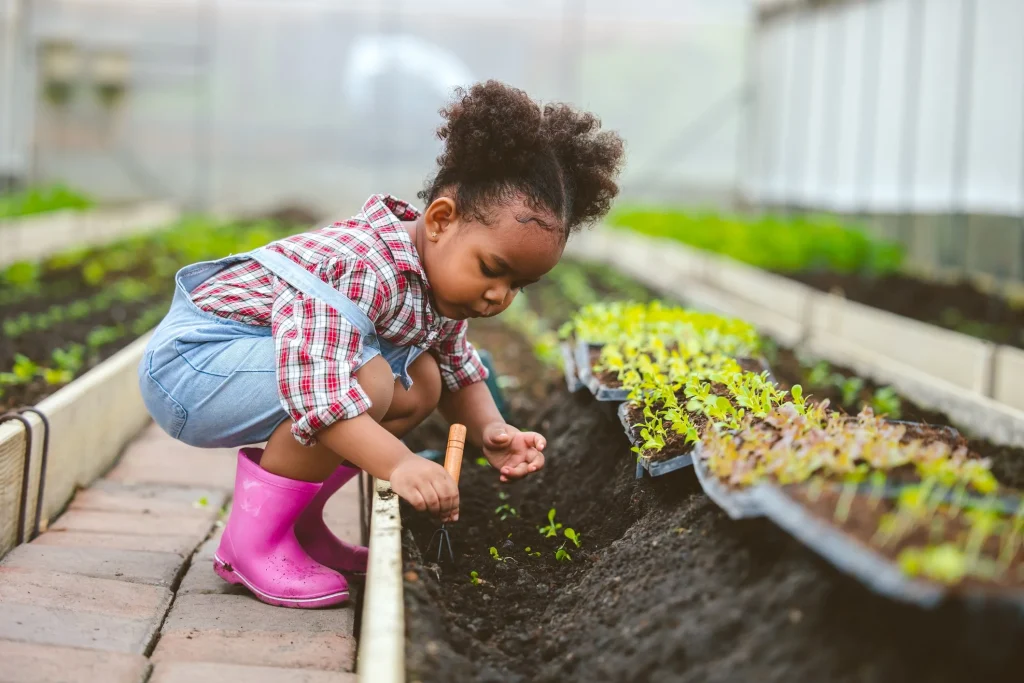
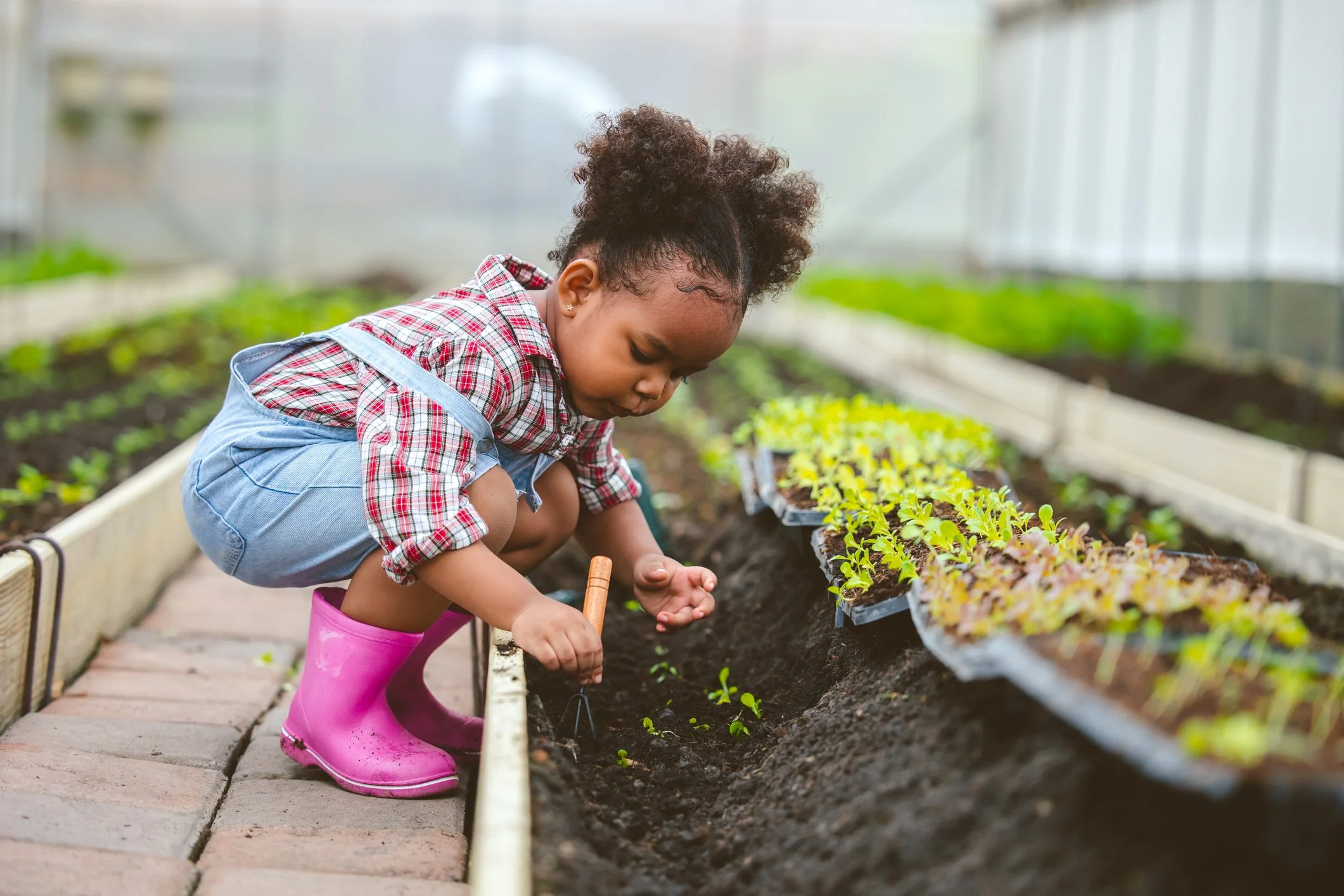
Young girl in rain boots planting seedlings in a greenhouse

If you have Black children, you are a Black household.

This seems straightforward, but most people reading this will immediately resist that description. If you pause a little longer, you might realize something crucial: if your children are Black and your household doesn’t actively understand and engage with issues that uplift or impact the Black community, you’re effectively leaving your child to navigate that terrain alone.

There’s a razor-thin line between othering your child and truly accepting the reality that your entire household is affected by what affects them.

If you’re a non-white parent who doesn’t understand society’s impact on Black children, this understanding is imperative. It’s not enough to simply know the statistics—the likelihood that your child could (and most likely is) experiencing racism in school, extracurricular activities, or while engaging with social systems as basic as riding the city bus.

What’s imperative is navigating the nuances of such ignorance with a deep radar for being gaslit and dismissed back into your comfort zone. If your gut is telling you something is off, it is off. If racism wasn’t in your top two explanations, double-check whether you’re avoiding what has been normalized in your world—not necessarily the world your child experiences daily.

If you find yourself asking, “Could it really be…?” It could. And most likely, it is.

What This Looks and Sounds Like

The manifestations are countless:

  • Assumptions about behavior leading to predictions of “nefarious pathways”

  • Presumptions about likelihood and capability

  • Adults showing apparent lack of experience with Black children, then either refusing accountability or using “not knowing” as justification for inaction

  • Absence of dialogue around the impact of cultural, racial, and ethnic experiences in our society

  • Describing appearance with coded, generally negative words: “wooly,” “frizzy,” “little monkey,” “hyper,” “loud” (when referring to excitement or energy)

  • Labeling children as “different” when the real issue is adults’ lack of exposure to Black children

I could go on. They can go on as well.

Some of these incidents might seem “silly” to address. However, your position should align with your child’s experience, not your own understanding of it. It’s crucial that your child isn’t taught to comply just to get along.

Every issue that affects a Black person must fully affect your household. Without this perspective, you effectively leave your child alone to address the fear and, ultimately, the shame of their involuntary inclusion in whatever the Black community is being charged with.

Everything charged to the Black community is being charged to yours.

One privilege of being white is that when the white community faces behavioral accusations, it’s not charged to the entire community. For example, though most mass shooters are white males, we haven’t labeled this demographic as “dangerous when angry and in crowds.” Yet any deficit attributed to the Black community—whether an individual act or not—lands as the responsibility and reflection of the group entirely.

Your child is no exception.

Your Essential Role

As parents, your job is to ensure that in a world directed at invalidating your baby’s existence, you empower your child with this truth: there is nothing—NOTHING—wrong with how they exist.

Your active commitment to engaging with Black history through the eyes of the Black community is essential. You don’t need to be different people. You do, however, need to be well-informed and an active advocate for your child and their community to live unharmed.

Parents are parents—you don’t want anything to happen to your precious child. This is precisely why it’s imperative to examine which lens you’re using when teaching your child how to be in this complicated society.

White parents especially must address their fear of their Black child navigating an aggressive world. (I’ll explore this more in a future post.) After consistent work on your own personal experiences, narratives, and conditioning, the short answer is this: don’t teach them to fear what being Black means.

There’s often a hidden narrative that white parents carry—one that positions their Black child as somehow complicit in persistent stereotypes, or as having innate knowledge about their “racial role.” This usually isn’t conscious.

There is a solution—many, actually. First and foremost: teach your child a deep understanding of their strength, and of the strength, beauty, and brilliance that is their Blackness, however that presents itself.

This foundation of strength and clarity will prove far more valuable when the day comes that they must stand up for themselves—and that day will come.

The concept of a Black home isn’t just about recognition—it’s about transformation. It’s about ensuring that every child who enters your door knows they belong not just in your family, but in this world, exactly as they are.

Ayisha Elliott is a mother, grandmother, and relational parenting guide who understands the beautiful complexity of raising Black children in today’s world. As a mother of three and grandmother of five—currently raising three of her grandchildren—she brings both lived experience and 25 years of professional expertise in relationship-centered approaches to the everyday realities of parenting across generations. From navigating school systems and cultural identity to managing sibling dynamics and travel logistics with children, Ayisha has learned that the same principles that transform organizations can revolutionize family life. As the content producer of the podcast Black Girl From Eugene, award-winning columnist, and sought-after speaker, Ayisha creates authentic conversations about what it means to raise confident, grounded children while honoring their heritage and preparing them for the world as it is. Her unique perspective comes from successfully balancing entrepreneurship with hands-on parenting, traveling internationally with the children she’s raising, and understanding that every parenting decision carries both personal and cultural weight. Through her writing and speaking, Ayisha offers practical wisdom, honest reflection, and relationship-building strategies that help Black families thrive—not just survive—in complex times.

Welcoming Refugee Families

Young boy looking at the camera during an outdoor community gathering

Thanks to Tiffany Smith, English Language Learner Specialist, for sharing resources.

Many towns are seeing a rise in refugee or asylum-seeking families. We view this as an opportunity for our communities to welcome new voices with generosity and compassion. Local organizations often rely on volunteers to ensure new families obtain the support needed. Consider how you can share resources personally and professionally to welcome refugee families in your community and to your parenting classes.

Look with New Eyes

Think about what it would be like to move to a new place with a different culture. What would help you feel welcome? What can we do to help families know they belong in our classes?

It may help pair newcomers with another family or person to be their “buddy.” They will have a go-to person to ask questions and look to for expectations. Relieve newcomers’ fear that they are burdening someone with their questions.

We may consider adding more visuals to our spaces and materials to help support someone who is learning English or may not be a strong reader of English. Can our welcome flyers and advertisements be translated into languages we see in our communities? Can we translate our class materials into the languages our families speak? (These social-emotional tip sheets offer translation into 16 languages.)

You may consider adding picture books for a display around the room that center the experience of your new families – those about refugees and their home culture. Learn to greet people in their language and pronounce their names correctly. Teaching other families names and greetings will help build community within your class and a sense of belonging.

Transition to a New Climate

Kari Leibowitz, PhD, writes in How to Winter that residents of northern cities, such as Minneapolis, have helped newcomers experience winter by teaching them how to ski and ice skate, inviting them to bonfires and celebrations. We may have learned tips that help us navigate heat, rain, or snow. We can share information about safely swimming in a river (bring a towel, sunscreen, water, sunhat) or layering clothing in cold, damp weather (wool layers and a waterproof shell are key). Consider how someone new to your town might need information to feel supported. Are there festivals or holidays to explain? Can you share ideas for communicating with schools? Also, the learning can be in all directions. Invite new families to share their knowledge and experiences with your classes to build connections.

Connect to Local Services

Families fleeing their home countries have endured trauma and intense fear. Updating your trauma training can be crucial to support families in parenting education classes. A calm setting can put everyone at ease. Compiling a list of local mental health supports could be essential for these families. You can also encourage them to contact their school counselors so their children can access services. Families may be navigating poverty as well. Sharing options about accessing SNAP benefits, local health clinics or OHP, affordable housing, childcare options, employment possibilities, public library, and free or inexpensive clothing could be much appreciated.

Resources

Books:

Home is a Lunchbox by Cherry Mo (picture book)

Solito by Javier Zamora (grown-up book)

Watercress by Andrew Wang and Jason Chin (picture book)

When Stars Are Scattered by Victoria Jamieson and Omar Mohamed (middle grade graphic novel)

Websites:

International Rescue Committee

Oregon Refugee Services

Salem for Refugees (Search for your local refugee support agency)

UN Refugee Agency

By Megan McQueen.
Spanish translation by  Dr. J Senior Consulting, LLC 

Megan McQueen is a warmhearted teacher, coach, consultant, and writer. She grounds her work in empathetic education, imparting a strong sense of community and social skills to those with which she works. Megan prioritizes emotional learning and problem solving skills. When not at work, she is most likely playing with her husband, two children, and pup.

Learn more about the Oregon Parenting Education Collaborative and read our blog!
Parenting Together: Building a Bond with Baby

Two parents joyfully bonding with their baby at home

Creating a strong bond with your baby during the early months of parenthood can be a wonderful but challenging journey as you adjust to new routines and responsibilities. You probably do many things already that help build a strong relationship! This connection you are building plays an important role in supporting their social, emotional, and physical development.

A strong bond, often referred to as a secure attachment, is a two-way relationship: your baby responds to your cues just as you respond to theirs. By responding to their needs, you are building trust, which helps them feel safe and understood. 

What Do Cues Look Like?  

In infancy, cues are the small signals that babies use to express their needs or feelings.

Since they cannot yet talk, they rely on sounds, movements, and facial expressions to communicate. Paying attention to these cues is important, and overtime time, you will begin to see patterns related to their needs. 

Common cues might include turning their head with an open mouth, smacking their lips, or making fussing sounds when they are hungry. Rubbing their eyes, yawning, or becoming quiet or fussy may suggest that they are tired. Crying is often the most recognizable signal for expressing their needs, including a desire for comfort.

Ways to Respond

•It can be helpful to notice early signs of hunger, such as lip smacking. Responding to these early signals before they begin to cry can create a more positive feeding experience.  

•When you observe signs of tiredness, like yawning or eye rubbing, gently soothing them to sleep may be beneficial. This might involve swaddling or rocking them in a quiet, dim environment to help them settle.  

•In moments of fussiness, picking them up and holding them close can often bring comfort. Using a gentle voice and soft movements can help soothe them, as babies love skin-to-skin touch and voice.  

•When your baby makes eye contact or reaches out to you, offer smiles, talk to them, or make gentle sounds. A great activity to connect is talking to your baby while changing their diaper. As silly as it sounds, talking to them about each step of changing their diaper is a way to engage with them routinely. 

Fostering a secure attachment with your baby plays a huge role in supporting your baby’s development. This two-way relationship builds trust, helping you and your baby feel strongly connected.

Book Nook

Brown Bear, Brown Bear, What Do You See?

By Bill Martin Jr and Eric Carle

Whose Toes Are Those?

Written by Jabari Asim

Illustrated by LeUyen Pham

Bunny to Bunny: Sing Me Your Song

Collaboratively Written

References

Karakaş NM, Dağlı FŞ. The importance of attachment in infant and influencing factors. Turk Pediatri Ars. 2019 Jul 11;54(2):76-81. doi: 10.14744/TurkPediatriArs.2018.80269. PMID: 31384141; PMCID: PMC6666355.

This Parenting Together newsletter was written by Jasmine Tua Karing.

Parenting Together is a monthly newsletter from the Oregon Parenting Education Collaborative. It was first launched in 2015 as a research-based resource for parents. Parenting Together aims to support caregivers of children between the ages of zero and five. It is available each month in English and Spanish. To access Parenting Together newsletters posted prior to January 2025, visit our archive.

Connect with the Oregon Parenting Education Collaborative elsewhere:

Little Stories that are Worth Our Attention

Parent and child walking hand in hand along the beach at sunset

As humans, our everyday experiences make up our lives. Often, we spend our time and attention focused on the big stories or major moments in life. Think of these like waves in the ocean, rising and falling one after another and carrying us along with them. But all the while, it’s our little stories of minor moments that capture the depth and breadth of life. These ripples are what create the shimmer and sparkle over the water that surrounds us.

Over the last few days, I made a list of a few of the little moments that made up my lived experiences.

  • Watching a swallowtail butterfly landing briefly on meadow flowers.

  • Enjoying how my son dangles a feathered toy on a stick to engage playful kittens.

  • Contemplating the phase of the moon and constellations as the night comes.

  • Inhaling the sweet smell of roses in the local rose garden.

  • Savoring a cup of Earl Gray tea with cream and local honey.

When we pay close enough attention, curiosity, wonder, awe and delight can be found everywhere at any time. And, luckily for us, parenting and teaching allow adults to bear witness to many hours of lived experiences for the children close to them.

Creating safe spaces and opportunities to observe and share thoughts and feelings shows how our everyday experiences are valued. What inspires you? What inspires your child?

To practice, make a list each day of at least ten moments that caught your attention. Some people keep a journal, fill a jar with slips of paper, or make notes. Capture your precious – and simple – observations with short stories, anecdotes, pictures, sketches, or video recordings. I invite you to gather your little moments in a way that best fits your preferences and give it a try. If it works for you, that’s great; it might work for your kiddos, too.

You can support your children’s early journaling by offering them paper and art materials to document their experiences through writing or drawn images. For very young children, adults can write down what the child dictates. The end of the day is often a great time for reflection and capturing these little moments, and it supports a positive rapport between the child and adult and builds greater capacity for connection.

Gratitude and mindfulness go hand in hand, because they’re both about raising our awareness and becoming more present to the meaningful little moments in our lives. A simple practice that we can use to support mindfulness is called the 5-4-3-2-1 technique, which includes taking several deep breaths and then tuning into our environment through our five senses. 

First, take three slow belly breaths.

List 5 things you can SEE

List 4 things you can FEEL

List 3 things you can HEAR

List 2 things you can SMELL

List 1 thing you can TASTE

Lastly, take another three slow belly breaths. 

Being grateful and present with our children is a gift for us all. Children often require us to slow down and take note of the many little moments. Perhaps the glacial pace of a fully lived moment is an antidote to the frenzied pace of modern life.

Resources

Want some inspiration on capturing the beauty of nature and cultivating gratitude? Louie Schwartzberg offers us a beautiful reflection through his story and deeply touching video images in the TED Talk on Gratitude.

To learn more about gratitude and related activities that parents and teachers can do with children and adolescents, please check out the links below.

1.     Positive Psychology shares their 20 Gratitude Exercises and Activities to Boost Well-being.

2.     At We are Teachers,  adults who support elementary and middle-school children might want to explore the 36 Meaningful Gratitude Activities.

3.     Pathway to Success offers 30 Gratitude Activities for Children and Teens

Aoife Rose Magee, PhD, earned a doctoral degree in Special Education from the University of Oregon Early Intervention Program. Her personal and professional interests have been largely focused on the social-emotional development of young children and how positive parenting and teaching practices may contribute to healthy development, promote resiliency, and mediate risk factors. Aoife is professional development specialist for students and practitioners in the areas of Early Childhood Education, Early Intervention/Early Childhood Special Education and Parenting Education.  Aoife serves as a Master Trainer for the Oregon Registry and frequently provides community based and private workshops for early childhood educators, parenting educators, and other professionals. For more than thirty years, she worked directly with families as a parenting educator, and she is a former Oregon Parenting Education Collaborative Hub Coordinator for the Parenting Success Network. She currently teaches as a full-time faculty in the Early Childhood Education Program at Lane Community College. She is also the mother of a fantastic young adult son and enjoys nature and creative pursuits in her spare time.

Outdoor Family Fun

Mother and young child sharing an affectionate moment outdoors on a country path

Although sunshine is a lovely backdrop for summer fun, many children don’t mind a little rain either. Children are usually their happiest outside, exploring among grass and trees. And while many of us adults may prefer to watch rainy days from inside, puddles usually only add to the fun for young ones. Be prepared with appropriate outdoor clothing that is durable and weather-resistant and watch the magic unfold!

There are lots of developmental benefits that come with outdoor play, making the effort worth it almost every time. The emotional, mental, physical, social, and behavioral health of children is fortified in natural settings. We see a marked increase in overall well-being, stress relief, resilience, restoration, emotional regulation, and mood enhancement when children have plenty of time outside. Their general health and immune function often improve with fresh air and sunshine. We often see children eating and sleeping better.

Active participation in outdoor play leads to better motor functioning. While staying inside on screens all day may improve kids’ gaming reflexes, time spent outside hones their real reflexes, benefiting their physical skills, strength, and coordination.

We also witness a boost to self-esteem, confidence, and agency. When children are engaged in fun outdoor activities they show heightened attention, attention restoration, memory, creativity, problem-solving, language development and executive functioning with mental control, self-regulation, and decision making. For school-aged children, academic functioning and attitudes toward school can significantly improve with more recess and outdoor experiences.

“The best classroom and the richest cupboard is roofed only by the sky,” says Margaret McMillan.

Parents and teachers often wonder how much time outside is enough. The simple answer is as much as possible. Several hours a day would be highly beneficial, and more is better. In the book, ‘Last Child in the Woods,’ author Richard Louv coined the term ‘nature-deficit disorder,’ which is a condition that may have serious implications for children who lack a connection with nature. Disconnection to the natural world has been linked to diminished sensory experiences, attention difficulties, obesity, vitamin D deficiency, increased aggression, higher rates of anxiety and depression, poor grades, reduced coping skills, higher levels of stress, and overall lower sense of well-being. In other words, time in nature is essential for health and wellness.

How can we do better? When adults place value on aesthetics, organization, thoughtfulness, provocation, communication, and interaction, children can learn a lot from being in the outdoor environment. The more care and attention paid to organizing the space

outdoors, the more this time can stimulate the imagination, creativity, exploration, discovery, engagement and sense of wonder for young children.

If you are looking for ideas, here are some ways to increase outside activity:

• Include children in gardening by planting seeds and nurturing plants, which supports their understanding of life cycles and teaches responsibility. Children may be more interested in eating vegetables that they had a hand in growing.

• Plan high-activity games with play equipment such as balls, bats, jump ropes, hurdles, tunnels, balance beams, targets, bean bags, balls, or hoops. Develop obstacle courses. Mark playgrounds with mazes, hopscotch, snakes & ladders, or other games. Support them to explore areas where they can climb, swing, move, and take reasonable risks to learn what they are capable of.

• Provide access to natural materials such as water, pinecones, stones, sticks, shells, sand, grass or flowers. Nature walks can be an engaging way to gather found treasures. Mud kitchens are hours of fun!

• Assure activities are enjoyable for the individual needs of children and adapt the spaces, as needed.

In the TED Talk, ‘The Best Kindergarten You’ve Ever Seen,’ Takahuru Tezuka shows us the benefits of designing indoor/outdoor spaces that are developmentally appropriate for young children.

Need some fun ideas to do with children? Check out the 50 Nature-based Outdoor Play Activities for Early Childhood Development compiled by Stepping Stone Childcare and Early Developmental Centers.

The Early Learning Hub of Lane County has a lot of resources at their link for Fun Family Activities & Lane County Activity Calendar.

Have fun!

Aoife Rose Magee, PhD, earned a doctoral degree in Special Education from the University of Oregon Early Intervention Program. Her personal and professional interests have been largely focused on the social-emotional development of young children and how positive parenting and teaching practices may contribute to healthy development, promote resiliency, and mediate risk factors. Aoife is professional development specialist for students and practitioners in the areas of Early Childhood Education, Early Intervention/Early Childhood Special Education and Parenting Education. Aoife serves as a Master Trainer for the Oregon Registry and frequently provides community based and private workshops for early childhood educators, parenting educators, and other professionals. For more than thirty years, she worked directly with families as a parenting educator, and she is a former Oregon Parenting Education Collaborative Hub Coordinator for the Parenting Success Network. She currently teaches as a full-time faculty in the Early Childhood Education Program at Lane Community College. She is also the mother of a fantastic young adult son and enjoys nature and creative pursuits in her spare time.

Supporting Creative Expression through Process Art

Child's hand drawing colorful scribbles with a handful of crayons

Creative activities can be a joyful experience for young children. The child can focus on creating, examining materials, and developing skills. Young children benefit from creative opportunities that allow unstructured time for exploration and self-expression. This approach encourages creativity, fine-motor development, planning, critical thinking, problem-solving, communication, imagination, emotional expression, and relaxation.

Often, the best way to encourage children to engage in process-focused art is for adults to offer a variety of materials and see what happens. Examples may include painting, sensory art activities, construction, design, clay, weaving, beads, stamps, collage, or drawing. Allow the child to come and go from their art, providing plenty of time for children to explore. For supplies, consider nature objects, recycled materials, loose parts, glue, scissors, paper, markers, paints, homemade dough, cloth, string, and other interesting materials.

Even as your young artist directs their own experience, adults can contribute by asking open-ended questions based on what they see the child doing. Open-ended questions are inquiries that do not have a simple “yes” or “no” response. Instead, they prompt children to think about their process, try to explain in their own words, and consider encouraging next steps they can to try out.

Can you think of another way?

What might you try instead?

What can you tell me about…?

What does it remind you of?

What does this make you think of?

What would happen if…?

What do you think would happen if…?

How did you think of that?

What can you tell me about the things you have?

What are you going to do with that?

Can you show me what you could do with it…?

Is there anything else you could use?

Process art is different from project art, which is adult-led, has guidelines and instructions, and usually only one outcome or final product in mind. Process art emphasizes expression, experimentation, and exploration. By providing a variety of materials and lots of time, the child can focus on their experience and create whatever they want, which is valuable for increasing confidence and autonomy.  

Need some fun ideas for process art with young children? Check out what children’s librarian Jaime at LearnPlayRead offers on her website. Merri Cherry also has 50 activities for kids that you might get some inspiration from. One of my favorite activities is Play-Doh in a variety of colors. Need a recipe for a no-cook version? Check out Laura Tuck’s recipe on the Inspire My Play website.

If you are feeling left out, remember that process art is not just for littles! Try out some fun exploration with materials yourself!

You are an explorer. You understand that every time you go into the studio, you are after something that does not yet exist.”
― Anna Deavere Smith, Letters to a Young Artist

Aoife Rose Magee, PhD, earned a doctoral degree in Special Education from the University of Oregon Early Intervention Program. Her personal and professional interests have been largely focused on the social-emotional development of young children and how positive parenting and teaching practices may contribute to healthy development, promote resiliency, and mediate risk factors. Aoife is professional development specialist for students and practitioners in the areas of Early Childhood Education, Early Intervention/Early Childhood Special Education and Parenting Education.  Aoife serves as a Master Trainer for the Oregon Registry and frequently provides community based and private workshops for early childhood educators, parenting educators, and other professionals. For more than thirty years, she worked directly with families as a parenting educator, and she is a former Oregon Parenting Education Collaborative Hub Coordinator for the Parenting Success Network. She currently teaches as a full-time faculty in the Early Childhood Education Program at Lane Community College. She is also the mother of a fantastic young adult son and enjoys nature and creative pursuits in her spare time.

Helping Your Child with Homework

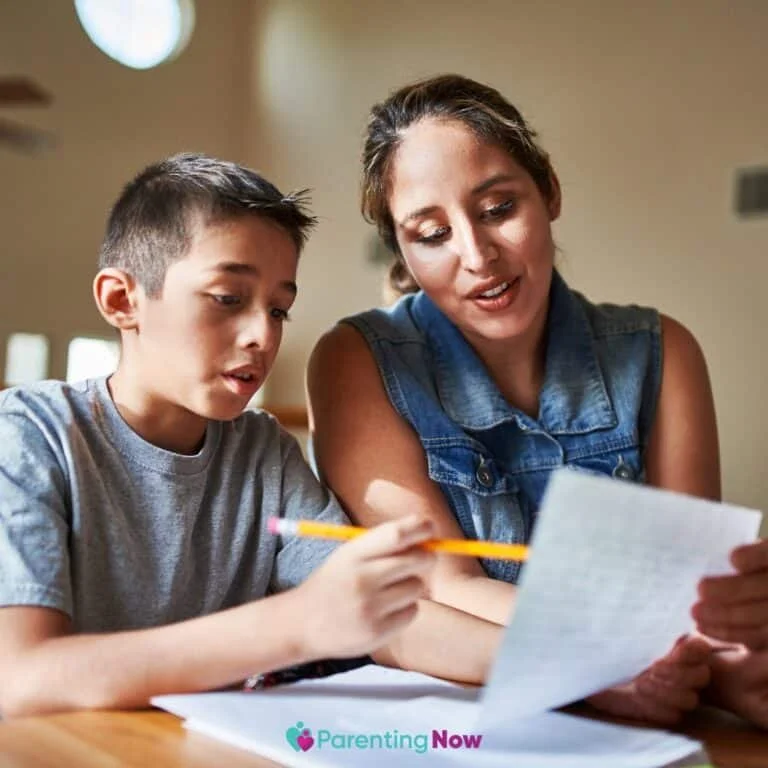
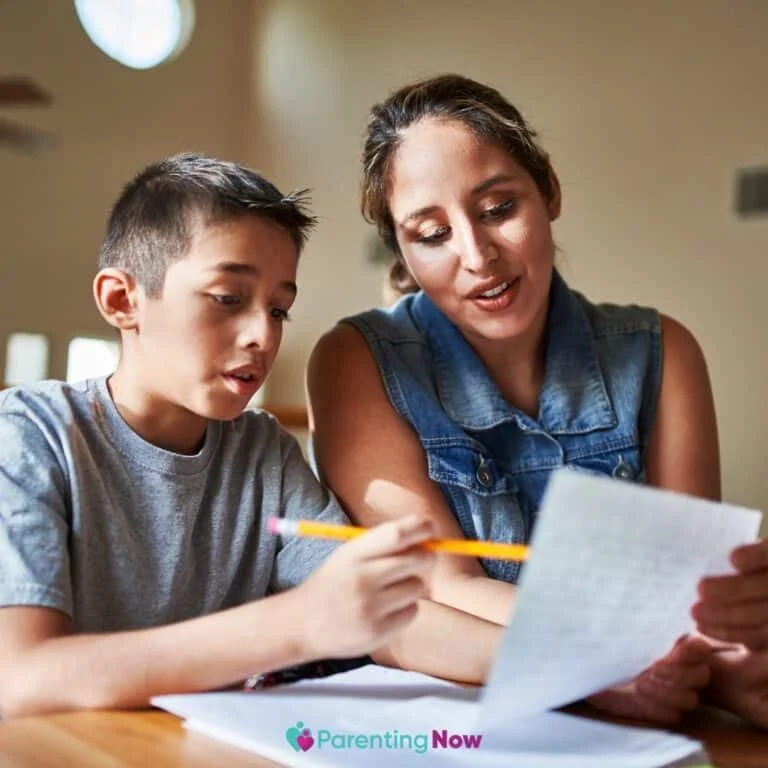
Mother helping her son with homework at the table

Helping Your Child with Homework

Homework is an important part of a child’s education, but it can sometimes be a source of stress and frustration for both children and parents. However, with the right approach, homework time can be a positive and productive experience. Here are some tips to help you support your child with their homework:

Preparing Your Child for Homework
Allow your child to relax and have a snack after school to recharge. Ask your child about their homework and what tasks need to be completed. Set a regular homework time that fits your family’s schedule and priorities.

Creating a Homework Environment
Set up a designated study area that is well-lit and free from distractions. Encourage your child to do their homework in a place where they feel comfortable and focused.

Encouraging Your Child
Help your child get started on their homework but avoid doing it for them. Praise your child for their efforts and progress, rather than focusing on mistakes. Encourage your child to solve problems on their own before offering help.

Dealing with Homework Challenges
If your child continues to struggle with homework, consider using a points system to motivate them. Set clear expectations and consequences for completing or not completing homework tasks. Keep track of your child’s progress and reward them for meeting their goals.

Seeking Additional Support
If your child consistently has difficulty with homework, talk to their teacher to see if extra support is needed. Focus on your child’s successes and strengths to help build their confidence and motivation.

By following these tips and providing positive encouragement and support, you can help your child develop good study habits and succeed in their homework assignments. Remember, every child is different, so it may take some time to find what works best for your child.

By The Triple P Team at Parenting Now.

Triple P – Positive Parenting Program
Are you interested in receiving more parenting advice? Triple P Online – Positive Parenting Program could be for you! This online parenting program allows you to take a parenting class in the comfort of your own home!

If you live in Lane County, you can get Triple P Online for free by filling out the form on the Triple P page. A staff person from Parenting Now will send you an access code within 24 hours and you’ll be able to start using the program right away! For more information about the program and to sign up visit the Triple P.

Supporting Young Boys so They Grow and Thrive

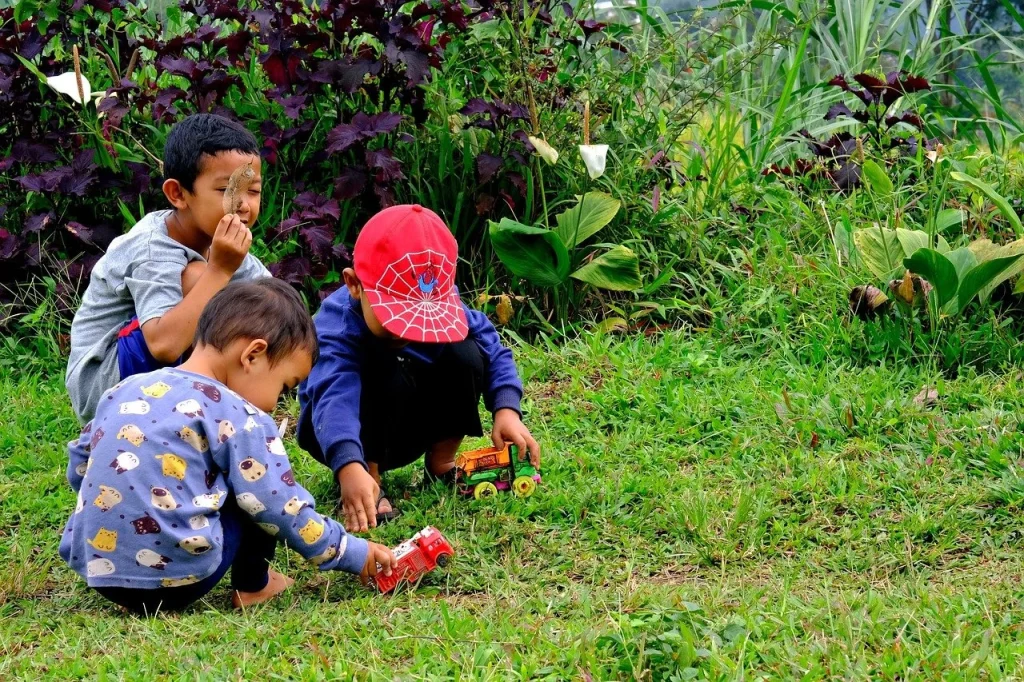
Three young children crouching outdoors, looking at something in a garden

Supporting Young Boys so they Grow and Thrive

We want all children to thrive in early childhood, but boys have biological and cultural differences that need special consideration. Let’s examine the unique needs of young boys, specific challenges that may arise if their needs go unmet, and positive strategies to support exploration, activities, and reduce struggles.

It is important to recognize that there is a wide range of individual differences and variation within each gender. Cultural norms and social expectations can also influence how young children behave and develop. But if we spend enough time around groups of children who are of the same age, we may observe some trends that show how the girls communicate verbally and manage their feelings sooner than the boys.

Boys may have feelings when upset that are externalized (such as impulsivity or anger) while the girls may internalize their feelings (like sadness or anxiety). You may find that the boys are busier and more physically active, take greater risks, build and destroy structures using the materials at hand, seek messy exploration, and can have a harder time sitting still. (An article by Zero to Three offers additional information on some of the interesting differences in brain development for boys and girls.)

Young boys do better when they are enjoying themselves and actively learning through play. Boys who are involved in highly engaging activities are more focused, persistent, emotionally regulated, prosocial, and able to communicate better with their friends than boys left without adequate stimulation or support. When adults follow the boys’ priorities and interests, they will witness fewer behavioral challenges and more meaningful participation in their daily activities and routines. (Stewart Brown is a pioneering researcher who tells us in his TED talk that play is more fun and necessary for physical and emotional health.)

If caregivers are committed to meeting the needs of young boys, there are many strategies that may benefit them. Here are seven effective approaches below.

1. Supporting boys’ need for active play experiences should include heavy work, open-ended materials, reasonable risk-taking, unstructured play, movement and frequent time outdoors.

2. Boys also need support for learning effective problem solving, coping with failure, safe ways for calming down when upset, maintaining good boundaries, peaceful conflict resolution, and “loving limits” for behavior.

3. Quiet and calming activities can be nurturing for young boys. Find children’s books on topics they love, play soft music, allow forts and hideaway areas, and provide varied materials for using their hands.  When a young child is stressed, we can support them through deep breathing, grounding practices that feel soothing, and designated areas to calm their body, mind, and emotions.

4. Young children need more frequent rest and refueling opportunities, which should include a well-balanced diet, clean drinking water, adequate sleep, and good hygiene for teeth and bodies, and regular medical care and developmental check ups.

5. Boys’ social and emotional needs can be supported by encouraging empathy and taking the perspective of others. Adults can cultivate a reverence for life by having boys care for plants, insects, or animals. We can offer hugs and encouragement whenever needed.

6. Young boys also benefit from close adult males who can show them through words and actions what to do, modeling expected behaviors.

7. Perhaps most of all, young boys need relationships with caregivers who provide adequate time for them, loving attention, lots of affection, and positive guidance that focuses on their strengths, needs, and interests.

Overall, young boys need trustworthy adults using developmentally appropriate expectations and positive discipline to guide them. Boys also need supportive environments that encourage them to grow in healthy ways that align with their need for autonomy and initiative. When they have these supports they can truly thrive!


Aoife Rose Magee, PhD, earned a doctoral degree in Special Education from the University of Oregon Early Intervention Program. Her personal and professional interests have been largely focused on the social-emotional development of young children and how positive parenting and teaching practices may contribute to healthy development, promote resiliency, and mediate risk factors. Aoife is professional development specialist for students and practitioners in the areas of Early Childhood Education, Early Intervention/Early Childhood Special Education and Parenting Education.  Aoife serves as a Master Trainer for the Oregon Registry and frequently provides community based and private workshops for early childhood educators, parenting educators, and other professionals. For more than thirty years, she worked directly with families as a parenting educator, and she is a former Oregon Parenting Education Collaborative Hub Coordinator for the Parenting Success Network. She currently teaches as a full-time faculty in the Early Childhood Education Program at Lane Community College. She is also the mother of a fantastic young adult son and enjoys nature and creative pursuits in her spare time.

Tech & Family

Father and two young children looking at a laptop screen together

We live in a digital world. Kids see their grown-ups on devices of all kinds for work, entertainment, navigation…just about everything. Many parenting struggles revolve around screen time – choosing when young children use a tablet, how to get them to stop using the device once they’re on, when to allow our children access to the internet, and when they get phones and social media accounts.

As parenting educators, we may hear about these disagreements. We listen to grown-ups asking for advice on how to enforce rules and what the rules should be. Parents often desperately seek guidance on what they should do with phones, and it may be helpful to have some tools to reference as we respond. 

Build Relationships  

Adults constantly prepare our children for adulthood and model what that can look like. One of the reasons setting screen time limits is challenging is because it is so nuanced. It depends upon the family’s schedule, the child’s maturity, and the kind of technology they use. Joining online communities has excellent opportunities for children to feel connected, especially if they are part of a minoritized group.

We want our children to know what healthy conversations feel like so they can recognize when something feels unhealthy. We want families to spend quality time together, creating memories, partially so the children will be motivated to live a rich life offline. We want children to reach out and process challenges or question misinformation with adults. We have to prioritize close connections with each other so our children know this is valuable.  

Screen Time Guidelines  

The American Academy of Pediatrics recommends “​​considering the quality of interactions with digital media.” They do not make specific age and time guidelines because video chatting with long-distance family for 30 minutes is a very different experience from browsing YouTube videos. Families may find it helpful to search Common Sense Media’s “Best of” lists for suggestions for games, movies, apps, etc., for various age groups.

As always, we want to work with families in a way that avoids judgment. Encouraging families to be intentional about their media use by creating a family media plan (In Spanish) may help them feel more comfortable with their expectations for each other.

Modeling healthy screen time usage will be an essential first step for families wanting to adapt their children’s usage of devices. We want to help adults prioritize enough time for sleep, physical activity, and time interacting with others in real life.  

Adolescents  

A wide range of ages are included in this phase, which necessitates different strategies and responses. Seventeen-year-olds need more opportunities to make their own decisions than thirteen-year-olds. We know this age group values their privacy and independence, and we want to stay in a positive relationship with them as they develop their skills.

Encouraging families to find the balance that works for them is crucial. Each teen is different. News headlines may concern families about the possible damaging effects of social media and countries banning access for kids.

Encourage grown-ups to sit with their child in an open, curious manner and see what comes up on their social media. Algorithms promote very different content based on our demographics and viewing habits. Keep an eye out for harmful messages, including racism, fatphobia, sexism, etc. According to the American Psychological Association, these are common in gaming and social media platforms and require conversations to process.

We don’t want these messages normalized. Adults can remind teens to talk with them if they are concerned about the health or safety of someone in person or online. Adolescence is a significant time of mentorship for our teens.  

Social Media & AI 

Children of all ages are increasingly more and more engaged with social media such as YouTube, TikTok, Snapchat, and more. According to the U.S. Surgeon General’s office, “up to 95% of youth ages 13–17 report using a social media platform, with more than a third saying they use social media ‘almost constantly.’” Additionally, AI tools have quickly been integrated into these spaces. These quick developments make it more important than ever to support children in being responsible and conscientious tech users.  

There isn’t an easy answer to this yet. Some tips from the U.S. Surgeon General’s office in mitigating some of the harmful impacts of social media include: 

  • Be cautious about what you share. 

  • Don’t keep online harassment or abuse a secret.  

  • Visit stopbullying.gov for helpful tips on how to report cyberbullying. If you have experienced online harassment and abuse by a dating partner, contact an expert at Love is Respect for support or if your private images have been taken and shared online without your permission, visit Take it Down to help get them removed. 

  • Model responsible social media behavior. 

  • Educate yourself on new technologies such as a new social media site or AI tool, especially on their privacy policies and how they protect minors’ safety and rights. 

Supporting families through these challenges with an even-keeled stability will help them stay grounded. We can empathize when we listen to their struggles and notice their frustration. Reminding families there is research to help them work through decisions.

Emphasize that the main goals are for their family to stay in a relationship with each other and for the adults to mentor their children through new experiences. They can make a plan, change course as needed, and have fun together. 

Resources: 

Common Sense Media 

Connect Safely (Guías rápidas en español

Growing Up in Public by Devorah Heitner 

Screentime Consultant 

Screentime Solution by Emily Cherkin 

Tweens, Teens, and Screens (OPEC blog post) 

SafetyNet: Smart Cyber Choices trainings from KIDS Center (free, in English and Spanish) 

By Megan McQueen. Spanish translation by IRCO’s International Language Bank.

Megan McQueen is a warmhearted teacher, coach, consultant, and writer. She grounds her work in empathetic education, imparting a strong sense of community and social skills to those with which she works. Megan prioritizes emotional learning and problem solving skills. When not at work, she is most likely playing with her husband, two children, and pup.

Learn more about the Oregon Parenting Education Collaborative and read our blog!