Supporting Resilience Every Day

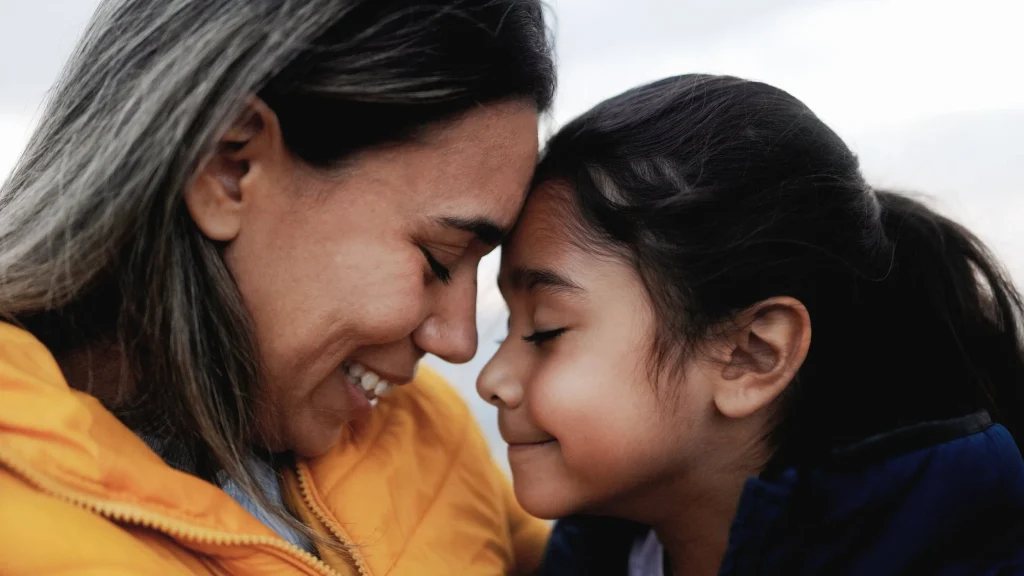
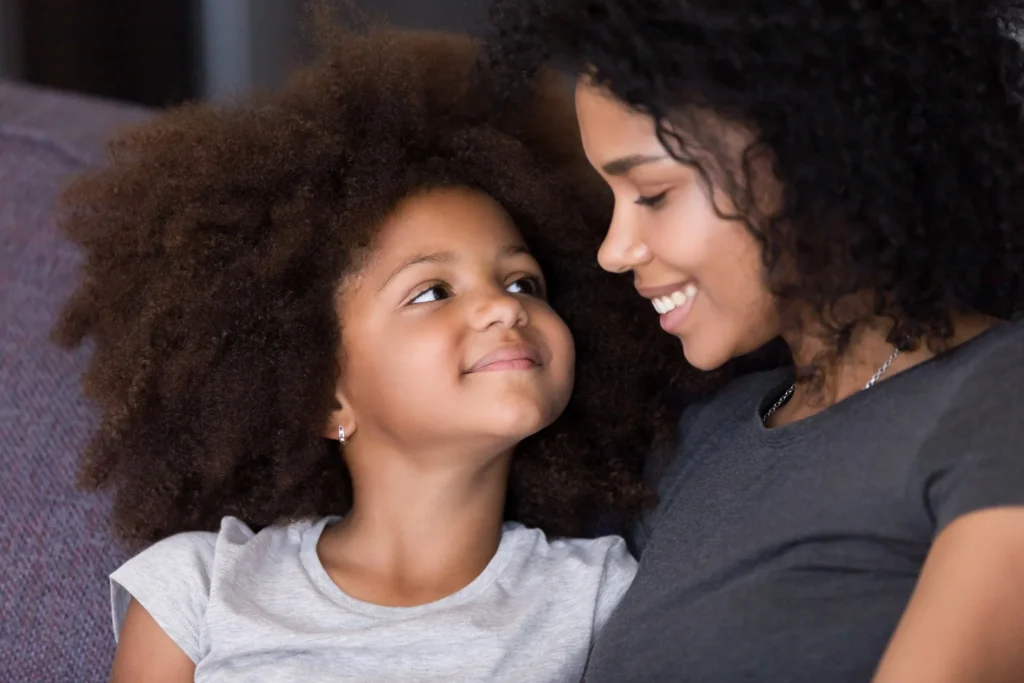
Mother embracing her daughter in a tender, comforting moment
 Original post by the Oregon Parenting Education Collaborative
Original post by the Oregon Parenting Education Collaborative

Our routines, relationships with other people, and perspectives on life all influence our wellbeing. When we share these parts of our lives with kids, we help them build resilience. 

Resilience is how we adapt and respond to the present moment. It affects how we cope with day-to-day life and moments of crisis. Fortunately, kids build these skills every day. Read on for ideas for how we as caretakers can support them. 

Help your child create positive connections with other people 

Secure relationships with adults help kids feel safe, understood, and cared for. These relationships also give kids multiple ways to seek help when they need it.  

You can help your child create relationships with family members, teachers, coaches, neighbors, and the parents of their friends. A strong support network makes your child more resilient and can help you find the support you need as well! 

Help your child practice gratitude

In challenging times and in joyful times, taking time to share what’s going right helps us keep a positive view on life. Practicing gratitude with your child can help prevent feelings of being overwhelmed. It may make you feel better as well! 

Mealtime is a great opportunity to model sharing what went well in your day. With the very young kids in my preschool classes, I would often smile and say, “I’m happy I got to laugh with you today,” or “I’m happy we saw birds in the park.” Kids understand that we are happy with them before they can say it back.  

Make space for wonder

Kids are natural explorers. Wherever they go, they search for new experiences. This is why toddlers love the question “why?” and why babies put everything in their mouths! 

When kids wonder about and explore the world around them, they practice mindfulness. We use mindfulness when we observe the present moment and accept it for what it is.  

Mindfulness is linked to lower stress, management of emotions, focus, and empathy. When kids have time and space to explore, they build these skills. 

Some ideas for supporting wonder and mindfulness for kids: 

  • Spend time outside 

  • Include slow, unrushed time in your family’s routine 

  • Play games like “I Spy…” 

Book nook:

  • Alphabreaths: The ABCs of Mindful Breathing by Christopher Willar and Daniel Rechtschaffen Illustrated by Holly Clifton-Brown 

  • What Are Your Words? By Katherine Locke Illustrated by Anne Passcher 

  • The Wonder You See By Joana Gaines 

  • The Going to Bed Book by Sandra Boynton 

Learn more about resilience: 

American Psychological Association

Raising Children Network

By Haley Bossé

Haley Bossé (they/them) is an Education Program Assistant for the Oregon Parenting Education Collaborative. They started their career as a preschool teacher and have had the pleasure of working with parents, children, and other educators in both schools and non-profit settings. Haley has three wonderful niblings and can often be found running around with them in the rain.

Learn more about the Oregon Parenting Education Collaborative and read their blog!

This blog post was originally published by the Oregon Parenting Education Collaborative (OPEC). We have OPEC’s permission to repost their content, and we’re grateful to share their valuable parenting resources with our community.

Free and Proud — Do You Know the Story?

It’s June, and that means the end of the school year, summer camps, and pool days with your little ones are in full swing. In previous blogs, I talked about skin care and hair maintenance for exactly these moments, however since June only comes once a year, I want to talk about two of its most significant occasions: Pride Month and Juneteenth.

This is an extraordinary month to celebrate inclusion, and I want to make sure you have the knowledge and language to educate those around you who may not. Your children will see you as a trusted ally for years to come, and you will feel more grounded and confident in your ability to understand what it means, and what it costs, to exist as a Black person in the United States.

By now, most people know that the first public Pride marches were held in the summer of 1970 — with Chicago actually leading the way on June 27th, one day before New York’s now-iconic Christopher Street Liberation Day March on June 28th. Both were held as the one-year anniversary of the Stonewall Uprising, a revolutionary act of resistance that lasted six days. If this is unfamiliar to you, I strongly encourage you to read about it. Two of its most prominent leaders were Marsha P. Johnson, a Black woman who described herself as a drag queen and transvestite, used she/her pronouns, and whose middle initial stood for “Pay it no mind,” her lifelong response to anyone who questioned her identity, and Sylvia Rivera, a Latine (the gender-neutral form preferred in many Latin American and Hispanic communities) woman who also described herself as a transvestite and is recognized today as a transgender pioneer. It is worth noting that the word “transgender” was not yet in common use during either of their lifetimes; they named and claimed their own identities on their own terms, which is itself a form of the freedom they were fighting for. Together, they founded STAR House: Street Transvestite Action Revolutionaries, a shelter for LGBTQ+ youth experiencing homelessness, with a deliberate focus on youth of color.

As we move through a month full of rainbow flags and celebration, we must also be intentional about what this history demands of us: Black and Latine queer people are still too often left behind, even within the very movements they helped build. When we talk about inclusion and equity, we must start with the Black experience — not only because Black Americans, across every community and identity, remain the most systemically denied group in this country, but because it was a Black woman and a Latine woman who first stood up and demanded the right to live out loud for a population that society had long misunderstood and cast aside. That is not a footnote, that is the foundation.

Juneteenth is both similar to Pride and entirely its own. That tension is worth sitting with. Black life in America exists in paradox: between both/and, never either/or. Both Pride and Juneteenth share a history of celebration born in the shadow of real and threatened violence, kept alive in private by communities who knew that joy itself was an act of resistance. That throughline matters. It is the same refusal to disappear.

Juneteenth takes its name from June 19th, 1865, when Union Army soldiers arrived in Texas to announce that more than 250,000 enslaved people were free by executive order. The painful truth is that the order had been given two and a half years earlier. The people of Texas were not told they were free until much later, and were never compensated for that

stolen time. While many sources cite Galveston as the origin of the celebration, historians point to smaller, rural communities in counties like Brazoria as the true birthplace. Juneteenth was celebrated privately, quietly, and often in secret, out of very real fear of violence from those who resented Black freedom. A few of the very first celebrations were started by a small group of freed men, one of those people are very dear to our family. My children’s great great great Grandfather Charles Brown.

As freedom always does, it grew. The celebration expanded from Galveston to Houston and across the state. Even so, Texas itself didn’t recognize Juneteenth as a state holiday until 1980. It didn’t begin to reach audiences outside Texas in any meaningful way until the early 2000s, and as recently as 2008, fewer than half of U.S. states officially recognized it.

This history matters deeply, for your child’s understanding of the legacy, resilience, and power of Black and Brown people who, against every conceivable odd, showed up, stood firm, and refused to disappear. These are not fairy tales. They are not ancient history. They are living, present, and urgently relevant. As the parent your child looks to first, how you hold this history; with honesty, and with pride in their revolutions is the first lesson they will carry.

There is no fear in empowerment. Knowing these stories,and sharing them,is one of the most important gifts you can give your child, whether they are surrounded by other Black children or navigating spaces where they are one of very few. These legacies are global, and they belong to your child. Keep them alive: put brown baby dolls in their hands, fill their shelves with brilliant Black poets and authors, ask their teachers whose voices are centered in the classroom. Do your own homework alongside them.

The work does not stop at your front door, and this is where many well-meaning white parents stall out. Your child will move through white spaces constantly: family reunions, school events, sports teams, neighborhood gatherings. In those spaces, they will sometimes be the only Black child in the room, and they will be watching you. They will notice whether you correct a relative who says something careless, or whether you go quiet. They will notice whether you advocate for them with their teacher or whether you accept a narrative about their behavior that you would question if it were applied to a white child. They will notice whether you treat their Blackness as something to be managed in certain company, or as something you carry with the same pride you are asking them to feel.

When a family member makes a comment rooted in ignorance, and they will, your child does not need you to start an argument. They need you to say, clearly and without performance, that you see it differently, and why. That correction, offered calmly and consistently, teaches your child two things at once: that their identity is worth defending, and that they do not have to shrink themselves to make white people comfortable. You are not just raising a child. You are raising a Black adult who will one day navigate these spaces without you.

This also means doing the internal work to recognize when your own discomfort becomes the center of a moment that should be about your child. When your child comes home hurt by something racial that happened at school, the first response cannot be your feelings about it. Their experience has to land first, be witnessed first, be validated first. Your processing comes later, in a conversation with another adult. That discipline, keeping your child’s emotional reality in the foreground, is one of the most specific and demanding forms of love this particular parenting journey asks of you.

None of this is meant to overwhelm. It is meant to orient. The same courage that Marsha P. Johnson brought to living out loud in a world that had no language for who she was, the same endurance that kept Juneteenth alive in small Texas communities for over a century — that spirit does not ask for perfection. It asks for presence, for honesty, and for the refusal to look away.

For Pride Month, start with Sylvia and Marsha Start a Revolution! by Joy Michael Ellison, illustrated by Teshika Silver. A picture book written and illustrated by queer and trans creators of color that tells the story of the very two women we discussed here, complete with a reading guide to help you keep the conversation going. For Juneteenth, read Juneteenth: A Children’s Story by Opal Lee. The grandmother of Juneteenth herself, aloud with your child, and pick up On Juneteenth by Annette Gordon-Reed for yourself. Gordon-Reed’s book is essential reading for any parent who wants to hold this history with the depth and honesty it deserves.

When you know this history yourself, you become your child’s first point of reference for pride not just Pride Month, but the quiet, daily pride of knowing who they come from, and what that lineage has survived, built, and refused to surrender.


Instilling a Love of Nature

Rows of red and yellow tulips blooming in a spring field
 By Megan McQueen. Photo by Rodrigo Rivas Aguilar.
By Megan McQueen. Photo by Rodrigo Rivas Aguilar.

We know our children will inherit environmental challenges, but raising them with cynicism and a dark mindset will not help them (or us) work toward meaningful solutions. For them to understand the urgency and the purpose behind the work, they must have a deep love and connection to nature.

We are not separate from nature – we are a part of it. As Robin Wall Kimmerer says, “You can’t have healthy human communities without having healthy land …and the land needs people to love it.” 

Create a Routine  

“Try to get outside together to play and explore three to four times per week. The more you do it, the easier it will be, and the more normal it will be to you and the kids,” suggests The Nature Conservancy’s caregiver’s guide to getting kids in nature, and nature into the hearts of kids.

Our calendars fill up fast, so take the decision-making (and arguing) out of it! If everyone knows that we play in the backyard after school or explore the woods on Saturday mornings, it becomes easier for everyone to expect it, and there is less chance of deciding not to go out.

The National Wildlife Federation has created a Green Hour—a time to spend outdoors consistently. They suggest activities to keep interest piqued, such as a fall bird bingo. 

Bundle Up  

As I hiked through a blustery, rainy morning, I wondered why I wasn’t miserable. Of course, the woods were beautiful, and the conversation with a friend was lovely, but it was in the high 40s and raining!

I started my hike with rain gear on, but between showers, I shed it all. I hiked in my waterproof boots, wool socks, and pants, a fleece zip-up, and a warm hat. When it began raining again, I didn’t feel the need to dig out my raincoat. I was warm!

Ensuring that you and your children have gear that will keep them warm and cozy, or cool and shady, is essential to our comfort and enjoyment. Not only that, but being comfortable makes it easier to go outside. It helps our mindset that the activity will be enjoyable.

Kari Leibowitz studied the winter mindset in Norway and discovered that “having a positive wintertime mindset was associated with greater life satisfaction, willingness to pursue the challenges that lead to personal growth, and positive emotions.” That alone motivates me to head outside and to take the time to bundle up my kids to explore the outdoors.  

Take an Awe Outing  

Cultivating a sense of wonder can help us become happier and kinder. Often, our children become awestruck out in nature, which can remind us to slow down and notice what they are experiencing. Sharing a moment can enhance the effects of beauty as well as connection with the people around you.

Taking an ‘awe walk‘ to intentionally notice what is around you is a simple idea that taps into our children’s natural curiosity. PBS Kids also suggests a five-senses walk that includes different tips and conversation prompts for various age groups.

While exploring close-to-home or new places, take time to learn the Indigenous names. Sites such as Native Land can help your education.  

Garden  

If you have a bit of outdoor space, your children might enjoy gardening! You can also cultivate houseplants if outdoor space is unavailable.

My kids loved caring for their own houseplants. Growing some of your own food or flowers can be a magical experience. Kids learn essential life skills, such as patience, navigating unexpected outcomes (like pests eating plants), failure (sometimes we do everything right, but things don’t grow), and working consistently to achieve growth.

The Farmer’s Almanac offers suggestions to keep kids engaged outdoors, such as building a bat house. Some kids find it fun to grow a themed garden, such as a salsa garden or a pizza garden.  

If children are given the opportunity to experience nature, even in simple ways, interaction and engagement follow quite naturally. Richard Louv

Resources 

Awe by Dachner Kelter 

Braiding Sweetgrass by Robin Wall Kimmerer (YA version and adult

Bud Finds Her Giftby Robin Wall Kimmerer (picture book) 

How to Winter by Kari Leibowitz 

Wanderlust by Rebecca Solnit 

By Megan McQueen.

Megan McQueen is a warmhearted teacher, coach, consultant, and writer. She grounds her work in empathetic education, imparting a strong sense of community and social skills to those with which she works. Megan prioritizes emotional learning and problem solving skills. When not at work, she is most likely playing with her husband, two children, and pup.

Learn more about the Oregon Parenting Education Collaborative and read their blog!

This blog post was originally published by the Oregon Parenting Education Collaborative (OPEC). We have permission from OPEC to repost their content, and we’re grateful to share their valuable parenting resources with our community.


Your Child Is Not a Zoo Animal

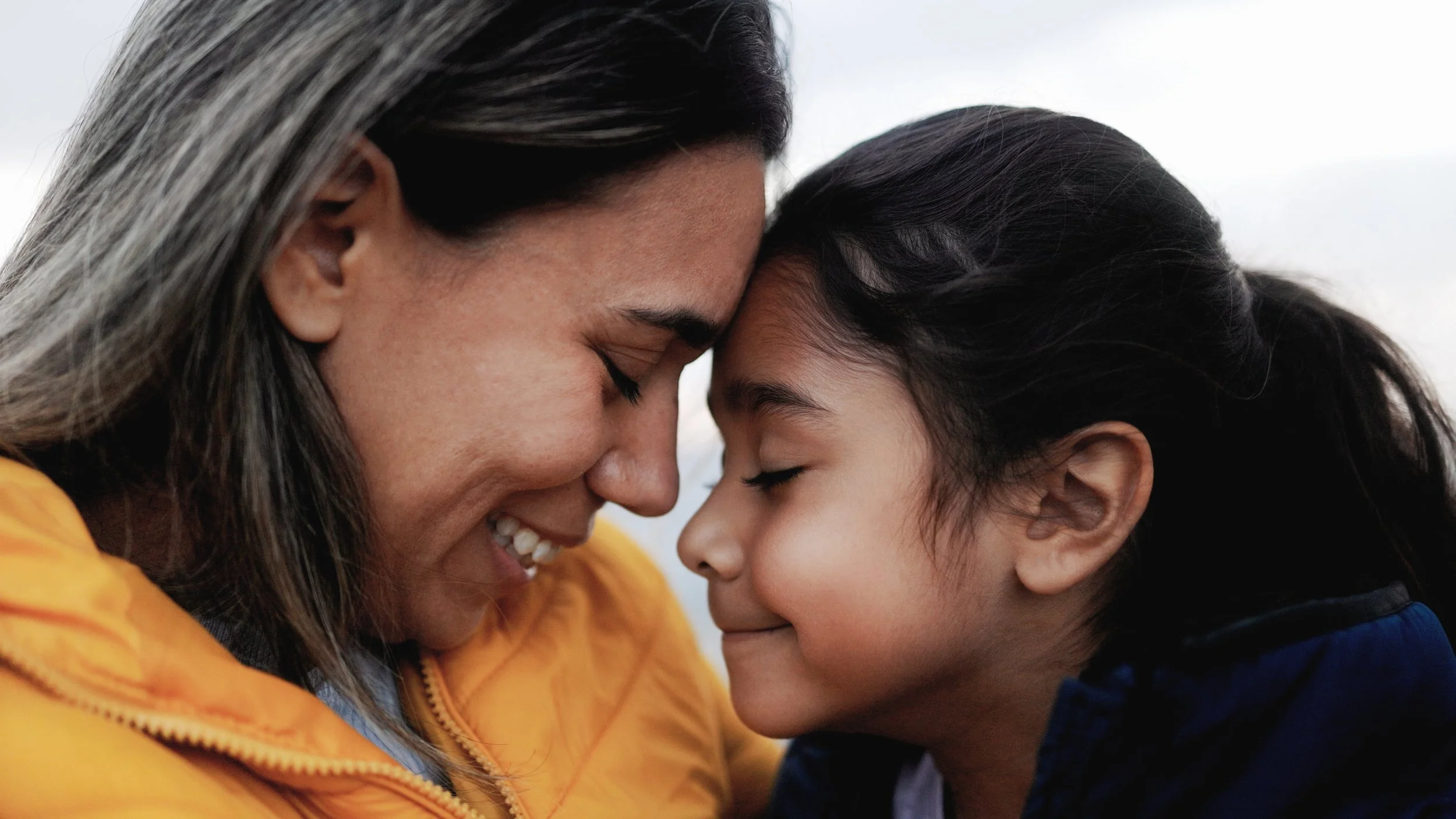
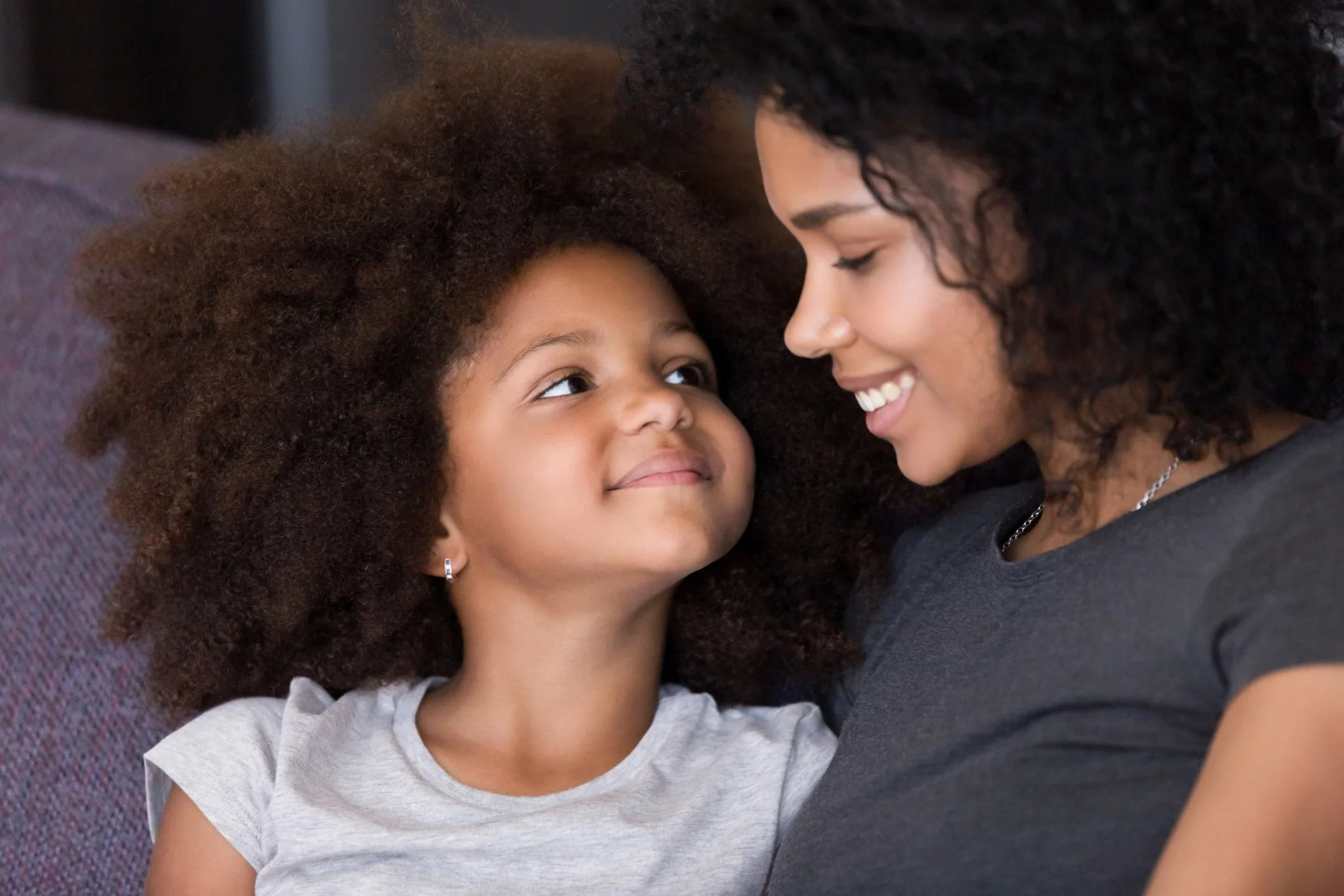
Mother and daughter sharing a close, smiling moment together

Directly, no one should ever touch your child’s hair without consent. While I’m speaking specifically about biracial children, particularly those with curly to kinky hair, the principle extends to every child. Bodily autonomy is not conditional on hair texture, race, or age. No child exists to satisfy the curiosity of another person, no matter how well-intentioned that person believes themselves to be.

Yet it happens constantly. A stranger reaches out, a relative leans in, and a well-meaning teacher, distant relative touches first and asks never. These moments are often among the first experiences of racism a biracial or Black child endures and they happen at the hands of the people who love them most. That is not a small thing, it’s a source of true identity conflict and one of the most dangerous harm is the kind dressed in warmth.

To understand why this matters so deeply, you need to understand where it comes from because this is not merely about manners. It is about centuries of dehumanization made physical.

There was a time when Black people were placed in what were called “human zoos” exhibited in Europe and the United States throughout the 19th and early 20th centuries as spectacles for white audiences. Their bodies, skin, and hair were placed on display as objects of fascination and otherness. Saartjie Baartman, known as the “Hottentot Venus,” was one of the most documented victims of this practice; paraded across Europe and studied after her death. She was not an anomaly. She was a part of a deeply disturbing pattern.

That kind of trauma does not simply end when the exhibition closes. It is carried forward in family stories, in cultural memory, in the body itself. Research in epigenetics increasingly supports what Black communities have long understood: that trauma can be inherited, encoded into the nervous system across generations. Your child does not need to have read a history book to carry this weight. They already may be coded with this trauma.

When you allow someone to reach out and touch your child’s hair uninvited or you laugh it off, or offer them up as a novel experience, you are re-enacting something much older than you realize. Your child feels it, even if they cannot name it.

People outside of Black culture are often puzzled by the significance placed on a child’s appearance particularly their hair and skin condition. Some parents, especially those who did not grow up in Black households, interpret this emphasis as vanity, or as an outdated preoccupation with looks they’d rather not pass on. I want to dismantle that assumption carefully, because the misunderstanding causes real harm.

“Presenting well” was once a phrase used to appraise enslaved Black people before they were sold. It was a term of commerce, a measure of a human being’s market value. After emancipation, Black communities reclaimed it. They transformed it into something defiant: a declaration that we take care of our own. Post-slavery Black families began to care for themselves and their children in ways that reflected their collective pride, strength, and resilience. Presentation became a reclamation, a way of saying: we know who we were before all of this, and we remember.

To “present well” became about more than looks. It became a signal of love, of belonging, of protection. When members of the Black community see a Black or biracial child who appears unkempt, particularly their hair or skin, what is activated is not judgment of the child, but grief. It reads as a severing from that thread of care and history. It is a pain that goes deeper than aesthetics.

This is not simple, It is absolutely layered, and living history.

Black hair, in all of its forms, tightly coiled, kinky, afro styled, deeply curly or dreaded, was weaponized by white colonial culture as a primary symbol of inferiority. The more “Black” your hair, the more ridicule you could expect. It was not accidental, it was codified systematically. Hair became a mechanism of racial hierarchy, used to shame, to exclude, and to rank human beings.

The Natural Hair Act, formal workplace protections, and the ongoing CROWN Act movement, legislation still not passed federally as of this writing, though adopted in many states (not all) exist precisely because Black people continue to face discrimination for wearing their hair in its natural state. Locs, afros, braids, and twists have been banned in schools and workplaces within living memory. Children have been sent home. Adults have lost jobs. For wearing their hair. Pause on that for a moment.

Wearing natural hair in America is still, for many Black people, an act that requires courage. Not because there is anything wrong with natural hair, there is not; because this country has spent centuries telling Black people otherwise, to wear hair naturally is a sometimes difficult decision of defiance. The decision to wear or not wear one’s hair naturally is deeply personal, often political, and always significant. It is not a neutral aesthetic choice the way it might be for someone outside this history.

That beauty demands respect. Not tolerance but open protection and respect.

If you are raising a Black or biracial child and you do not share their racial heritage, you have a specific responsibility. Your child’s hair is not decorative nor is it optional. It is a cultural tie, one they will one day need to understand and claim for themselves. It is one that right now communicates to the broader Black community whether or not they are in safe hands.

This is not about perfection but it is about intentionality. When you take time, care, and thought with your child’s hair, you are telling them: you are worth this effort. Your identity is worth learning. Your culture is something I honor, and hold safely.

The practical guidance is this: find a Black hair stylist who can advise you and build that relationship. For children under three, YouTube is a genuinely rich resource, there are entire communities of parents and stylists documenting this care with love. Once your child is in school, be prepared, because their hair will need regular attention and style changes, and they will begin to notice how it is treated by you, and by the world.

When you engage fully in this practice often what happens is, the time becomes warm memories. Hair days become bonding rituals. The creativity of Black hair, the braids, the protective styles, the oils and butters and the folklore of it all becomes something you share with your child, not just a task you perform for them.

Your child’s hair is an extension of their body. It is not a texture sample. It is not a conversation starter. It is not an invitation.

Curiosity is not an entitlement. “I’ve just never felt hair like this before” is not a reason. Kindness of intention does not override violation of body or that unforgettable impact. A child who is too young or too socialized to say “no” to an adult is not a child who has given consent. They are a child who has been made to comply.

When someone reaches toward your child’s head, your job is to step in before their hand arrives. Not after, don’t add a laugh and an apology on your child’s behalf. Before.

Your child is watching you. They are learning, in real time, whether their body belongs to them or to whoever finds it interesting.

They are not here for display. They are not a curiosity. They are not a zoo animal.

They are a child, and their crown is their own.

Talking With Your Children About Current US Events (2026)

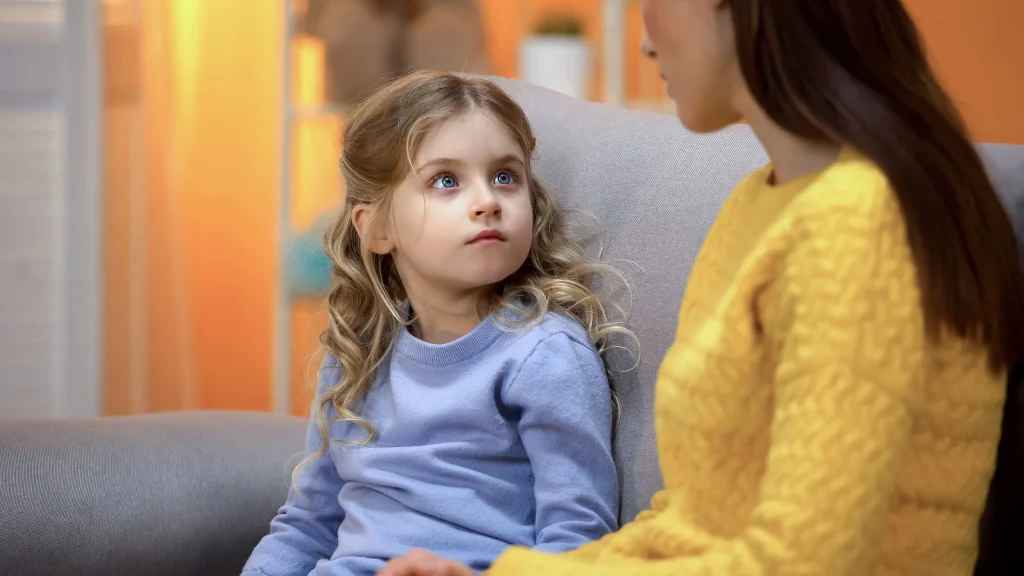
Worried-looking girl listening to an adult talk on the couch
 By  Megan McQueen.
By Megan McQueen.

The world is historically heavy right now. As adults, we struggle to make sense of events happening, and it is extremely challenging and heartbreaking to try to explain it to our children.

Of course, advice will differ depending on your children’s ages, race, immigration status, and where you live. This is not meant to be prescriptive, but a helpful place for you to center yourself and think about what is best for your family. Our hearts are with you. 

If you have a moment to pause before talking with your children; take it. Let yourself feel your feelings and acknowledge how difficult the situation is. It is hard to expose your children to scary news. It is hard to move through our normal lives right now.

When to Talk with your Kids 

You may decide not to share news with your child. We have to gauge our children’s capacity and age to navigate what they know. But if the information will directly impact their day-to-day life, or if they will find out the news from other sources (friends, social media, school), you may want to help support them through this. 

Now that my children are teenagers, I know they will hear about major news. I want to talk about it together. I want to help them gain perspective about events. I want to warn them about violent images they may come across, and tell them that they don’t need to watch it. 

Melinda Wenner Moyer reminds us of the value these talks have that you are here for them and will engage in challenging conversations. I’ve found that these conversations, though hard, help us connect.

If you can get through your acute emotions before talking, that will help you stay steady when you answer their questions or talk. Children will look to us as guides.

There are times when I’ve cried sharing news and it is okay for our children to see that. They can know that this is terrible and you are affected. It helps to be steady, to help them feel safe, especially if our children are younger. 

Share What Is Needed 

Asking our children what they have heard is a great starting place for us to gather information about what they know and have questions about. We can sit together and say, “Have you heard about what happened in Minnesota?” If they say yes, you can ask some follow up questions to find out how much they know. If they haven’t heard the news, you can share what you need to. 

Watch for clues about how they are feeling through the conversation and care for those feelings. If they are scared, offer reassurance that many, many people are helping right now. This may be a time to revisit or share a safety plan for your family if you are separated. 

You’ll have to decide what your child needs to hear at the moment. We want to offer safety – even if we cannot guarantee it right now. We still want to show them that the adults in their lives are thinking this through and creating plans. You are here for them. 

It might help to name all the people who are keeping them safe – relatives, teachers, neighbors, firefighters, etc. Dr. Eileen Kennedy-Moore suggests drawing these people to give your child a sense of the bubble of safety around them. 

If you fear your family or child has a strong likelihood of dealing with ICE, you may need to talk through what to do. What words can they say or not say? You might tell them not to try to run away, but to say, “I am a citizen.”

It may be helpful for your child to memorize a guardian’s phone number and an emergency contact’s number. Be sure to keep that information updated at their school or day care as well. You might consider putting a card with emergency contact information in their backpack.

Action Lessens Anxiety 

Ask your child what they need to cope, if they are capable of articulating this. These conversations can help build resilience. Dr. Shauna Tominey suggests sharing how you manage your feelings and asking, “What do you do when you feel sad or scared?” 

If you or your child is feeling anxious, action steps may be helpful. Maybe you can attend a peaceful protest, donate money, write letters or make phone calls. Young children can make pictures or help bake for local organizations or neighbors to bring people some cheer.

Maybe your family is staying inside your home. Can you connect with loved ones through a video chat? Can you make some cheerful decorations for your home? Can you share images of the countless people trying to help? 

As Martin Luther King, Jr. said, “If you can’t fly, then run. If you can’t run, then walk. If you can’t walk, then crawl. But whatever you do, you have to keep moving forward.”

We are holding tight to our communities to get through this difficult time. We hold you in our hearts as well and hope you feel safe soon. 

Picture books for everyone to read

The Big Umbrella by Amy June Bates (Spanish version)

Change Sings by Amanda Gorman

I Am Every Good Thing by Derrick Barnes

I Am We by Susan Verde

The Home We Make by Maham Khwaja

Maybe Something Beautiful by Isabel Campoy (Spanish version)

Saturday by Oge Mora

Will it Be Okay? By Crescent Dragonwagon

Additional resources for families impacted by ICE activities can be found here.

By Megan McQueen.

Megan McQueen is a warmhearted teacher, coach, consultant, and writer. She grounds her work in empathetic education, imparting a strong sense of community and social skills to those with which she works. Megan prioritizes emotional learning and problem solving skills. When not at work, she is most likely playing with her husband, two children, and pup.

Learn more about the Oregon Parenting Education Collaborative and read our blog!

This blog post was originally published by the Oregon Parenting Education Collaborative (OPEC). We have permission from OPEC to repost their content, and we’re grateful to share their valuable parenting resources with our community.

Sacred Tresses: Raising a Black Child Means Caring for Their Crown

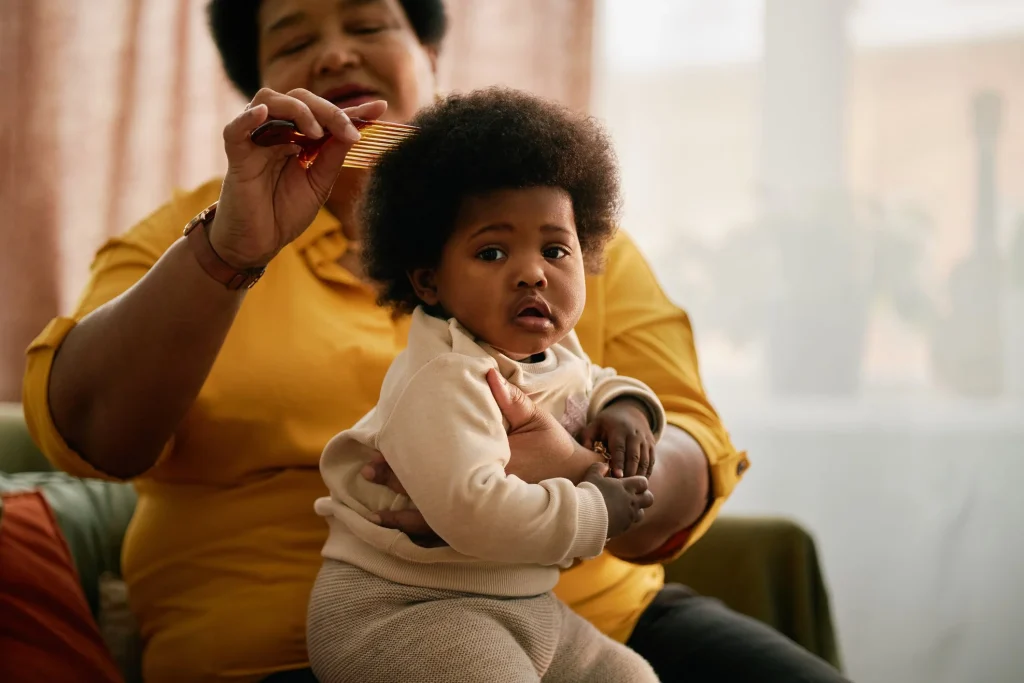
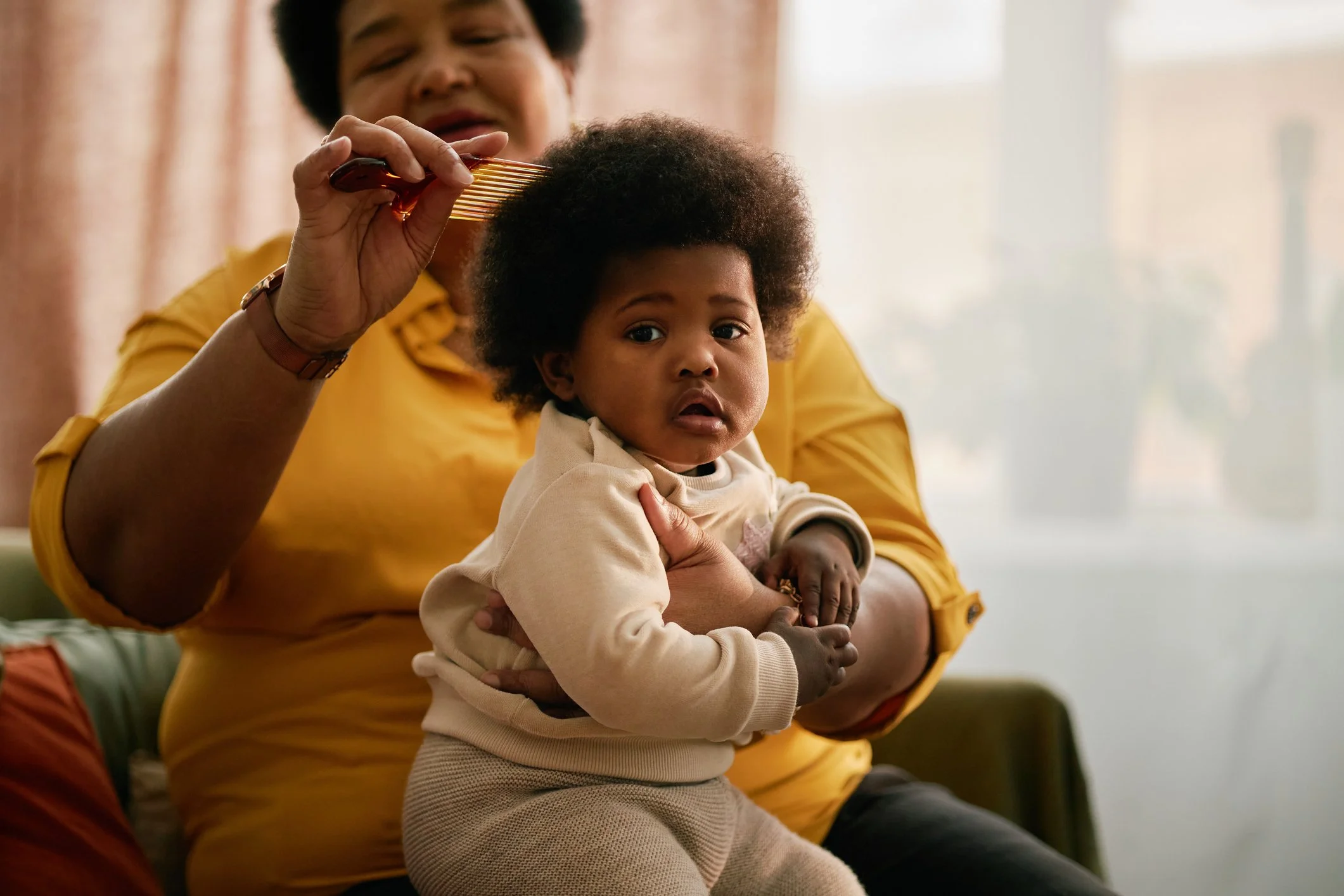
Woman carefully styling a baby's curly hair at home
 By Ayisha Elliott
By Ayisha Elliott

Summer is here, and with it comes a question that lands in my inbox, in community groups, and in quiet, honest conversations more than almost any other: What do I do with my child’s hair?

If you are not Black and you are raising a Black child, this question is not small nor is it cosmetic. It is cultural, relational, and deeply tied to how your child will move through the world and understand themselves. I want to help you get it right not because I’m judging where you are, but because I know where this can take you both.

I want to be clear about who I am before I offer guidance. I am not a hairstylist. I am a Black woman with a formidable amount of hair. This hair I have twisted, cornrowed, and braided myself, extensions included. I have maintained a full set of locs, worn a voluminous afro, and had relaxed hair. I have two daughters, 8 nieces, 1 grand daughter and at least a few cousins, whom I have been an active, trusted presence in the care of all of their hair. I offer this not to impress but to establish: this isn’t theory. This is lived knowledge.

In Black culture, hair is not simply an aesthetic choice. It is a ritual, a legacy, and a living symbol of identity. The condition of a Black child’s hair communicates something to the world ,and to the child, about whether they are seen, loved, and cared for.

I have heard too many stories of White families with Black children being approached sometimes harshly, sometimes directly with the comment: do your child’s hair. I understand the defensiveness that follows. I understand the embarrassment. I also understand why those reactions happen and what they’re pointing to.

This guide is not about shame. It is about equipping you with what you need, because the goal isn’t perfect hair, it’s a child who grows up knowing their crown is worthy of attention, care, and pride.

One of the most important things I can tell you has nothing to do with products or technique. It has to do with habit.Introduce hair manipulation early. A daily or near-daily routine even just a gentle brush, a little moisture, a few minutes of intentional contact teaches your child, from infancy, that having their hair touched is normal, expected and safe. This is what I mean when I say training, and I know that word can feel strange to parents who don’t come from a hair-ritual tradition. Stick with me here.

A toddler who has never had a consistent hair routine will resist it, they all do initially, and rightfully so,it feels foreign to them. A child who has grown up with it will sit still, will know what to expect, and will eventually take pride in it themselves. You are not just detangling hair. You are building trust, routine, and the earliest foundations of self-care.

Start gentle manipulation around six months, soft brushing, directing their hair. Whenever there is enough hair to work with you can start with loose little braids in small sections. You are not going for a perfect style. You are going for familiarity.

Washing daily is not necessary for most Black hair and in fact, over-washing can strip essential moisture. That said, life with babies means food, milk, and mystery substances end up everywhere, so use your judgment and wash as needed. Sometimes just a warm water rinse will work in that instance. What matters more than frequency is that washing is part of a predictable routine. When it does happen, make it gentle and intentional.

On moisture: Before you style, always wet the hair. A simple spray bottle with warm water and a leave-in conditioner mixed together is ideal for young children — it avoids unnecessary chemicals while providing the slip needed to detangle. Get the hair genuinely wet. Avoid gels, use natural oils instead.

On detangling: Always brush from the bottom up. Start at the ends and work your way toward the roots. Take your time. Do not rush. Do not pull.

On tension: This cannot be said strongly enough never pull tight. Not for a ponytail, not for braids, not for any style. High tension causes real damage to your child’s scalp and hair follicles and hairline, and it is never worth it. Messy buns, cared for “naturals” (afros), loose braids, and soft styles are completely appropriate, and beautiful, especially while the hair is still establishing itself. When you are beginning to practice braiding, try working without a rubber band to anchor the sections. Focus on learning the form and the parting pattern first. Clean, purposeful, and gentle is always the goal. You can anchor later, but still avoid pulling.

For tutorials on braiding, parting, and adding adornments like beads, YouTube is genuinely one of the best resources available. There is an entire community of people who have documented this knowledge generously, I’d definitely use it.

Yes and no. Curl pattern matters for styling decisions and for understanding how much tension or manipulation a style can handle. Tighter coils that tangle easily will need more moisture and more careful detangling; the spray bottle method above is especially important here.

What matters even more than curl pattern is hair porosity — how well your child’s hair absorbs and retains moisture. If you can access a specialist in Black hair, ask about this. The difference between a light oil and a heavy oil, and knowing which one suits your child’s hair, is more meaningful than most people realize. Side note: Moisture is equally important for short cuts (fades) as well.

I hear this often from parents who are not Black: that they are letting their child’s hair grow “free form.” I want to sit with this for a moment, because it deserves a careful and honest response. A free form choice — intentionally cultivating natural, unmanipulated growth — is a valid and beautiful hair journey. I know this personally. My afro is healthy, voluminous, and deeply cared for. The key word is cared for.

Free form is not the same as untouched. It requires its own moisture routine, its own attention, its own relationship with the hair. And more importantly: it is a choice that should belong to the person whose hair it is. A young child cannot make an informed choice about their hair identity. What they need, in the meantime, is to have their hair tended to with consistency and love so that when they are old enough to make that choice themselves, they have a foundation of care rather than a history of neglect.

If your child resists having their hair touched, that is information about the routine, not a sign to abandon it. All kiddos cry being held in place. It’s not always about them getting their hair brushed more than it is having to sit still to do it. Meet them with patience, shorter sessions, and gentleness. Resistance is normal. It does not mean stop.

Finding a Black hairstylist in Eugene, or the PNW more broadly, is genuinely difficult and I want to acknowledge that without letting it become an excuse. I know personally that there are non-Black stylists in Eugene who are highly qualified and experienced with Black hair textures. A knowledgeable, attentive stylist who respects the hair and culture tied to it is far better than the nearest available appointment with someone who does not.

For the deeper cultural connection that Black hair care carries, the community, the conversation, the connection, a Black stylist, if you can access one, offers something irreplaceable. A Black therapist, Black teachers, Black mentors: these relationships matter to your child’s sense of belonging and self. Do what you can with what you have, and keep looking for what works best.

Everything I have said about consistency and intentionality in hair care applies directly to skin care. This is a daily practice, and it is not optional.

Lotion and I mean real, substantive lotion after every bath, after every swim, morning and evening. The thicker the formula, the better. Look for shea butter in the first three ingredients. It is deeply nourishing for melanated skin and has been a cornerstone of Black skin care for generations.

Yes, sunscreen. Every summer, every day of real sun exposure no matter how deeply melanated your child is. Darker skin tones can and do sustain UV damage. This is not up for debate.

In winter, the routine intensifies rather than relaxes. Cold air and indoor heat are relentless in stripping moisture from skin. Keep the lotion routine consistent year-round.

The “moisturized” look — that glow, that richness, that visible vitality is more than aesthetics. It is a cultural signal that says: this child is loved and tended to. It is a grounding piece of Black identity and self-regard that your child will absorb and carry forward. Build that into the routine now, while they are small, and it becomes part of who they are.

You may not get this perfect immediately. That is fine. What matters is that you are taking it seriously, that you are learning, and that your child can feel the intention behind your hands when you touch their hair and care for their skin.

Their crown is sacred. Treat it that way and let that be something they know without ever having to be told.

Have questions, want product recommendations, or looking for Eugene-area resources? Reach out — I’m happy to point you in the right direction.

Supporting Pre-Writing Skills for Little Hands

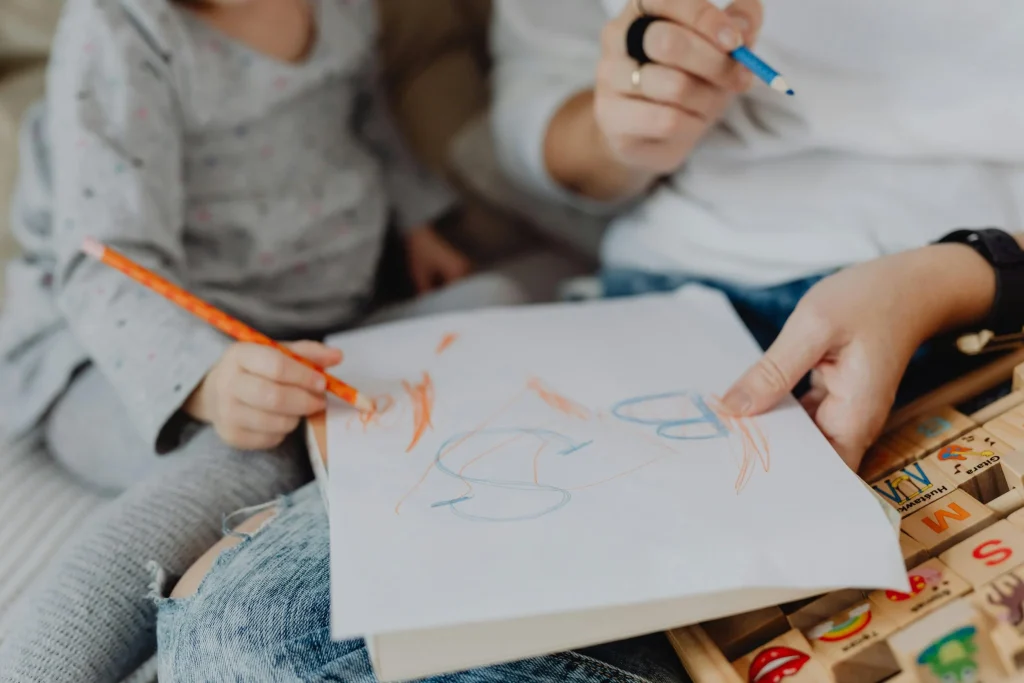
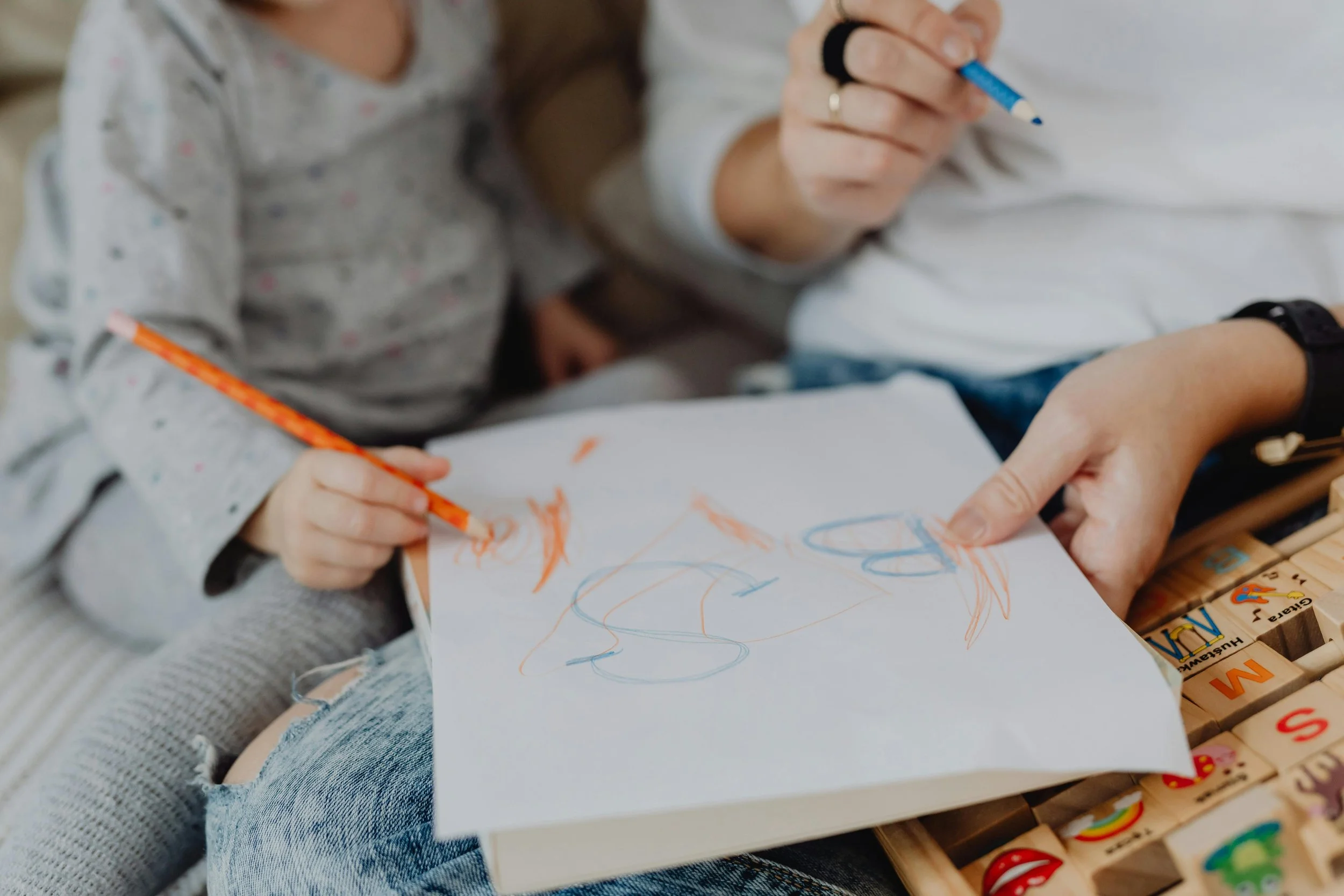
Child drawing on paper while an adult gently guides their hand
 By Aoife Rose Magee
By Aoife Rose Magee

‍When I was a school-aged child, I can remember asking my mother to support me as I learned cursive writing. I wanted to learn because I loved pretty writing. As an amateur artist, I still enjoy creating artful lettering and practicing simple calligraphy with colorful inks.

What I didn’t fully appreciate as a young child was how important active play experiences would be to help me build the skills I would later need to write. There is a long progression to writing that starts with mark-making and progresses as they watch adults make purposeful shapes. Usually, we see random scribbling beginning when children are a year and a half to two years old. After that, toddlers may imitate vertical and horizontal lines and beginning circles that you show them how to draw. By preschool, children may draw lines and circles on their own and start to imitate a cross shape, squares, and diagonal lines. Around school age, young children may be able to draw a “X” shapes and triangles. From there, they will likely be able to form letters and show a preference for writing with their left or right hand. ‍

Each of these steps stem from skills that are built earlier in life. For very young children, pre-writing skills can include strengthening their hands, building the upper body strength to sit upright, learning to reach across their body, and developing good hand-eye coordination. ‍

Here are five ways to support pre-writing at home: ‍

1. Build Fine Motor Skills and Hand Strength. Pre-writing skills require strong finger and hand muscles, as well as hand-eye coordination.

  • Kneading, rolling, and squeezing play dough and clay strengthens fingers and wrists.‍ ‍

  • Have children use tweezers, tongs, or clothespins to move items like cotton balls or beads.

  • Use beads, pasta, or cereal to practice hand-eye coordination and fine motor control through threading or lacing. ‍

  • Encourage cutting out shapes or pictures with scissors from magazines, which improves hand strength and coordination.

2. Provide Posture and Tool Support. Make sure that children can sit upright with stability, and use the writing implements they are given properly.‍ ‍

  • Ensure your child has a stable, comfortable chair where their feet can touch the floor, with their back straight.

  • Using smaller, broken crayons forces children to use a proper “tripod” grip with their fingers rather than their whole hand.

  • Tape paper to the wall or use an easel/chalkboard. Writing on a vertical surface strengthens shoulders and wrists.

3. Promote Mark-Making and Drawing. Encourage early “writing,” which often starts as scribbling and drawing. 

  • Let children draw in sand, shaving cream, salt, or flour trays to practice making lines and shapes during sensory play.

  • Allow children to “paint” fences with water or draw with sidewalk chalk, which builds muscle memory for writing letters.

  • Provide thick markers, chunky crayons, and colored pencils to encourage different grips and mark-making.

  • Use tracing workbooks, dot-to-dot activities, or trace over shapes made with glue to develop control. 

4. Encourage Early Letter Recognition. Adults can support children to recognize the alphabet and start to practice making letters.

  • Focus on helping them learn to write the letters in their own name. Start with the first letter of their name and have them find it in their environment.

  • Encourage making letters out of playdough, pipe cleaners, or tracing them in sand for a multisensory experience, and then reading them back.

  • Use alphabet magnets, games, or point out letters in the environment to make learning letters and other shapes fun.

  • Label objects around the house to increase letter recognition.

5. Encourage Daily “Writing” and Literacy. Show children that writing has a purpose and is used in everyday life.

  • Create an “Office” by setting up a dedicated space with paper, envelopes, notebooks, and writing utensils.‍ ‍

  • Have children help write shopping lists, fill out forms, or write birthday cards. ‍

  • Buy a special notebook for your child to draw or “write” in daily.

  • Invite your child to dictate stories, which you can write down to help them understand the connection between speech and writing.

At a time when many of us adults type on the computer or use screens for daily tasks, try to show children examples of when physical writing has been helpful in your life, such as journaling, making a to-do list, or leaving a message for a family member. Make sure and write in front of them. When your child watches you write and has access to their own writing and art materials, they will feel encouraged to practice writing, too.

‍If you have any concerns about the development of your child, there are resources to support your family. For children in Lane County, Early Childhood CARES or Connect the Dots may be able to help with early intervention and pediatric therapy. Kid Sense offers a lot of great information in their Writing Readiness (Pre-Writing Skills) webpage that covers pre-writing skills by age, potential challenges, and when to seek support from a local occupational therapist or health care provider.

Resources:

‍ Here are more fun ideas for supporting pre-writing skills:

28 Pre-Writing Activities for Preschoolers

7 Fun Pre-Writing Activities for Preschoolers

Preschool Pre-Writing Skills

5 Creative Activities That Help Develop Pre-Writing Skills

Moving Beyond Fear to Empowerment

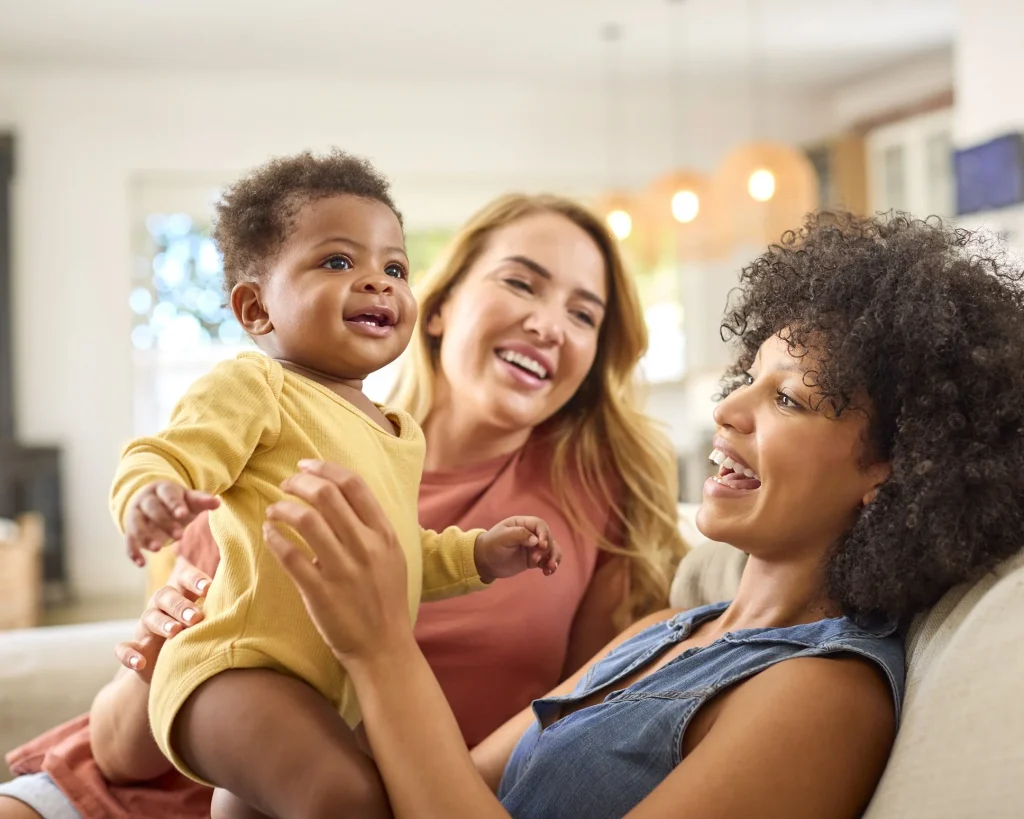
Family embracing and smiling together on the couch at home
 By Ayisha Elliott
By Ayisha Elliott

I want to start with acknowledging that Identity development involves many factors, adoption, foster care, multiracial identity, class, disability, and more. This piece and most of my pieces focus specifically on navigating race, recognizing there may be additional layers to your family’s experience. It’s important to recognize the lens in which we navigate information.

As a parent raising Black or Brown children while you yourself are not Black or Brown, you’re navigating something that requires more than love although love is essential. What also matters is understanding this truth: the USA was designed to ensure Black and Brown people live with fear that limits their potential. When you are Black or Brown, this reality is evident from day one. The difference lies in how we, as a community approach it.

Healthy Black communities understand that constant messages suggesting inferiority are not coming from within us, and they are not relevant to our story. We teach and live empowerment, not fear. We are not afraid of being Black. Being Black is not worrisome or scary. Which I’m sure seems like a “no-brainer”, however in reality, what is worrisome is how cultural practices of white supremacy reacts to and treats Black people. Healthy Black people do not center white people’s fear.

This is the critical distinction you must grasp: Fear of the Black experience is taught through ignorance and isolation, really just knowing the Black community only through rumors, TV, music, and/or distant perspectives. If you’ve been conditioned to fear what your child is or may become, how do you raise them to be unafraid of themselves? The deep truth is you cannot teach your child to be unafraid of themselves if you haven’t examined your own relationship with Blackness.

When you have a child developing an identity the world will work to demonize, your understanding of how Black people navigate and succeed in a discriminatory world directly shapes what and how you teach them.

Ways in which Fear shows up unconsciously could look like and is not limited to:

  • Choosing hairstyles that are “easier to manage” which turn out to be less “ethnic”

  • Skipping skincare steps to avoid attention, even though your child’s skin needs shea butter

  • Asking your “talkative” toddler or “highly energetic” middle-schooler to quiet down, to be less noticeable, to fit standards designed to make them smaller

Black and Brown children are labeled “loud” or “overly energetic” instead of engaged and excited. Your job is to know the difference and protect your child’s full expression, not police it. Policing expression that looks new to you can be a total shut down of what they are naturally expressing. Proceed with curiosity and learn who they are, without any constraint.

Your babysitter, your child’s school, even your own parents may not realize they’re damaging your child’s self-esteem by treating what is normal as something needing correction. Fear can sometimes come in at this point as protection, be careful in the reason why.

The difficulty of this work is not a reason to shy away. We have all been socialized to believe people are better or worse based on skin color. You must locate where your internalized bias lies dormant, bring it into light, and deconstruct it.

Your child needs you to acknowledge Black excellence without framing it as “success despite discrimination” as if the benchmark is proving something to white supremacy. 2. Recognize Black struggle as the ability to rise above systemic harm, not as evidence of deficiency- this can be demonstrated in your narrative. 3. Teach them what is possible, not what is safe according to white comfort. 4.Discern truly safe spaces and people, not based on assimilation, but on who affirms your child’s full humanity.

You cannot shield your child from a world that will judge them by their skin. That is painful reality. But you do not have to accept the limits that world imposes. What you must do is ensure you are not unconsciously reinforcing those limits.

Here are three ways to get started:

  1. Examine what you absorbed What did you learn about Black people growing up? Where did you learn it? What narratives about Black hair, Black speech, Black expressiveness do you carry unquestioned?

  2. Build authentic relationships in Black community If you’re raising your child isolated from Black people and culture, you’re setting them up for harm. This isn’t about Tokenizing, it’s about your child needing mirrors and your needing people who can see your blind spots. Find Black-centered spaces: bookstores, cultural events, parenting groups, churches. Show up consistently, not as a spectator, get involved in a way you and your child are joining a community, and let them shine, while you support.

  3. Learn from Black parents Read books by Black authors on Black child development (not white authors writing about Black children). Understand how Black parents teach empowerment in the face of systemic harm. This isn’t about copy and paste. This is perspective. This is a check in on your lens, this is a temperature check, and an opportunity to grow.

Prepare your child to navigate harm without internalizing it. They will encounter people and systems that don’t recognize their humanity. Your job is to make sure they know deeply, without question, that the problem is not them.

By age two, your child will notice race. By age four, they’ll ask why their skin is different from yours. By age 6, they’ll encounter their first racist comment. By age twelve, they’ll be navigating how the world sees them versus who they know themselves to be. At every stage, they need you awake and honest.

This work is ongoing. It requires you to keep examining where you might unconsciously teach your child to shrink. But this is the work that love requires when raising a Black or Brown child in a world not designed for their thriving.

So ask yourself: What is one belief about Black people you absorbed without questioning?

Start there.

Happy Parents, Happy Kids!

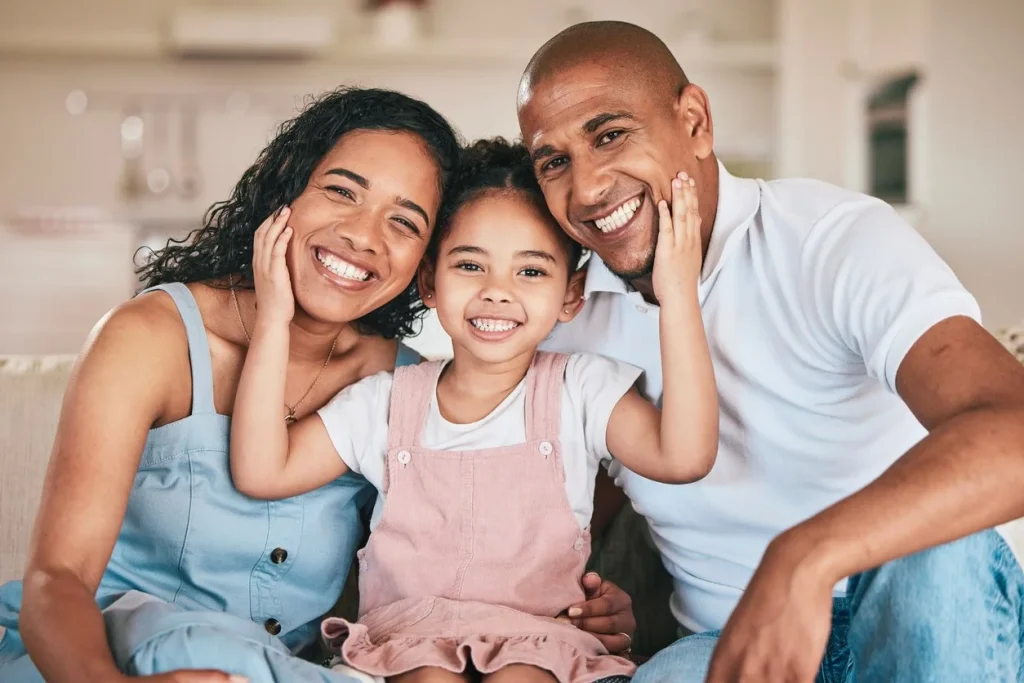
Two smiling parents with their daughter posing together indoors
 By Aoife Rose Magee
By Aoife Rose Magee

Happy Parents, Happy Kids!

Having young children can be a joyous time for families, but it can also be a stressful time for the adult caregivers. Too much stress on a relationship can create discord and disconnection at a time when collaborating and supporting each other matters most.

Children learn a lot about relationship dynamics from their families. Modeling good communication, problem-solving and conflict resolution each day impacts your child’s well-being and often sets them up for their own future relationships.

In particular, children can benefit from positive co-parenting efforts that offer consistency and predictability whether couples remain together or experience a separation. Children cope more effectively when they understand what is happening and when information is shared on a developmentally appropriate level, particularly if there is a change in family structure.

Remember that love takes many forms, whether it’s the way we demonstrate our love for others or experience it when it is sown to us. Commonly, we summarize these different forms of love using the framework of the five Love Languages.

The five love languages are:

  • Acts of service,

  • Receiving gifts,

  • Quality time,

  • Words of affirmation,

  • Physical touch.

Although many of us enjoy any number of these languages, many people have a preferred way they like to experience love. Some people like to have their partner help them around the house, running arrands, or other acts of service. Others may especially value quality time together – lots of time spent hanging out our actively participating in activities together – or, the poets among us may reach for words of affirmation. Knowing about each other’s Love Language in a partnership can help strengthen the bond between you.

Date nights are designated opportunities for partners to spend time together apart from the children. These can be a dinner out, visiting a winery, taking a walk or stargazing, signing up for a class together, or setting up a game night. Whether playful or romantic, investing in a strong connection and spending time together is the key.

Often, those of us in partnerships may use different love languages. However love is demonstrated in your home, it’s important to show appreciate. Appreciating your partner involves intentionally recognizing and valuing your partner’s efforts, which often leads to increased trust, deeper emotional connection, and improved collaboration. A simple thank you or making more of a gesture that demonstrates gratitude goes a long way. Showing appreciation is good for you, good for your partner, and a great thing to model for your children, who are often looking to you for signs of how healthy relationships work.

It’s not just about partnerships. Self-love and self-compassion are important for parents, too. Practicing self-love and compassion involves treating yourself with the same kindness, understanding, and care you would offer a child or dear friend. Key practices include being mindful of your emotions, embracing your imperfections (we all have them!), celebrating small wins or accomplishments, setting healthy boundaries, using positive self-talk, or cultivating self-care habits like journaling, enjoying a cup of tea, or walking outside. If the tradition of enjoying bouquets of cut flowers, lighting candles, or eating yummy chocolates appeals to you, these are things that you can give yourself all year round.

They say that happiness is an inside job. Not only does self-love contribute to personal well-being, but it also makes us better equipped to be in healthy and happy relationships with others.

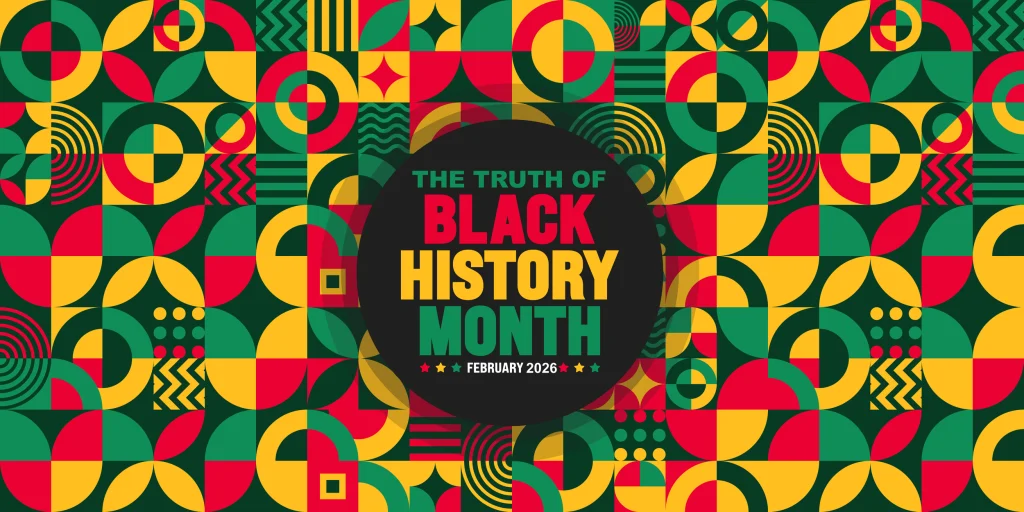
The Truth of Black History Month

 By Ayisha Elliott
By Ayisha Elliott

What does Black History Month mean to you?

If you said “the shortest month,” we need to talk. If you said “a celebration to show us about Black people,” we need to talk. Because both of those answers accept lies as truth. In 2026, as we watch the systematic dismantling of truth in education, book bans, attacks on teaching Black history, the weaponization of the word “woke” against truth-telling and collective awareness, it matters more than ever that we get this right.

The month is, of course, a celebration, but it was first a week of encouragement to celebrate Black achievement in a time when Black achievement was not widely accepted. It’s crucial that we know the truth of this month with accuracy, not with watered-down half-truths born from the unfortunate narrative that Black history is not American history.

The story begins in Chicago during the summer of 1915. Carter G. Woodson, an alumnus of the University of Chicago, traveled from Washington, D.C. to participate in a national celebration of the fiftieth anniversary of emancipation. Thousands of African Americans traveled from across the country to see exhibits highlighting the progress their people had made since the destruction of slavery. Awarded a doctorate from Harvard three years earlier, Woodson joined with a Black history display. Despite being held at the Coliseum, an overflow crowd of six to twelve thousand waited outside for their turn to view the exhibits.

Recognizing having earned his PhD from Harvard, Woodson understood what was at stake: a community’s relationship to its own excellence. Inspired by the celebration, he decided to form an organization to promote the scientific study of Black life and history. On September 9th, Woodson met at the Wabash YMCA with A. L. Jackson and three others and formed the Association for the Study of Negro Life and History (ASNLH).

He established The Journal of Negro History in 1916, hoping others would popularize the findings. As early as 1920, Woodson urged Black civic organizations to promote the achievements researchers were uncovering. He urged his Omega Psi Phi fraternity brothers to take up the work. In 1924, they created Negro History and Literature Week, renamed Negro Achievement Week. But Woodson desired greater impact. As he told Hampton Institute students, “We are going back to that beautiful history and it is going to inspire us to greater achievements.”

Black History week was for the growth and encouragement of a community to resist settling into mediocrity. It was internal cultural work, Black people creating the conditions for our own remembering, our own inspiration, our own refusal to accept less than our full humanity. In 1925, Woodson decided the Association had to shoulder the responsibility of both creating and popularizing knowledge about the Black past. He sent out a press release announcing Negro History Week in February 1926.

Woodson chose February for reasons of tradition and strategy. He selected it to encompass the birthdays of Abraham Lincoln and Frederick Douglass, the 12th and the 14th respectively. Since Lincoln’s assassination in 1865, the Black community had been celebrating the fallen President’s birthday. The narrative that Black people were given the shortest month of the year due to disrespect is simply untrue. This myth diminishes the intentional, strategic brilliance of Woodson’s choice. It replaces Black agency with Black victimhood. It erases the fact that Black people chose February, claimed it, built something powerful within it. Woodson didn’t passively accept what he was given, he strategically chose. This distinction between passive receipt and active creation is a critical difference in narrative of Black identity in the United States. I will add that it was 50 years later that this week was granted the entire month of February by President Ford.

In 2026, when accurate Black history is being banned from classrooms, when DEI initiatives are being rolled back, when the structures that allowed truth-telling are being systematically dismantled, knowing the real story of Black History Month is an act of resistance. It’s proof that we have always had to create the conditions for our own remembering. It’s proof that erasure has always been the project, and reclamation has always been our response.

When we accept watered-down stories like February was an insult rather than a strategic choice, that this month is about what was given to us rather than what we created for ourselves, as if we accept a diminished version of ourselves. That would indicate that we settled into the very mediocrity Woodson fought against.

Black History Month was not designed for white learning. It was internal cultural work that others are invited to witness but not center themselves in. It was about a community saying: we will not let our children grow up believing we have no history of brilliance, no tradition of excellence, no legacy worth celebrating. We will research it, document it, teach it, and celebrate it ourselves. As parents who are not Black, this is something to protect, to champion, to insist on.

With this celebration, make sure it is a celebration true to its nature, its story, its legacy. Share that Carter G. Woodson didn’t wait for permission. Share that Black communities organized themselves to reclaim and celebrate their own history when it was being systematically erased. Share that February was claimed with intention, not assigned as an afterthought. Share that this month was created to inspire us to resist mediocrity and reach for the pursuit of excellence is our birthright. It is a testament to the refusal to be forgotten, the insistence on being known truthfully, and the understanding that a people who know their history refuse to settle for anything less than full potential.