
Health & Development
Supporting Resilience Every Day
Our routines, relationships with other people, and perspectives on life all influence our wellbeing. When we share these parts of our lives with kids,…

Health & Development
Happy Parents, Happy Kids!
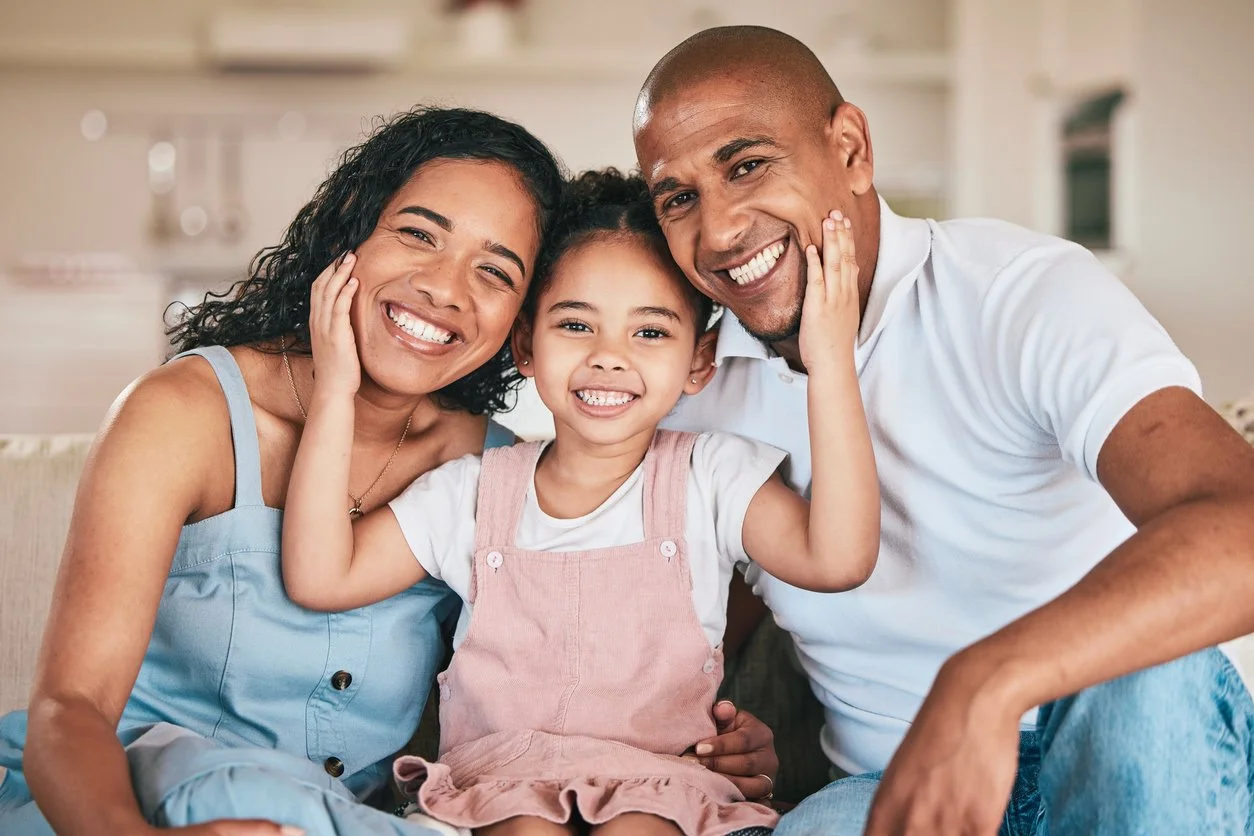
Having young children can be a joyous time for families, but it can also be a stressful time for the adult caregivers. Too much stress on a relationship can create discord and disconnection at a time when collaborating and supporting each other matters most.
Children learn a lot about relationship dynamics from their families. Modeling good communication, problem-solving and conflict resolution each day impacts your child’s well-being and often sets them up for their own future relationships.
In particular, children can benefit from positive co-parenting efforts that offer consistency and predictability whether couples remain together or experience a separation. Children cope more effectively when they understand what is happening and when information is shared on a developmentally appropriate level, particularly if there is a change in family structure.
Remember that love takes many forms, whether it’s the way we demonstrate our love for others or experience it when it is sown to us. Commonly, we summarize these different forms of love using the framework of the five Love Languages.
The five love languages are:
Acts of service,
Receiving gifts,
Quality time,
Words of affirmation,
Physical touch.
Although many of us enjoy any number of these languages, many people have a preferred way they like to experience love. Some people like to have their partner help them around the house, running arrands, or other acts of service. Others may especially value quality time together – lots of time spent hanging out our actively participating in activities together – or the poets among us may reach for words of affirmation. Knowing about each other’s Love Language in a partnership can help strengthen the bond between you.
Date nights are designated opportunities for partners to spend time together apart from the children. These can be a dinner out, visiting a winery, taking a walk or stargazing, signing up for a class together, or setting up a game night. Whether playful or romantic, investing in a strong connection and spending time together is the key.

Often, those of us in partnerships may use different love languages. However love is demonstrated in your home, it’s important to show appreciate. Appreciating your partner involves intentionally recognizing and valuing your partner’s efforts, which often leads to increased trust, deeper emotional connection, and improved collaboration. A simple thank you or making more of a gesture that demonstrates gratitude goes a long way. Showing appreciation is good for you, good for your partner, and a great thing to model for your children, who are often looking to you for signs of how healthy relationships work.
It’s not just about partnerships. Self-love and self-compassion are important for parents, too. Practicing self-love and compassion involves treating yourself with the same kindness, understanding, and care you would offer a child or dear friend. Key practices include being mindful of your emotions, embracing your imperfections (we all have them!), celebrating small wins or accomplishments, setting healthy boundaries, using positive self-talk, or cultivating self-care habits like journaling, enjoying a cup of tea, or walking outside. If the tradition of enjoying bouquets of cut flowers, lighting candles, or eating yummy chocolates appeals to you, these are things that you can give yourself all year round. 
They say that happiness is an inside job. Not only does self-love contribute to personal well-being, but it also makes us better equipped to be in healthy and happy relationships with others.

Aoife Rose Magee, PhD, earned a doctoral degree in Special Education from the University of Oregon Early Intervention Program. Her personal and professional interests have been largely focused on the social-emotional development of young children and how positive parenting and teaching practices may contribute to healthy development, promote resiliency, and mediate risk factors. Aoife is professional development specialist for students and practitioners in the areas of Early Childhood Education, Early Intervention/Early Childhood Special Education and Parenting Education. Aoife serves as a Master Trainer for the Oregon Registry and frequently provides community based and private workshops for early childhood educators, parenting educators, and other professionals. For more than thirty years, she worked directly with families as a parenting educator, and she is a former Oregon Parenting Education Collaborative Hub Coordinator for the Parenting Success Network. She currently teaches as a full-time faculty in the Early Childhood Education Program at Lane Community College. She is also the mother of a fantastic young adult son and enjoys nature and creative pursuits in her spare time.
Health & Development
Our routines, relationships with other people, and perspectives on life all influence our wellbeing. When we share these parts of our lives with kids,…
Health & Development
The world is historically heavy right now. As adults, we struggle to make sense of events happening, and it is extremely challenging and heartbreaking…
Receive our monthly newsletter for activities, local events, and fun learning ideas. Available in English or Spanish.
Sign Up