
Rain, rain and more rain, and yet you can still enjoy all of winter with your toddler. Maybe those early winter days of sweet indoor cuddling are gone as more chilly grey days arrive, but having a variety of indoor activities to keep your child busy and stimulated will make for a happy winter for all. You don’t need fancy or expensive toys. There are lots of fun and safe playthings you can find with everyday objects in your home:
-
Create a simple scavenger hunt. Place three red objects around the room — a red apple, a red cup and red toy fire truck. Your child will love exploring and finding the objects and will learn about colors (shapes or sizes) too.
-
Use empty egg cartons and make long trains with them. Try decorating them.
-
Make a simple bread dough (or buy some pre-made) and create interesting shaped breads to bake. Then eat your work!
-
Make music! Tambourines or shakers work, as do wooden spoons and pots.
-
Have fun with food. Try these STEAM-based activities in the kitchen.
-
Make pretend snow.
-
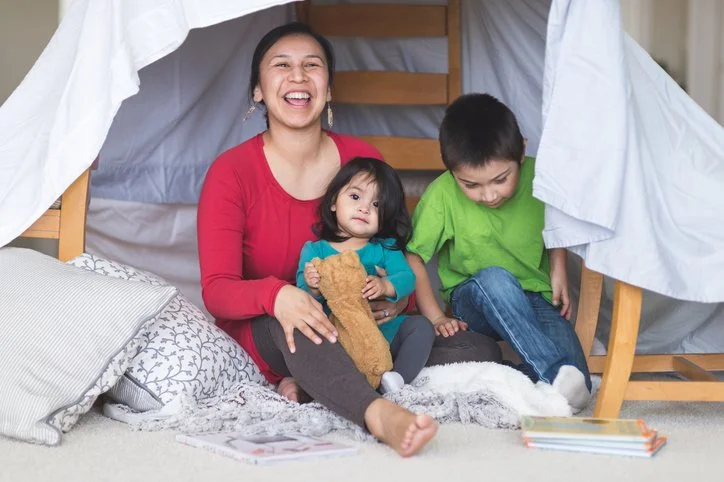
Build an inside fort or tent to cozy up in.
-
Use toilet paper rolls to make binoculars
Winter Safety
If your child is busy with fun activities, they are less likely to get into mischief. Of course, even if your child is occupied, it’s still critical to take general safety precautions like keeping knives, sharp objects, and medicine out of reach. There are extra winter safety issues to be aware of too:
-
Never put space heaters in a child’s room or where they are sleeping. Keep anything that can burn at least three feet away from space heaters.
-
Winter can mean more open flames in your home. Whether it’s a kerosene lamp, a fireplace, candles or other open flames, make sure they are well out of reach of children – remember toddlers are very resourceful when trying to get to something that sparkles or glows.
-
Don’t use electric blankets or heating pads with young children, and if you have an infant, use sleeping sacks or warm sleepers instead of blankets in sleeping areas.
Out and About
Even when it’s cold or rainy, it’s still a good idea to get out of the house with your little one. Sometimes just stepping out the front door is enough to change a mood. Between rainstorms, kick a ball back and forth, or encourage your toddler to throw the ball across the yard, retrieve it, and throw it again. If you really want to enjoy the outdoors with your child, Mt. Pisgah has fun, interactive stations where kids can learn about nature. Hedricks Park is a fun place to look at native flowers and trees, or just run around in the big, open grassy area. Your neighborhood park is a great place to look for worms in puddles, or watch the wind blow leaves.When you do head outdoors, be sure to:
-
Dress your child in layers. A good rule of thumb is to dress babies and young children in one more layer than an adult is wearing.
-
Make sure places on your child’s body that can get particularly cold or damp are covered — hands and feet, head and ears.
-
Don’t overdress! Children can get sweaty and overheated, causing problems like skin irritations.
-
If you are outside for an extended period, check if layers need to come off or on.
-
If it’s frightfully cold, avoid taking your child, especially infants, outside as much as possible.
-
Do not put your child in a winter coat or snowsuit while buckled in their car seat. Instead, put an extra blanket over the straps if it is especially cold outside.
-
Strings or scarves can get caught and strangle small children, so choose other warm items to wear.
-
Use sunscreen for babies over six months of age; we can still get burned on cloudy or cold days.
-
Keep them hydrated; offer warm drinks and water often. We lose moisture through our breath.
Winter doesn’t have to be filled with weariness or worry! There are lots of exciting and safe things to do indoors and outdoors and around town, too. You might even miss winter when it’s over – especially if you remember to let yourself join your child in jumping in puddles.
This article is brought to you by Parenting Now! Parenting Educators and authors Amanda Bedortha, Claire Davis and Lynne Swartz, and consultant Jay Thompson. Parenting Now offers parenting groups and drop-in programs for families with children 0-8, and is passionate about happy, healthy families. For more information about Parenting Now, please visit their website or contact us at info@parentingnow.org.
Triple P – Positive Parenting Program
Are you interested in receiving more parenting advice? Triple P Online – Positive Parenting Program could be for you! This online parenting program allows you to take a parenting class in the comfort of your own home!
If you live in Lane County, you can get Triple P Online for free by filling out the form on the Triple P page. A staff person from Parenting Now will send you an access code within 24 hours and you’ll be able to start using the program right away! For more information about the program and to sign up visit the Triple P page.