

Toddler Emotions: Ups and Downs and All Arounds

Toddler crying while being comforted with a hug

Your toddler is talking more, exploring more, and acting more independently. There are new and exciting things to experience, whether it is going to storytime in the library, playing in the park, or planning a trip to see Grandpa! Along with new experiences and activities will, inevitably, come frustration, disappointment, anger, sadness, and other strong emotions. Toddlers are known for their “big” feelings and you can help your toddler during this big leap in their development. The part of our brain that processes big feelings and emotions (the limbic system) is developing rapidly in toddlers. We can help shape healthy patterns for responding to big feelings. Built on the structure and wiring of the brainstem, all the times you met your baby’s physical and emotional needs form the foundation of trust that their needs will be met as they grow. When a big feeling arises (or rears its ugly head), just naming the feeling helps your toddler’s brain relax and eventually with consistency, they will be able to name their own feeling and move into their thinking brain to solve the problem. Here are some ideas to help with managing these big emotions! 

First, it can be helpful to notice when your child is struggling with their emotions and step in before the situation escalates. You might see your child:

  • Quieting or whining or otherwise shifting their mood

  • Throwing things, such as toys or food

  • Hitting or biting other children or adults, or themselves

  • Refusing options they usually like – they are offered apples or pears for a snack, but refuse both.

  • Quickly and angrily give up working on a “project,” such as a favorite puzzle.

When your child is having a hard time managing their emotions:

  • Name your child’s feelings. By naming the feeling, you are building emotional vocabulary so that eventually they will be able to recognize and name their own feelings. This is the first step to regulation.

  • Validate your child’s feelings and experiences. Show sympathy and understanding. Even if you can’t understand why your toddler is so upset that you gave them the red cup instead of the green cup, just remember that your toddler’s feelings are very real to them

    • “We didn’t get to go to the park this morning because it’s raining. It’s really fun to go to the park and play on the swings and in the sandbox. You feel really angry because we can’t go and play. Let’s hope we can try again another day when it is not raining so hard.”

  • Find safe and appropriate ways for your child to process their emotions.

    • Angry – How about punching a pillow or having a special “biting toy?” Make sure to emphasize hitting or biting people or animals is not okay.

    • Sad – “Would you like to cuddle up in my lap while I read you a special story?”

    • Frustrated – Try the “Smell the flower, blow out the candle” breathing technique for calming down.

  • Find time to get outside and exercise every day. Toddlers, like us, need lots of time and opportunity to let off steam. Toddlers learn with their whole body and through interaction with you. Just kicking a ball back and forth or playing chase will prevent or tone down some of those inevitable upsets.

Everyday ways to help toddlers with their emotions

You don’t need to wait for an epic upset to teach your child about feelings and emotions! There are things you can do in your everyday routine to help your child work through their emotions. 

  • Practice patience:

    • Mark time with music – If your child needs to wash their hands thoroughly, have them sing the birthday song and keep washing until the song is finished.

    • Teach your toddler about taking turns – Switch off using different color crayons. Use a kitchen or phone timer to mark how much time you can use each color. Let them know how great they are doing waiting to use the next color or acknowledge that it’s hard to wait sometimes.

  • Pay attention to transitions. Give a five minute warning, and a two minute warning when changing activities. Aim to get your toddler invested in the new activity. “In five minutes, it will be time to put the crayons away. Then we’ll go to the park for our play date with Sammy.”

  • Make a habit of naming emotions:

    • Is there an angry, sad, happy, or excited character in a movie or book? Point out and name the emotion – “Jameson is angry because he didn’t get to pick out a toy.” “Look how excited Alex is about going to the library with his Grandma.”

  • Talk about your emotions and how you handle them – “Daddy is disappointed there are no more bananas left to buy in the store. Let’s buy apples instead.”

    • Even your pets can help – “The dog feels happy with her new toy!”

The toddler years can sometimes feel like an emotional rollercoaster. One minute, you’re up, the next you’re down—and once you think you’ve got everything figured out, your toddler throws you for a loop! It’s not always an easy ride, but it’s worth it.

This article is brought to you by Parenting Now! Parenting Educators and authors Amanda Bedortha, Claire Davis and Lynne Swartz, and consultant Jay Thompson. Parenting Now! is passionate about happy, healthy families. For more information about Parenting Now! please visit their website or contact us at info@parentingnow.org.

Triple P – Positive Parenting Program

Are you interested in receiving more parenting advice? Triple P Online – Positive Parenting Program could be for you! This online parenting program allows you to take a parenting class in the comfort of your own home!

If you live in Lane County, you can get Triple P Online for free by filling out the form on the Triple P page. A staff person from Parenting Now will send you an access code within 24 hours and you’ll be able to start using the program right away! For more information about the program and to sign up visit the Triple P page.


Put a Stop to Swearing

Parent and child having a conversation together on the couch at home

It’s not easy to shield your child from the use of strong language. They might hear it on TV, a YouTube video, video game, or from other peers or adults, and at some point your child might experiment with it. The language and words you use (and don’t use) in your home can be thought of as part of your family’s value system. You and your partner can decide what words you consider “off limits” in your family, as well as words that would be unacceptable to use at school and in the community. Be prepared to go over this list of words with your child if their swearing increases. You may need to say something like: “I understand that you hear other kids use that word, but that word is not allowed in our home.”Your first line of defense is setting a good example at home, making sure you aren’t using language at home that you don’t want your own child to use. Remember, your kids are always listening even if it might not seem that way.In addition, here are some other strategies to try when your child starts using strong language:

  • Planned Ignoring: Use this strategy the first time your child uses a swear word at home. It’s possible that ignoring their chosen words will be enough to get them to stop using swear words. The key is to not overreact or laugh, which takes the excitement away, and when they don’t see you react, they may remove it from their vocabulary.

  • Discuss The Problem: Pick a time when everyone is calm to talk to your child about swearing. “Diya, I don’t like it when you use swear words. From now on those words are not allowed.” Ask your child to give you some reasons why swear words are not OK to use, such as “Swearing can get you in trouble at school, or at a friend’s house,” or “Words have power and can hurt people’s feelings.” Then, ask them to make a list of words they can use instead to express what they are feeling.

  • Name Emotions: Encourage your child to name the emotion they are feeling. Naming the emotion instead of using a swear word will be a positive step toward regulation. When we can identify a feeling, it helps the emotional part of the brain to calm, and then we can more easily think about how to respond to the problem. Work through the problem and talk about the swearing when they are calm. Then, you can teach your child acceptable ways to express themselves when feelings are high.

  • Keep A Swear Jar: Grab a small jar and some small items of your choice (beans, or craft pom poms). Explain that for every swear word that the child uses, a “bean” will go in the jar. Once the jar is full, they will lose a privilege. Another option could be, if they are able to keep the jar “bean-free,” they can earn a reward at the end of the day, weekend or week, such as a special activity with mom or dad. You might consider having a jar for everyone, and agree on a family activity ahead of time if all of you can go the whole day, weekend or week using only acceptable language. Teenagers especially respond to being able to help keep their parents accountable to the family.

  • Encourage Positive Alternatives: Come up with some words to use in place of swear words. If your child uses foul language when you tell them it’s time to turn off their video game, offer other words they can use when they feel frustrated like “phooey!” The sillier, the better!

  • Establish The Source: Did your child pick up their newfound vocabulary from school, an older sibling, a TV show, social media, or even yourself? Depending on the source, you may need to limit exposure to that particular show or book, as well as be mindful of the language you use yourself. If your child watches YouTube or plays online video games, you may also want to turn off the comments and chat features.

  • Give Praise: Did you notice your pre-teen stop herself before she let a bad word slip? Let her know that you appreciate her efforts to use appropriate language rather than swear words.

Being a positive role model goes a long way in establishing appropriate word usage in your home and discouraging those words you never want to hear come out of your child’s mouth. With planning and consistent responses, you can address the issue right away, and your child can learn ways to express himself with language that is easier on the ears.

This article is brought to you by Parenting Now! Parenting Educators and authors Amanda Bedortha, Claire Davis and Lynne Swartz, and consultant Jay Thompson. Parenting Now! is passionate about happy, healthy families. For more information about Parenting Now! please visit their website or contact us at info@parentingnow.org.

Triple P – Positive Parenting Program

Are you interested in receiving more parenting advice? Triple P Online – Positive Parenting Program could be for you! This online parenting program allows you to take a parenting class in the comfort of your own home!

If you live in Lane County, you can get Triple P Online for free by filling out the form on the Triple P page. A staff person from Parenting Now will send you an access code within 24 hours and you’ll be able to start using the program right away! For more information about the program and to sign up visit the Triple P page.

Wandering Woes – Encouraging Your Toddler to Stay With You

Toddler walking alone along a garden path

As soon as babies are mobile, they start to explore their environment. When they become walkers, they graduate to being a toddler – and it’s a whole new level of  wandering around. Wandering can occur on shopping trips, playgrounds, or on a walk through your neighborhood. In a blink of an eye, a toddler can dart off or find a good hiding spot. It’s no wonder that safety and careful supervision are concerns for parents at this stage of parenthood.Some parents find it challenging to balance encouraging their toddler’s growing independence while also keeping them safe. In this article, we discuss why toddlers wander and what you can do when it happens.

Why Toddlers Wander

Toddlers are excited to learn about the world and explore everything around them. Toddlers learn by doing; they learn with their whole body. Being able to touch, play, or smell objects is an important part of that experience. If your toddler sees a colorful leaf on the ground or a squirrel running through the grass, they are going to want to see it up-close.Another reason toddlers wander is to practice their newly found independence. Instead of being held, they may want to walk on their own, or even walk ahead of you. They are beginning to practice being separate from you, and to see themselves as a separate person. They may want to “see what happens” when they wander away. When your toddler walks away, you will often notice them looking back at you. This is their way of maintaining the connection they have with you, and lets you know they are securely attached. This is important because their attachment to you lays the foundation for all the relationships they will ever have in their life. As a parent, you are their secure base. When your toddler wanders away, they are trusting you will be there for them. Our job as parents is a balance of having open arms, encouraging exploration, and being the safe, secure place for our children.Many parents think that their toddler may be wandering to get a reaction from them. In a way this is true, but they are not trying to be disobedient;  the underlying developmental task is more complicated. Some children enjoy being chased after, and suddenly their wandering turns into a chasing game! They don’t yet understand that there are dangers in the world that they aren’t yet able to negotiate for themselves. They enjoy engaging you in this fun game. Your toddler may also be looking for your reaction when they wander off: “Will my Dad be surprised?” “Will mom make a funny face?”

What You Can Do

If your toddler’s wandering has revved up lately, don’t give into the temptation to just stay home and wait this stage out. Your toddler needs safe ways to practice the skill of staying close to you when you ask, as well as safe ways for them to play and explore independently. You can start practicing this skill by planning a series of short trips in safe places such as small neighborhood parks or quiet streets. You could start with a short, 5-minute walk through Owen Rose Garden or Hendricks Park.

  • Try to plan these practice trips during a time of day when your child is content (avoid nap time, or just before a snack or meal).

  • Tell your toddler where you are going and what you would like your toddler to do: “We’re going for a walk in the rose garden. Remember, you must stay where you can still see me while we are walking.”

  • While on your walk, give your toddler lots of positive feedback when they walk with you or hold your hand.

  • As you walk together, point out things you see or hear, such as plants, birds, rocks, or bugs. Make a game out of it, such as “I Spy.” The idea is to keep them engaged and interested in interacting with you.

  • Find safe opportunities for your toddler to explore freely and walk (or run) at their own pace. A big open field where they can still see you from a distance often does the trick.

You can also help your toddler practice following simple directions like “stop” and “wait for me.” A game like “red light, green light” helps them learn to control their bodies with their mind, rather than their impulses. Or you can take turns saying “stop” and “go” and sometimes your child gets to give you directions to follow. If your toddler is wandering away, you may want to try “having a rest” on a bench, and explaining to your child that the walk can continue when they are ready to walk with you. You may also want to insist that your toddler hold your hand until they are able to stay close on the walk. All skills take practice, and it’s OK to practice another day As your toddler gets more experienced at staying close on short trips, you can try practicing longer trips, or in different settings, such as the library.  Over time, with patience and practice, you and your child will become experts at navigating new adventures together safely. 

This article is brought to you by Parenting Now! Parenting Educators and authors Amanda Bedortha, Claire Davis and Lynne Swartz, and consultant Jay Thompson. Parenting Now offers parenting groups and drop-in programs for families with children 0-8, and is passionate about happy, healthy families. For more information about Parenting Now please visit their website or contact us at info@parentingnow.org.

Triple P – Positive Parenting Program

Are you interested in receiving more parenting advice? Triple P Online – Positive Parenting Program could be for you! This online parenting program allows you to take a parenting class in the comfort of your own home!

If you live in Lane County, you can get Triple P Online for free by filling out the form on the Triple P page. A staff person from Parenting Now will send you an access code within 24 hours and you’ll be able to start using the program right away! For more information about the program and to sign up visit the Triple P page.

Indoor Crafts For Rainy Days

Guest blog by Kalina Glover Moresi

The winter months can be challenging for restless toddlers. The weather has most families inside, which can make it difficult to keep your child entertained on those cold, rainy days.

If you’re feeling in a rut, here are some ideas to engage your child and have some crafty fun together!

Paper SnowflakesMaterials:

  • White paper – computer paper is the easiest

  • Scissors

Instructions:

  • Fold the paper in a simple way. Young kids can make beautiful snowflakes with a piece of paper folded into fourths.

  • With adult supervision cut the paper on the edges and in funny directions.

  • Open the paper up to see your fun and festive snowflake!

Paper Hearts

Materials:

  • Colored Paper

  • Markers or crayons if you want

  • Scissors

Instructions:

  • Fold paper in half

  • Draw half a heart shape on the piece of paper where the fold part of paper is.

  • Cut out on the line

  • Ask your children what they are thankful for and decorate your house with all the hearts.

Kool-Aid Soft Dough:

Materials:

  • 2 mixing bowls

  • 1 cup of salt

  • 1 cup of water

  • 2 cups of flour

  • 1/3 cup of oil

  • 1 package of Kool-Aid

Instructions:

  • Together with your child, measure and pour the flour and salt into the first bowl and mix.

  • Pour the oil, water and Kool-Aid into the second bowl and mix thoroughly.

  • Pour the liquid mixture into the flour mixture and mix and squish until you have soft dough.

This article is brought to you by Parenting Now! Parenting Educators and authors Amanda Bedortha, Claire Davis and Lynne Swartz, and consultant Jay Thompson. Parenting Now offers parenting groups and drop-in programs for families with children 0-8, and is passionate about happy, healthy families. For more information about Parenting Now! please visit their website or contact us at info@parentingnow.org.

Triple P – Positive Parenting Program

Are you interested in receiving more parenting advice? Triple P Online – Positive Parenting Program could be for you! This online parenting program allows you to take a parenting class in the comfort of your own home!

If you live in Lane County, you can get Triple P Online for free by filling out the form on the Triple P page. A staff person from Parenting Now will send you an access code within 24 hours and you’ll be able to start using the program right away! For more information about the program and to sign up visit the Triple P page.
Preparing Your Toddler for a New Sibling

Toddler hugging a pregnant parent's belly while sitting together on the couch

A new baby means some major changes for the entire family. Children’s reactions can vary from being helpful with diapers or feedings to jealousy, acting out, or regressing to baby-like behavior. Having toileting accidents or wanting to drink from a bottle are normal reactions to the stress of having a new baby. Love, reassurance, and patience go a long way in helping your child adjust. Preparing your child for the new baby will help get their bond off to a good start. It is important to set the stage for a good bond between siblings because their relationship is a lifelong one. They can understand themselves and the world through each other’s eyes throughout their lives. Here are some steps you can take to help ease this big life change.

Before Baby Arrives

Talk about babies: Three to four months before the baby is due, talk to your toddler about the arrival of their new brother or sister. After the big talk, discuss all things newborn: that they sleep a lot, cry, cannot play or crawl (yet!), and need lots of gentle snuggles. Use this time to share stories about when your other child was born or when they were a baby. You might share their baby book with them if you have one. Share pictures of them as a baby, share the story of their birth and talk about how much they have grown.

There are many books you can check out of the library for toddlers and young children about the arrival of a new brother or sister. Some books about welcoming a new family member can even be customized for your child. 

Get your toddler involved: Another way to soothe new-baby worries is to get your child involved. 

  • Let them feel the baby kick

  • Make a present for the baby together

  • Come up with a list of baby names and nicknames

  • Let them help decorate the new baby’s space

  • Make or buy “big brother” and “little sister” t-shirts

  • Let your toddler pick out a special baby blanket or newborn outfit for the baby to wear

Plan ahead for “big changes”: A new baby can throw everyone’s routine for a loop. If your toddler has “big changes” coming up—such as moving to their own room, starting daycare, or moving out of their crib—try to work on them ahead of the new baby’s arrival. Rather than pointing out that the changes are because of the baby, point to their own growth: “You’re a big girl now, so it’s time for you to sleep in a big girl’s bed.”

Now That Baby is Here

When you are ready, have your child meet their new sibling. Talk ahead of time and make a plan with them about what to expect. Some kids enjoy making cards and small gifts to bring along if your baby is born at a hospital or birth center. Prepare your toddler for the quiet hospital environment and what they might experience. It’s not unusual for a child to be quiet or distant when first visiting a hospital— if offered, a sibling tour of the hospital ahead of time can help set the stage for the birth. 

When the time comes, they will interact when they are ready. Many families find that giving their toddler a “baby” of their own to care for helps ease the transition. They can practice feeding, burping and cuddling their baby doll just like you will be caring for their new sibling. Once home, give the new baby over to your co-parent or another family member so you can spend some extra time with your toddler, and provide extra snuggles if they are open to it. Schedule a special time each day to play with your toddler, and add it into their routine. Although a new baby can throw the family routine out of whack, try to keep your toddler’s routine as close to normal as possible. This includes sticking to regular mealtimes, bedtimes, and other activities. Toddlers are natural-born helpers and involving them in baby care is a great way to spend extra time together and encourage the sibling bond.

Here are some “special helper” ideas:

  • Getting diapers or blankets

  • Checking on the baby (practice tiptoeing quietly)

  • Singing songs to the baby (share songs they enjoyed as a baby)

  • Picking out a new outfit for the baby

  • Looking at board books together

New Challenges

The parent/child relationship changes when a new baby enters the picture, and children need time to adjust. Some children may feel resentment toward the new baby—sharing a parent is hard! As you get used to being a parent again, you may also have some mixed feelings. You may feel torn between spending time with one or the other of them, or feel guilty when you feel like there aren’t enough hours in the day to give your toddler the attention you were able to before the new baby’s arrival. It takes time and patience to find a new normal, so be gentle with yourself, just as you are gentle with your toddler.

Talking with your child about their feelings goes a long way in helping them work through their emotions. You might hear, “I don’t like the baby,” or “Can we take her back to the hospital?” If this happens, tell them you understand how they feel and agree that it’s not always easy to have a baby around. But follow this up with what you do love about the baby and what’s hard for you as the parent (such as night feedings). Kids love stories, so reading stories about children who are also having mixed feelings about their brother or sister will let them know that it’s okay to feel this way. Your child might need a little extra time to get used to the idea of sharing family time. A little planning—and patience—will go a long way to help make the introduction of your new bundle of joy easier on the whole family.

This article is brought to you by Parenting Now Parenting Educators and authors Amanda Bedortha, Claire Davis and Lynne Swartz, and consultant Jay Thompson. Parenting Now offers parenting groups and drop-in programs for families with children 0-8, and is passionate about happy, healthy families. For more information about Parenting Now please visit their website or contact us at info@parentingnow.org.

Triple P – Positive Parenting Program

Are you interested in receiving more parenting advice? Triple P Online – Positive Parenting Program could be for you! This online parenting program allows you to take a parenting class in the comfort of your own home!

If you live in Lane County, you can get Triple P Online for free by filling out the form on the Triple P page. A staff person from Parenting Now will send you an access code within 24 hours and you’ll be able to start using the program right away! For more information about the program and to sign up visit the Triple P page.

Winter Fun and Safety

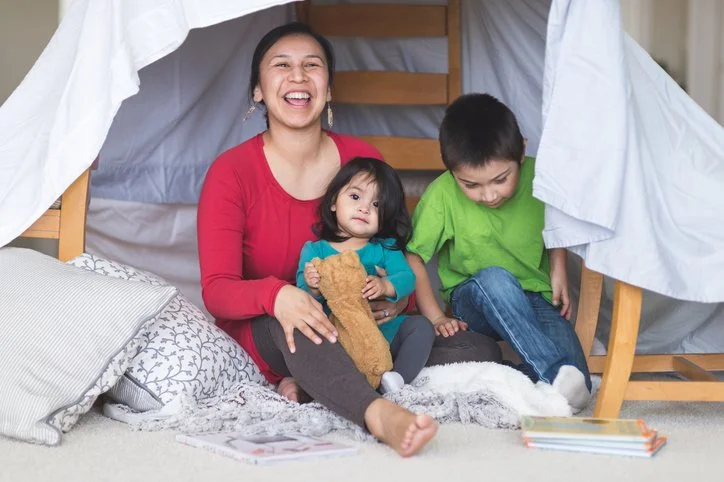
Parent and two children laughing together inside an indoor blanket fort

Rain, rain and more rain, and yet you can still enjoy all of winter with your toddler. Maybe those early winter days of sweet indoor cuddling are gone as more chilly grey days arrive, but having a variety of indoor activities to keep your child busy and stimulated will make for a happy winter for all.  You don’t need fancy or expensive toys. There are lots of fun and safe playthings you can find with everyday objects in your home:

  • Create a simple scavenger hunt. Place three red objects around the room — a red apple, a red cup and red toy fire truck. Your child will love exploring and finding the objects and will learn about colors (shapes or sizes) too.

  • Use empty egg cartons and make long trains with them. Try decorating them.

  • Make a simple bread dough (or buy some pre-made) and create interesting shaped breads to bake. Then eat your work!

  • Make music! Tambourines or shakers work, as do wooden spoons and pots.

  • Make pretend snow.

  • Build an inside fort or tent to cozy up in.

  • Use toilet paper rolls to make binoculars 

Winter Safety

If your child is busy with fun activities, they are less likely to get into mischief. Of course, even if your child is occupied, it’s still critical to take general safety precautions like keeping knives, sharp objects, and medicine out of reach. There are extra winter safety issues to be aware of too:

  • Never put space heaters in a child’s room or where they are sleeping. Keep anything that can burn at least three feet away from space heaters.

  • Winter can mean more open flames in your home. Whether it’s a kerosene lamp, a fireplace, candles or other open flames, make sure they are well out of reach of children – remember toddlers are very resourceful when trying to get to something that sparkles or glows.

  • Don’t use electric blankets or heating pads with young children, and if you have an infant, use sleeping sacks or warm sleepers instead of blankets in sleeping areas.

Out and About

Even when it’s cold or rainy, it’s still a good idea to get out of the house with your little one. Sometimes just stepping out the front door is enough to change a mood. Between rainstorms, kick a ball back and forth, or encourage your toddler to throw the ball across the yard, retrieve it, and throw it again. If you really want to enjoy the outdoors with your child, Mt. Pisgah has fun, interactive stations where kids can learn about nature. Hedricks Park is a fun place to look at native flowers and trees, or just run around in the big, open grassy area. Your neighborhood park is a great place to look for worms in puddles, or watch the wind blow leaves.When you do head outdoors, be sure to: 

  • Dress your child in layers. A good rule of thumb is to dress babies and young children in one more layer than an adult is wearing.

  • Make sure places on your child’s body that can get particularly cold or damp are covered — hands and feet, head and ears.

  • Don’t overdress! Children can get sweaty and overheated, causing problems like skin irritations.

  • If you are outside for an extended period, check if layers need to come off or on.

  • If it’s frightfully cold, avoid taking your child, especially infants, outside as much as possible.

  • Do not put your child in a winter coat or snowsuit while buckled in their car seat. Instead, put an extra blanket over the straps if it is especially cold outside.

  • Strings or scarves can get caught and strangle small children, so choose other warm items to wear.

  • Use sunscreen for babies over six months of age; we can still get burned on cloudy or cold days.

  • Keep them hydrated; offer warm drinks and water often. We lose moisture through our breath.

Winter doesn’t have to be filled with weariness or worry! There are lots of exciting and safe things to do indoors and outdoors and around town, too. You might even miss winter when it’s over – especially if you remember to let yourself join your child in jumping in puddles.

This article is brought to you by Parenting Now! Parenting Educators and authors Amanda Bedortha, Claire Davis and Lynne Swartz, and consultant Jay Thompson. Parenting Now offers parenting groups and drop-in programs for families with children 0-8, and is passionate about happy, healthy families. For more information about Parenting Now, please visit their website or contact us at info@parentingnow.org.

Triple P – Positive Parenting Program

Are you interested in receiving more parenting advice? Triple P Online – Positive Parenting Program could be for you! This online parenting program allows you to take a parenting class in the comfort of your own home!

If you live in Lane County, you can get Triple P Online for free by filling out the form on the Triple P page. A staff person from Parenting Now will send you an access code within 24 hours and you’ll be able to start using the program right away! For more information about the program and to sign up visit the Triple P page.

Setting Parenting Goals For The New Year

Parent reading a book together with a child on the couch

It’s a time-honored tradition to set goals for yourself for the New year. For some, it’s reducing sugar intake; for others, it is spending more time in nature. But what if this year you tried setting parenting goals for yourself?

Your parenting goals could be a behavior you want to change in yourself, such as practicing being “present” at the moment, or a family goal of spending more time together, cutting down screen time, etc. To make a change that will stick, it’s best to start small with goals that are realistic and achievable. The key is to make sure you are successful. Make a list of two or three clear goals. Here are some ideas:

Carve out time for yourself

When you are on an airplane, you know that in case of an emergency you put on your own oxygen mask and then help your child put on their mask. The fact is that taking care of your needs means you are better able to take care of your child’s needs. Not only will you be nurturing yourself, but practicing self-care will also help you be a better parent and model for your child that you are important as well.

Having trouble thinking about what kinds of things you need to do to care for yourself? Think about what you do for your child – you make sure they eat right, sleep enough, play, express their emotions and creativity, and so much more. You can do the same kinds of things for yourself. Here are some other ideas to meet your self-care needs:

  • Spend time in nature. It’s proven to help reduce anxiety and stress. There are a lot of great Lane County spots – walk to Delta Ponds and look for herons and turtles. Even a walk in the park or sitting on a bench by the river will help to renew you and bring you into your body so you can be more present with your child. Sound overwhelming? Walk outside your door and look at the sky, watch the wind blow the trees, or appreciate your neighbor’s garden.

  • Parenting brings a lot of joy, but it also brings stress and challenges. Having friends to talk with, play with, cry and laugh with is an essential part of self-care. Parenting groups are a great place to create new friendships with other parents, often with children in the same age range as your child. Reconnect with a friend you haven’t seen in a while by sending a quick text or call.

  • Use exercise as a way to reduce stress, as well as have fun and improve your mood and physical health. Exercise has proven mood-boosting properties, and there are lots of fun ways to get the heart-rate going, including a family dance party, soccer game, or running challenges.

Make it a priority every day to spend a little time on you – you’re worth it! 

Read more with your child

There are so many benefits to reading with your child—and it’s never too early or too late to start! Reading to your baby will help develop their language skills, even before they can talk! It’s a great way to cuddle, connect, and calm down together. Toddlers benefit from reading time—especially if it’s their favorite book over and over again—because it helps them to deepen their understanding of cause and effect, recognize patterns, and build their vocabulary. Children can begin to see the world from another’s perspective through books, building a foundation for empathy. Older children also benefit from reading with their caregivers. Even if your school-aged child can read independently, they will appreciate being read to or sharing their reading skills with you. Reading with your older child is a wonderful way to sneak in some one-on-one time together. When you enjoy reading together, those warm feelings you have together nurture your relationship. Reading a longer chapter book together every evening is something you both will look forward to in your day. You could make a goal to build reading time into your family’s daily routine, or if you already read with your child every night before bed, your goal could be increasing the number of books you read together per night, or adding an additional reading time into your day. For example, reading 3 books after lunch, before rest time or after school pickup. 

Be more present

“Presence” is the concept of being alert and focused on the current moment, rather than looking ahead to the future, or distracting yourself from the moment with other thoughts or activities. Being present with our children is a great way to meet their emotional needs.We can think of being present with our children by picturing opening our arms to them, either to encourage them to explore or to welcome them back. Children need both of these things, and they learn to be independent by first knowing they have you to always be there for them.Some experts say with 15 minutes of your fully focused attention children will feel satisfied and independent for the next half hour or so. If a work email needs to get sent ASAP but your toddler is struggling to play independently, try reading books with him for 15 minutes first, then try getting your work done again. You can think of the positive time and attention you are giving your children as “money in the bank,” or positive connection you can count on as a buffer for when you need to be away from them. Other ways to feel and be more present, include:

  • Putting down your phone, tablet or other device, and putting them out of sight.

  • Kneel down to talk to your toddler or young child at eye-level. It’s scary to always be looking up at people towering over you. When you talk with them on their level, they feel safe.

  • Take 5 minutes every day to just breathe, meditate, stretch—whatever it is that clears and calms your head.

Can’t go wrong with a focus on family

The great thing about setting parenting goals is that you can’t really do it wrong. Just the simple act of intending to set parenting goals to improve your skills as a parent, spend more time together with your family, or change the way you interact with your children, shows just how much you love them. Here’s to a great year in 2022!

This article is brought to you by Parenting Now Parenting Educators and authors Amanda Bedortha, Claire Davis and Lynne Swartz, and consultant Jay Thompson. Parenting Now offers parenting groups and drop-in programs for families with children 0-8, and is passionate about happy, healthy families. For more information about Parenting Now, please visit their website or contact us at info@parentingnow.org.

Triple P – Positive Parenting Program

Are you interested in receiving more parenting advice? Triple P Online – Positive Parenting Program could be for you! This online parenting program allows you to take a parenting class in the comfort of your own home!

If you live in Lane County, you can get Triple P Online for free by filling out the form on the Triple P page. A staff person from Parenting Now will send you an access code within 24 hours and you’ll be able to start using the program right away! For more information about the program and to sign up visit the Triple P page.

Visitors During the Holiday Season

Family members embracing and exchanging a gift during a holiday visit

With many adults vaccinated and children ages 5 and up now eligible for their COVID-19 vaccination, families are looking forward to reuniting with family and friends this holiday season after a long stretch of social distancing. But while you may be excited to have Grandma over for a New Year’s fest, your child may have some concerns about it.

It’s completely normal for some children to be worried about having visitors over. To children, there is no safer place in the entire world than their home. Letting someone in, regardless of how well they know them, can sometimes set off alarm bells in a child. The social distancing that began in March 2020 was a first for many where we did not gather with friends or family in groups, or if we did, it was rare and with precautions. Think about what percentage of your child’s life has happened since then – for a three-year-old, this is how it has been for half their life. No wonder this change can cause some discomfort!

If this is happening in your home, first, pay attention to your own concerns or worries and manage those. Your child will pick up on your calmness and will help them manage his own stress and worry.

Knowing the signs to look for, as well as ways to help your child work through their feelings, can go a long way in building up your child’s social-emotional skills when it comes to having visitors over.

What’s so scary about having visitors over?

There are a number of reasons your child might act nervous before guests arrive or behave differently when guests are over, especially if it has not been a regular occurrence:

  • Lack of practice about how to behave with friends in their own space

  • They don’t know or remember how to ask for what they need/want from peers

  • They don’t know or remember how to join in play

  • They don’t know how to respond to peers when there is conflict

  • They want all their parent’s attention

  • They get bored or restless when they don’t have their parent’s attention

  • They have an unmet physical needs like hunger or rest

  • They had a negative experience the last time visitors came over, such as a playmate who took their favorite toys and refused to take turns.

  • A recent bout of illness can also lead to anxious behavior in other areas of a child’s life, such as having visitors over.

The tell-tale signs

Have you noticed that your child acts differently when visitors come to your home? You may notice your child:

  • Being overly loud or silly

  • Showing off/demanding your attention

  • Refusing to play or share toys with a playmate

  • Excessive teasing of a sibling or playmate

  • Whining

Learning complex social skills—such as greeting visitors, talking politely, getting your attention politely, and entertaining friends—is something that takes time, patience, and practice. When you know visitors will be coming over, here are some things to keep in mind:

  • Try to plan visits around your child’s usual sleep and meal times so they are not tired or hungry when visitors arrive.

  • Practice or role-play manners you would like to see with guests, i.e. saying please and thank you or asking their friend to decide what to play. Start with a shorter amount of time for guests, then build up as they get reacquainted with expectations

  • Tell your child who is coming over and the reason for the visit — “Your Great Grandma is coming over tonight to celebrate New Year’s Eve with us.”

  • Let your child know what to expect; what will happen when guests are there.

  • Plan some activities for your child to do while guests are visiting, ideally something your child can manage on their own, such as soft dough, coloring books, or building blocks. Some children need more guidance when it comes to play, especially when playing with a new friend or in a new situation. Save yourself a lot of interruptions by planning some activities and setting them up before your guests arrive. You can also think of things your child might like to show their visitor.

  • Check-in on your child from time to time. Notice when your child is playing well with another child or on their own and show your approval to your child. A quick hug can send the message that you are still thinking about your child even while in the other room visiting with Great Grandma. 

Having visitors over can be a fun time for your child to mix with others–both adults and other children. With a little practice and guidance, your child will look forward to having friends and family over for visits. We will all build up those social-emotional muscles and connect with others comfortably again.

This article is brought to you by Parenting Now Parenting Educators and authors Amanda Bedortha, Claire Davis and Lynne Swartz, and consultant Jay Thompson. Parenting Now offers parenting groups and drop-in programs for families with children 0-8, and is passionate about happy, healthy families. For more information about Parenting Now, please visit their website or contact us at info@parentingnow.org.

Triple P – Positive Parenting Program

Are you interested in receiving more parenting advice? Triple P Online – Positive Parenting Program could be for you! This online parenting program allows you to take a parenting class in the comfort of your own home!

If you live in Lane County, you can get Triple P Online for free by filling out the form on the Triple P page. A staff person from Parenting Now will send you an access code within 24 hours and you’ll be able to start using the program right away! For more information about the program and to sign up visit the Triple P page.

All Parents Benefit From Parenting Education

Parent and toddler laughing together while taking a selfie at home

According to the National Parenting Education Network, “Loving may be instinctual, but skills are developed. Even before becoming a parent and throughout your journey, you can continually learn skills and gain insights. These empower relationships, support growth and development, and create family well-being, even during difficult transitions.”As parents, we can all benefit from parenting education, no matter your culture, family background, location or financial status. Parenting education programs often start by supporting you to think about your values. What kind of parent do you want to be? What are the wishes or hopes you have for your child? What are you already doing that is supporting these goals? What else could you do? Parenting programs also focus on helping you think about parenting practices and behaviors, such as:

  • Developing and practicing positive discipline techniques

  • Learning what is reasonable to expect your child to do based on age

  • Developmental milestones

  • Promoting positive play and interaction between parents and children

  • Locating and accessing community services and supports

You can also learn about your child’s temperament, which will help you choose strategies that will work best for them. Through a parenting education program, you can learn about the needs of your children, as well as your own needs as a parent, including:

  • How to best support children of different ages and stages of development

  • Developing strong and healthy relationships with your children

  • Activities for every stage of development that help children become healthy and successful physically, emotionally, socially, and academically

  • Healthy ways to cope with the stress of parenting

  • The importance of caring for yourself in order to be the parent you want to be

In turn, children:

  • Feel confident and safe

  • Build strong relationships

  • Are emotionally stable

  • Are more successful in school

  • Decrease their chance of

    • substance abuse

    • teen pregnancy 

    • dropping out of school

In Lane County, parenting education programs are offered in a variety of settings: in-person classes and workshops, online, individual counseling sessions, facilitated groups, or home visits. A parenting program, such as Triple P Online (TPOL), offers parents the opportunity to receive support and education from the comforts of home on their own schedule. Triple P Online is an online course for parents and caregivers of children ages 2-12, comprising 12 modules introducing different skills to help families thrive. Information is delivered in video format with activities to customize the program to your family. Group-based parenting education, led by a professional Parenting Educator, is another way to receive support. Parenting groups, such as those offered at Parenting Now, can help reduce feelings of isolation by connecting you with families who have similar-aged children. During a parenting group, you might, for example, learn you are not the only one having a hard time getting your child to sleep or being able to find someone for a playdate. Individualized parent support programs, such as Healthy Families Lane County, can begin before your baby is born until your child is 2 years old, and will support you to set your family up for success as well as connect you with community resources, answering questions like:

  • Where can I get support with infant feeding?

  • Who can I contact with concerns about my baby’s development?

  • How do I get my baby to sleep through the night?

  • How do we integrate this new baby into our family?

Many local resources—including counseling services, help with basic needs, and more—can be found at Parenting Now’s Resources for Families website. For a list of family-friendly activities and other parenting classes, visit the LaneKids’s website. When you can reduce isolation and get more support, resources and information, your stress as a parent goes down. Parenting education programs support parents by equipping them with the skills and confidence they need to handle parenting challenges and build strong relationships with their kids. Parenting education, in whatever form you choose, supports you to be the parent you want to be so your family will thrive. 

This article is brought to you by Parenting Now Parenting Educators and authors Amanda Bedortha, Claire Davis and Lynne Swartz, and consultant Jay Thompson. Parenting Now offers parenting groups and drop-in programs for families with children 0-8, and is passionate about happy, healthy families. For more information about Parenting Now, please visit their website or contact us at info@parentingnow.org.

Triple P – Positive Parenting Program

Are you interested in receiving more parenting advice? Triple P Online – Positive Parenting Program could be for you! This online parenting program allows you to take a parenting class in the comfort of your own home!

If you live in Lane County, you can get Triple P Online for free by filling out the form on the Triple P page. A staff person from Parenting Now will send you an access code within 24 hours and you’ll be able to start using the program right away! For more information about the program and to sign up visit the Triple P page.

Helping Toddlers Play Cooperatively

From refusing to share toys to making hurtful comments, it’s important to teach children the importance of playing cooperatively and getting along with others. Teaching these skills early on in toddlerhood can help your child during a time when they are striving for independence and testing their limits.

Toddlers can sometimes fight or become physically out of frustration or anger when things do not go their way. It’s their way of communicating. Young children need to be shown how to play cooperatively with others, take turns, and problem-solve in healthy ways.

Before they play with others, toddlers play next to or near each other. When they are in the same space, toddlers can slyly watch each other and eventually will copy each other and interact minimally. You might see one take a toy from another, and in that case, you can calmly model taking turns. This is the first step in learning to play with others.

The next step is establishing some rules for playing with others. This will help them feel safe and secure, and begin to instill a sense that the world can be fair, and there is plenty for everyone.  Decide on two or three simple rules for playing with friends and discuss them with your child. Ideally, the rules should tell your child what to do rather than what not to do. This could include:

  • Be gentle.

  • Take turns.

  • Keep your hands and feet to yourself.

  • Use your polite words, like “please, and thank you.” 

Remember to make the rules short and easy to remember. It’s also important to give young kids the opportunity to practice these rules and playing skills with you in a supportive, safe environment. Start by playing these games with your child to show them how to take turns. Activities that promote sharing, cooperation, and taking turns are great for building healthy play skills. Ideas include:

  • Kicking the ball back and forth

  • Hide and seek

  • Age-appropriate board games that involve taking turns for those over 3 years old

  • Building with blocks (first, you put on a block, then me)

Encourage desirable behavior

When you see your child playing cooperatively with a friend, sibling, or even yourself, give them praise: “I’m noticing the two of you building the train tracks together. You are playing very gently with your little brother, Dillon. You can be proud of yourselves for playing so well together!” Talk to the kids and ask questions about what they are doing: “You two are building a great castle there, how many towers will it have?”At first, it can be helpful to step in and help children solve problems before any fighting occurs. When possible, keep an eye on your child while they play but try not to hover over them. If you notice that your child is having a hard time sharing or taking turns, you can help by giving your child some words to use: “Issac, it sounds like you want to play with the truck now. You could say to your friend, “I would like a turn with the truck. Can you please give it to me?”  Or you may need to help decide who can play with a toy first: “Girls, you can both play with these toys by taking turns. Who is going to have the first turn?” Let each child go first at different times. Offering play ideas for the child waiting their turn can also help in these moments. “Sally, while you wait for the red shovel, you can choose to play with the sand sifter or green shovel.”Once you’ve supported the kids to play together within the rules, try stepping back. You may be surprised! 

Manage fighting when you see it

Act quickly when you see children fighting with each other over a toy or arguing. Step in and be clear and firm in your tone but not angry. Remember, your child is not purposefully misbehaving. You can use these moments to teach your child about feelings and healthy ways to express their anger or frustration.

When we can identify and name our feelings, our mind can calm. When you acknowledge how they are feeling, they will feel heard and seen. After they feel heard, they can move to the thinking part of their brain to problem solve. Soon you will hear them taking turns on their own, and then you will see interactive play: they will start listening to each other’s ideas and negotiating how the play will unfold. You may need to step in from time to time, especially when feelings become heated. Remember, it takes time to learn the life skills of cooperation and getting along together, and they learn these skills through relationships developed in play.

This article is brought to you by Parenting Now Parenting Educators and authors Amanda Bedortha, Claire Davis and Lynne Swartz, and consultant Jay Thompson. Parenting Now offers parenting groups and drop-in programs for families with children 0-8, and is passionate about happy, healthy families. For more information about Parenting Now, please visit their website or contact us at info@parentingnow.org.

Triple P – Positive Parenting Program

Are you interested in receiving more parenting advice? Triple P Online – Positive Parenting Program could be for you! This online parenting program allows you to take a parenting class in the comfort of your own home!

If you live in Lane County, you can get Triple P Online for free by filling out the form on the Triple P page. A staff person from Parenting Now will send you an access code within 24 hours and you’ll be able to start using the program right away! For more information about the program and to sign up visit the Triple P page.