

Tools to Calm Down During Uncertain Times

Person wrapped in a blanket holding a warm mug on the couch
 By Aoife Rose Magee
By Aoife Rose Magee

In these complex times, caring for ourselves, our families, and our communities can feel especially demanding. It’s okay to need extra care and flexibility as parents right now. 

Most of us feel a certain level of discomfort when there is a lot of change or upheaval in our lives. Adults may or may not realize how much their emotional responses can impact others around them, particularly their children.  When things are unpredictable, it’s important that we have ways to calm down and rebalance ourselves – This helps us feel better and has a positive impact on our children.

Below are recommendations that may help you as a parent manage uncertainty during stressful times like these.

Address Foundational Needs

Taking care of ourselves physically and emotionally makes a big impact on our well-being. That’s why it’s important to keep a handle on the basics: Prioritize rest and sleep routines for the entire family. Eat healthy meals and snacks and stay hydrated. Engage in physical activity and movement, even in short bursts. Set boundaries and learn to say “no” to extra responsibilities. Take breaks from screens and electronics, such as phones, email, social media, news, and TV. Identify what is in your control and let go of what is not.

Look for Connection and Support

Seeking social and emotional support from others can help lessen the burden and keep us feeling more connected. Spend time with friends, family, or other parents who understand you, or who you relate to. Ask for help or specific support when needed. Strengthen your partnerships or other close relationships. Reach out to members of your community — a strong network cultivates resilience and sense of safety for everyone. Consider support groups, online support, and local family resources for dealing with high levels of stress or strategies for healing trauma.

Mental and Emotional Well-Being

Taking time to reflect, feel our emotions, and recharge can make a tremendous difference when experiencing stress. Allow yourself to feel and express emotions, even tears. Mindfulness practices include deep breathing or short meditations to stay present. Acknowledge your efforts and find things to be thankful for by creating a gratitude list, which can often help people refocus their energies on what’s working or going well. Focus on your strengths and the many ways you are supporting yourself and others. Find what brings you joy, laughter, and happiness and do more of that. Make time for activities that you enjoy such as nature, reading, hobbies, music, or art.

Self-compassion can be helpful. Here’s how to ground yourself, as a person who is hurting, guided by Dr. Kristin Neff. 

Supporting Our Children

These moments can shape how children experience the world around them, and paying attention to how children may be processing, wondering, or responding matters deeply.

Additional Resources

1. Here’s how to help children and families facing detention or separation, published by Healthy Children, and endorsed by The American Academy of Pediatrics.

2. Here’s how to talk to children about violenceNAEYC: Supporting Young Children after Crisis Events, & NAEYC Resources – Coping with Trauma, Stress, & Violence

3. Dr. Chandra Ghosh Ippen has produced many resources and books to support families to recover after stressful and traumatic events and can be found at Piplo Productions. Her children’s stories are available in multiple languages, including Spanish.

Teaching Our Children a Different Story

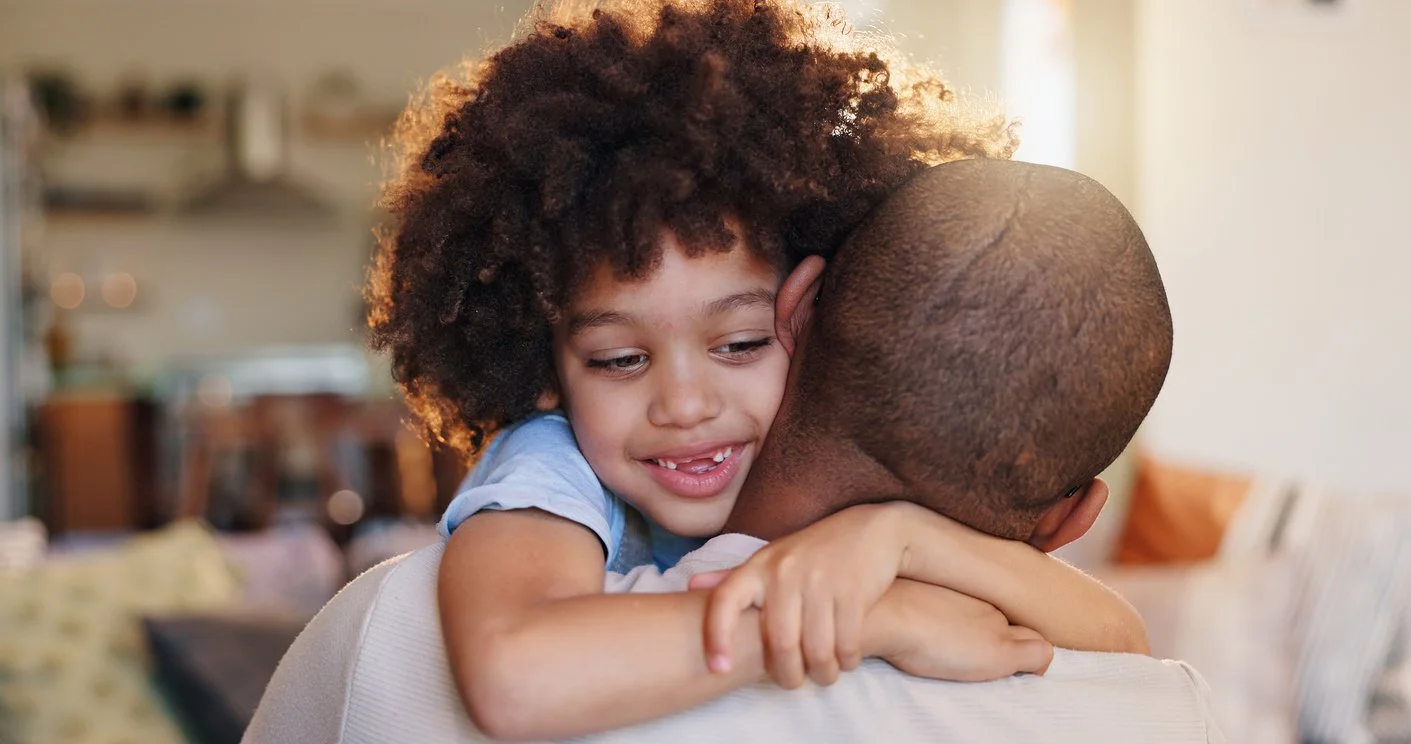
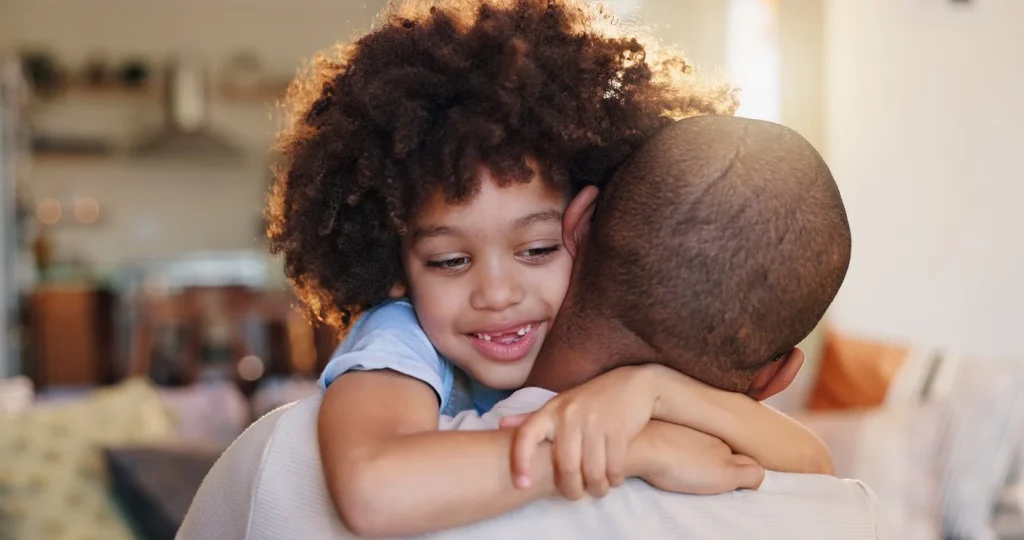
Child hugging a parent warmly at home
 By Ayisha Elliott
By Ayisha Elliott

Welcome to 2026. I know it’s looking very complex at the moment, and I know you’re scared—we all are. I generally write these pieces for non-Black parents raising Black children; however, I think this message is for all parents of young children. This year carries a particular type of peril. Our communities haven’t faced this specific flavor of danger within the United States affecting the masses of the population since the genocide of Indigenous peoples when the invasion began 250 years ago.

That being said, our communities have a hidden code of norms that are not safe for everyone. They are norms that subtly tell some children they must wait their turn to be heard or seen, with little encouragement to dream as big as they can. The words may say one thing, but opportunity, access, and resources say something very different.

We are in a time when nothing can be taken for granted and everything good, fair, and just must be protected. We have to reach for the most ideal version of equity. This is the time to take all doubt of possibility out of your mind and insist on it, unequivocally.

This moment is slightly different from the history of marches, judicial decisions, and constitutional amendments, because this is not just about the “exceptions to the rule”, the others: people of the global majority, women, disabled folks, or the queer community. This includes people who were thought to be protected. White, educated men who are not billionaires do not get a pass. They cannot pass go. Their $200 stolen. The lie is exposed.

It is crucial to examine the narratives we have practiced and passed down. Does your narrative, your songs, your books, your baby classes actively EXPRESS inclusion? Does the park where you take the dog reflect a diverse population? Does your yoga class acknowledge and honor the origins of the practice? Are we assuming these things are by choice, or have we recognized a design of exclusion? If the answer is no, do you know why?

When we are playing with and teaching our youngest people, they are learning by example faster than AI is evolving. Language of comparison, of class, of either/or thinking is problematic in a community of inclusion. Of course, as parents, it starts with us. We have to practice this in ways that don’t insist on perfectionism, but in ways that allow for learning and practiced humility. Here are a few examples you can try:

  • Instead of “We don’t do that in our family,” try “Some families do it this way, some do it that way, and both are beautiful.”

  • Instead of “They’re different from us,” try “They do things differently than we do, what can we learn from them?, what can we share in learning?”

  • Instead of “You’re so lucky to have what you have,” try “We’re grateful for what we have, and everyone deserves to have their needs met.”

  • Instead of “Those people over there,” try using names, or “our neighbors,” or “people in our community.”

  • Instead of “That’s weird or odd,” try “That’s new to me, tell me more about it.”

I believe compassion is easy for little ones. Adults tend to operate from some sort of fear. There is plenty to be afraid of, especially now, but fear will never develop into functional or positive clarity.

Children respond to joy in ways that are expansive. Children have a magic they are born with. Their minds are full of stories based only in imagination and possibility. If our stories about our neighbors, about our place in society, remove man-made barriers like race and fill their hearts with diverse language and knowledge of global humanity, then “different” only means options of possibility. Having a healthy sense of cultural appreciation, with a healthy lack of ownership, just shared joy is the world of a child’s connection.

Reject the narrative of division and insist, everywhere you are, that division is not tolerated, it is not celebrated and most importantly not ignored as a norm in this new world and your babies will follow!

For Parenting Educators: Burnout

Woman with eyes closed appearing exhausted, hand near her face
 By  Megan McQueen.
By Megan McQueen.

Exhausted. Nervous. Cynical. Headaches. Sad. These symptoms persisted, and I began to realize this wasn’t me. I used to feel optimistic, light, and joyful. These emotions appeared after a profoundly stressful time at work, and I didn’t like who I was becoming. Sometimes, I knew exactly why: there were WAY too many things on my to-do list, and it felt unreasonable to accomplish it all, or people I worked with were navigating significant challenges that were more than I could support. Other times, I couldn’t pinpoint why I felt all this. Maybe it was compounded stress. Labeling these feelings “burnout” helped me realize that it wasn’t a failure on my part that I was struggling. There were systems at work against me or too many responsibilities/demands on me that were unsustainable. Instead of just throwing around the term “burnout,” I could find tools to unravel these feelings instead of band-aid options.

People in caregiving positions often hold on to the stress of those they work with. If you recognize yourself as having symptoms of burnout, you might want to explore these suggestions to head toward healing. It is possible that what you are feeling is depression. Working with a therapist can help you tease out the best support for you.

Maybe it’s rigged
Sometimes, articles about self-care and burnout put the responsibility of the solution on the person navigating the feelings. Burnout might be a clue that the systems aren’t working for you. The cultural pressure to be productive so much of the time, job expectations that seem impossible, and the gender pressure many women feel to manage parenting, house upkeep, career, health, and relationships effortlessly and flawlessly are all systemic problems, not personal. We can mitigate these expectations, advocate for a healthier society, and care for ourselves. We can prioritize our needs to support ourselves. Release the idea that we are failing. Maybe the system needs to shift.

Notice and name
Slowing down to feel our feelings can help us tremendously. Identifying our feelings helps us realize that there is not something wrong with us and that there are pathways to move forward. We will not feel better if we push through and ignore our feelings. Mindfulness techniques help us pause and notice what we think. We may uncover some of the causes of our struggle. Through this awareness, we can address the root causes of our discomfort instead of trying to bubble bath it away. You may gain some clarity to help you move forward. Do you need to ask for more help with childcare? Leave a relationship? Change your job? Delegate some responsibilities? Lower your expectations for yourself?

Complete the cycle
Sisters Emily and Amelia Nagoski write about “the secret to unlocking the stress cycle” in their book Burnout. Historically, when humans faced a stressor, they often had a release after the stressful moment. If a hungry lion has spotted you, you run. Running helps you escape and helps your body process the flood of stress chemicals released by your body. Emily and Amelia suggest we don’t typically have releases in our modern stress cycles. We get a nasty email at work, mull it over, complain to a coworker, and go to the next meeting. We must “complete the cycle” and release the stress before it compounds. We can do this in many ways, but movement is an efficient answer. Hiking, dancing, jump roping, yoga, strength training, and tennis can all help release some of the stress that your body is holding. So can a good cry.

Simplify
There is much in this world that is out of our control. We can do our best to improve situations, but some things will take too long to change. We can stick to our work schedule, arriving and leaving at our set times and taking breaks. You could take a mental health day. The work will wait for you. Focusing on sleep, nutritious and convenient foods, water, and some movement can feel restorative. Can you cancel or delay some commitments to create space in your calendar?

Shanna B. Tiayan reflects on her reading of Burnout Immunity. “Burnout has a tendency to disconnect us from the things and people that are most important to us. Reconnecting with hobbies and habits that brought us joy prior to burnout, like art, gardening, or fishing, can be restorative and serve as a bridge to also reconnect with important people in our lives.Reimagine a post-burnout vision for your life, a vision motivated by optimism and hope that there is a better way forward.”

Be gentle and patient with yourself as you advocate for better conditions and prioritize your well-being.

Resources:

Burnout by Amelia Nagoski, DMA and Emily Nagoski, PhD (and a workbook)

Burnout Immunity by Kandi Wiens

Managing Secondary Traumatic Stress blog post

Slow Productivity by Cal Newport

This blog post was originally published by the Oregon Parenting Education Collaborative (OPEC). We have permission from OPEC to repost their content, and we’re grateful to share their valuable parenting resources with our community.

By Megan McQueen.

Megan McQueen is a warmhearted teacher, coach, consultant, and writer. She grounds her work in empathetic education, imparting a strong sense of community and social skills to those with which she works. Megan prioritizes emotional learning and problem solving skills. When not at work, she is most likely playing with her husband, two children, and pup.

The Gifts that Keep on Giving

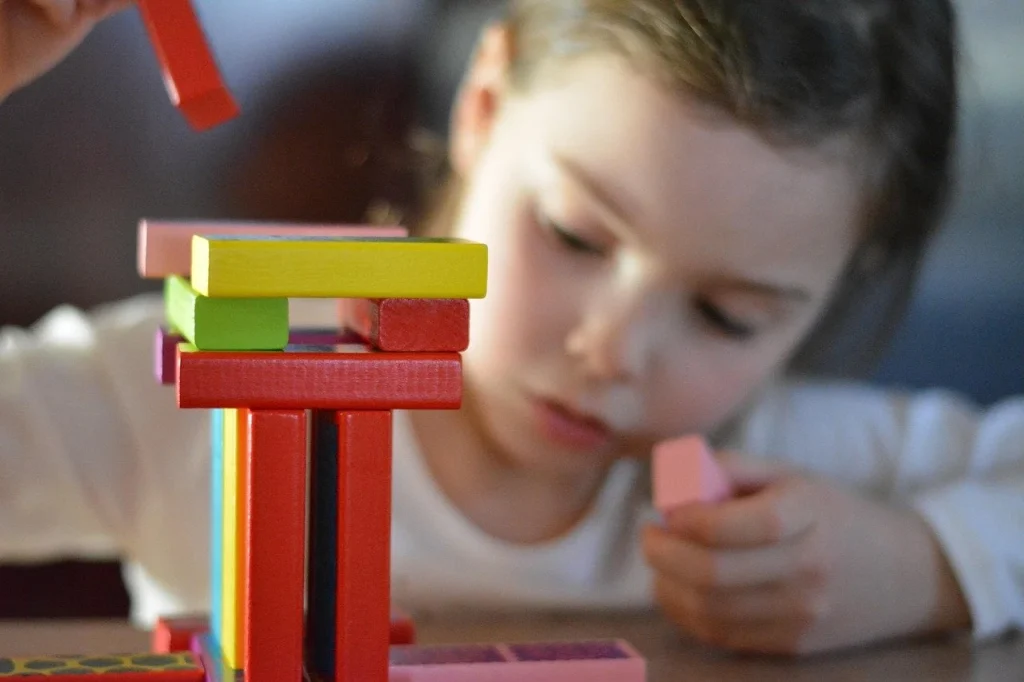
Girl stacking a tower of colorful wooden blocks
 By Aoife Rose Magee
By Aoife Rose Magee

I was recently at an event where a child was handed a toy. They asked an adult, “What does it do?” This was a reasonable question when there are so many toys that only seem to do one thing. And when toys only do one thing, children tend to lose interest quickly. More than anything, children require novelty for skill building.  So consider offering open-ended toys: items and materials that have nearly unlimited potential for what they can do when the opportunity arrives. In contrast to closed-ended toys, these are more versatile and allow for child-led, creative, and imaginative experiences with no predetermined rules or outcomes.

Ideas for Open-Ended Play

Building and Construction: For children who enjoy building and construction, some great options include wooden blocks, Lego, magnetic tiles or marble runs. What makes these open-ended is that they are reusable and can be configured in different lots of different ways. Keep in mind that purchasing full sets is unnecessary – the building blocks are the essential element for open-ended play. Natural materials and recyclables also make for good building supplies. Cardboard boxes, toilet paper tubes, plastic lids or twigs, stones, shells or large leaves are all excellent choices for loose parts that can be assembled or crafted into something new. It’s helpful to have designated spaces for construction and deconstruction activities.

Imagination and Dramatic Play: Open-ended play isn’t limited to construction sites. It can also come from the imagination or dramatic potential an item has. Can it be used to tell a story? Play kitchens (indoors or outdoors) and play food, dollhouses, small animals or figures, tea sets, play silks, animals, dolls, wooden bowls, spoons, pots and pans, baskets, safe containers, or other materials that can be used to extend the play experience. Role-playing outfits, accessories, and household props can bring in additional elements for dramatic play. 

Art Materials and Sensory Supplies: Art supplies and sensory materials offer outlets for creative play, self-expression, and skill development. Playdough or clay and accessories, kinetic sand, paint, sensory bins, natural materials, ribbons, beads, buttons, craft sticks, yarn, paper, markers, and crayons. Keep in mind that children need encouragement to enjoy the process and explore colors, textures, and materials and not be concerned with a specific product. All they need is the space and ability to be messy and express themselves freely.

Games and Activities: Adults can also encourage games and open-ended activities that support movement and fun for children that require few if any materials. These might include Simon says, freeze dance or tag, bubble chase, animal walks, hopscotch, scavenger hunts, bean bag toss, obstacle courses, fort building with blankets and cushions, Red Light Green Light, hide and seek, or I Spy. Also, balls can be used in many ways and are often a hit with children. Feel free to draw from your own experiences and be sure to ask other adults for their ideas.

Through their open-ended play, children learn and develop many physical, emotional, and mental skills that they can build on throughout their lives. More than anything, open-ended play allows children long periods of unstructured time to get bored and shift into discovery mode, bringing forward their creativity and imagination.

Additional Resources

Check out this article by Katy Andewrson, “Loose Parts is the Real Brain Booster That Fancy Toys Pretend to Be” to learn more about the benefits of open-ended play.

This set of books on “Loose Parts” through Redleaf Press offers excellent information and beautiful photography. These can also be purchased separately at other booksellers.

For some examples of open-ended art, please read The Power of Open-Ended Art: Sparking Creativity in Preschoolers by Creative World School or The Best Kids’ Art Ideas for 2025 by Jean Van’t Hul.

 Aoife Rose Magee
Aoife Rose Magee

Sleep and Rest Routines for the Whole Family

Young girl sleeping peacefully in bed with a stuffed bunny
 By Aoife Rose Magee
By Aoife Rose Magee

We’ve all experienced the challenges of supporting an upset child who was tired or not well-rested. And we have also been in a position as parents when we tried to do more than was reasonable on less sleep than we really needed, too.  

How long and how well we sleep has a big impact on the overall well-being of both children and adults alike. We need adequate sleep to:

  • Restore our energy and heal our bodies

  • Grow and develop optimally

  • Have good brain functioning that includes attention, focus, learning, decision-making and memory

  • Regulate emotions and behavior

How much sleep is enough? According to the Centers for Disease Control and Prevention,  how much sleep you need depends on how old you are, and they provide guidance on the daily recommended hours of sleep for children and adults of various ages. This can range to as much as 17 hours a day for newborns, all the way down to just seven hours a day for some particularly light-sleeping adults.

Getting sleep right is important: children who are chronically tired are less able to regulate their emotions and behaviors and have difficulty paying attention. It can impact their physical, emotional and mental health. If you are concerned about your child’s sleep, talk to your healthcare provider. They will be able to look at health problems that may be getting in the way of nighttime rest requirements or support an individualized approach to address the needs of the family.

Since sleep influences our long-term health and wellness, having family bedtime routines can support quality sleep habits for everyone and improve cooperation in children.

Some steps we can take to develop these habits for our children:

  1. Encourage children to develop awareness of their body’s need for rest and calm.

  2. Set a consistent time for bedtime that takes the age of the child (see the above CDC link) into consideration. Start to reduce lights, noise, screen use, and activity in the home well before that time.

  3. Use a predictable schedule for washing up, brushing teeth, using the bathroom or diapering, and putting on night clothes.

  4. When adults provide balanced schedules and boundaries, children can practice self-regulation and change from active to restful.

  5. Children will seek connection for safety and comfort, so make time for cuddles, sharing stories, and reading books to meet their emotional needs. Read Brightly has a list of books by Jennifer Ridgeway that can help in Sleepytime Stories: Books to Help Children Build a Bedtime Routine.

  6. Create a peaceful sleep environment for children using white noise or soft music, calming scents such as lavender or chamomile, cool temperatures, and darkness (add a nightlight, if needed).

  7. Getting up at the same time each morning and having balanced daily routines that include appropriate activity and rest periods can help improve naps and nighttime sleep. Observe signs of maturation in the child as they outgrow naps and consolidate sleep.

Sometimes families will put lots of thought and care into a bedtime routine, and find that their child just doesn’t want to play along. That’s why I recommend, as you’re planning a a bedtime routine, try allowing your child to have some choice in their routine, such as what they wear or what special comfort items they bring to bed. This helps reduce power struggles for children, who naturally seek autonomy and independence even from young ages.

Some children can become stressed about being separated from their parents during the night, so be sure they receive care and attention in positive ways to encourage relaxation and sleep. Adults can join their children in being quiet and still as they transition to sleep or rest.

Sweet dreams families!

 Aoife Rose Magee
Aoife Rose Magee

Aoife Rose Magee, PhD, earned a doctoral degree in Special Education from the University of Oregon Early Intervention Program. Her personal and professional interests have been largely focused on the social-emotional development of young children and how positive parenting and teaching practices may contribute to healthy development, promote resiliency, and mediate risk factors. Aoife is professional development specialist for students and practitioners in the areas of Early Childhood Education, Early Intervention/Early Childhood Special Education and Parenting Education.  Aoife serves as a Master Trainer for the Oregon Registry and frequently provides community based and private workshops for early childhood educators, parenting educators, and other professionals. For more than thirty years, she worked directly with families as a parenting educator, and she is a former Oregon Parenting Education Collaborative Hub Coordinator for the Parenting Success Network. She currently teaches as a full-time faculty in the Early Childhood Education Program at Lane Community College. She is also the mother of a fantastic young adult son and enjoys nature and creative pursuits in her spare time.

Understanding ADD and ADHD

Child running quickly through a wooded field wearing a helmet
 By Megan McQueen.
By Megan McQueen.

By Megan McQueen.

We know that your love for your kid is indescribable. At the same time, we can be exasperated by their seeming constant high energy or forgetfulness. If you are parenting a child with a diagnosis of ADD or ADHD, or if you are noticing your child has symptoms, you may be wondering what you can do to support them. Understanding that their brain works differently can help you have more compassion for their experience and patience as you navigate home life together.

Understanding ADD and ADHD
Attention Deficit Disorder and Attention Deficit Hyperactivity Disorder are brain conditions that manifest in different ways but are often categorized by inattention (but sometimes hyperfocus) and difficulty controlling behavior.

People with ADD or ADHD usually feel frustrated at forgetting things, losing items, or being late. They sometimes think that life seems easier for most other people as they struggle.

Many people with ADHD are highly creative and can hyperfocus on a project they are excited about. They are often resilient and great conversationalists. Learning more about these conditions will help you support your child and help them understand how their brain works.

Parenting Tips
We want to focus on the positive with our kids so they feel we are in their corner instead of pointing out when they have missed the mark. We can help build social skills by reminding kids to listen well without interrupting and ensuring everyone has a turn to contribute to the conversation.

Building routines and organizational strategies will support our kids as they move toward adulthood. A WebMD article suggests breaking tasks into smaller steps that they can check off.

Angela Duckworth writes for Character Lab to “Notice when they plan ahead: ‘Great job getting all your stuff organized!’ Appreciate ingenuity in navigating self-control dilemmas: ‘Keeping your cell phone in a different room is such a clever idea!’

Treatment Options
We are not medical doctors, and each person is different. We encourage you to talk at length with your medical provider to find the best options for your family.

You may want to consider communicating with your child’s school so they can implement accommodations to support your student as well. Some of these are simple, such as offering immediate feedback. Others may need documentation to help, such as additional time for tests.

These supports may be crucial to have in place as your student ages and possibly attends college or university classes. Your child may qualify for a 504 plan if your student’s learning is affected.

Hold on to the unconditional love you have for your child. Surround them with that and help them break down any shame they might be feeling about this difference.

Understanding the brain better may help you build patience to greet your child with love. It is not a problem or something wrong with them. Help them see the strengths they have and the joy they bring to your family.

Resources:

ADHD is Awesome by Penn Holderness and Kim Holderness

Children and Adults with Attention-Deficit/Hyperactivity Disorder (CHADD)

Helping Kids with Behavior Struggles – An OPEC blog post

Mindful Parenting for ADHD by Dr. Mark Bertin and Ari Tuckman, PsyD

Raising Girls with ADHD by Mary Anne Richey

The Power of Picture Books

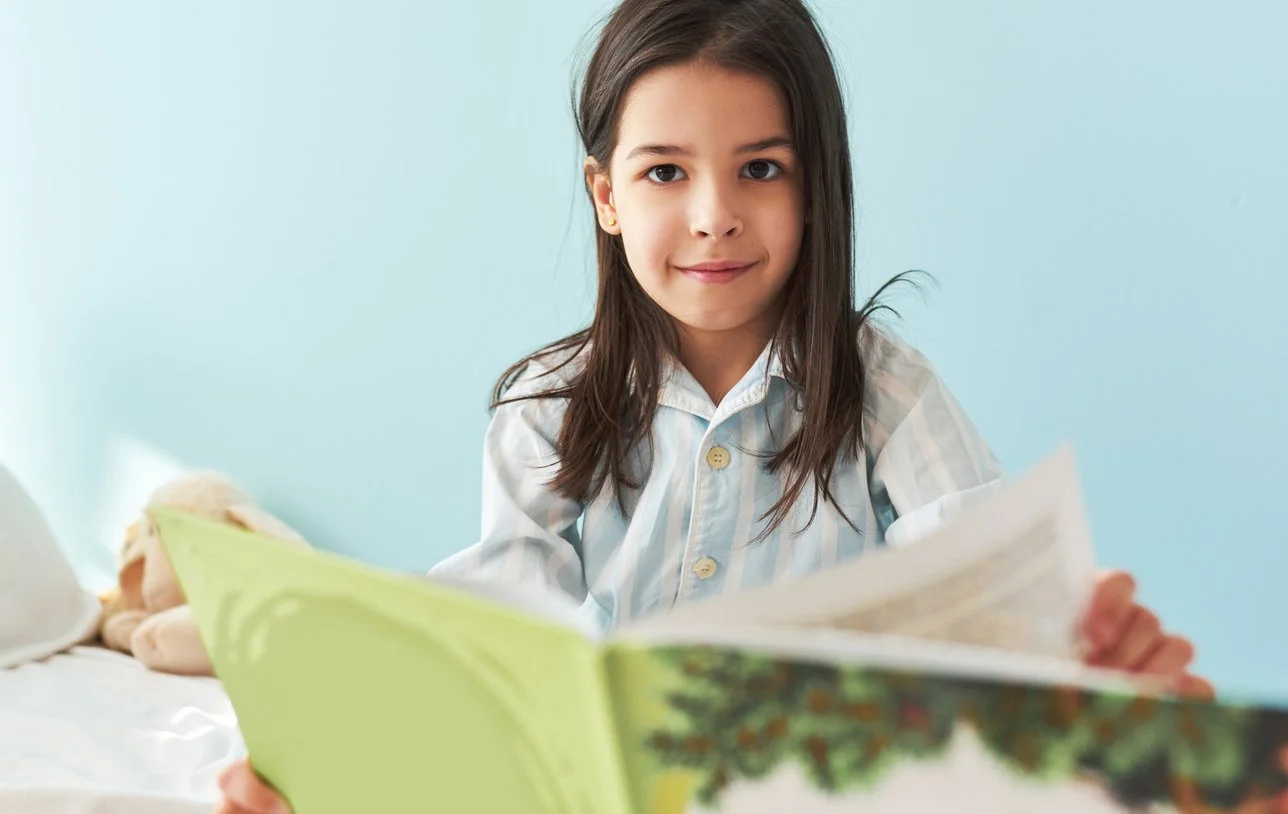
Girl sitting on her bed reading an open picture book
 By  Haley Bosse
By  Haley Bosse

My family teases me about my vast collection of picture books. They say I can open a library out of our home. I give picture books as gifts to recipients of all ages.

They are works of art! Literally! I am constantly amazed at the artistic skill of the illustrators. The authors magically make the readers feel inspired, cozy, seen, happy, and mighty in just 32 pages.

Behold, the Picture Book

Mac Barnett was recently named the National Ambassador for Young People’s Literature. This prestigious appointment comes with an opportunity to choose a platform on which to focus for the tenure. Barnett named his theme, Behold, the Picture Book! Let’s Celebrate Stories We Can Feel, Hear, and See, to elevate the status of these texts.

When we take a moment to consider the talent required to create a book that makes the reader feel so deeply and to acknowledge the special rituals that often surround snuggled-up book reading time, the word “behold” is perfect. These books have become beloved by children.

As Barnett says in an interview with NPR, “The picture book is my favorite art form. It’s such an incredible, vibrant, exciting, forward-looking, experimental art form.”

Rebellious Read Alouds

OPEC’s Training Academy hosted former kindergarten teacher and author, Vera Ahiyya, to discuss her book, Rebellious Read Alouds and the power of picture books. She shared staggering statistics about diverse representation in picture books.

Animals are the 2nd most popular primary character, and Ahiyya said children are less likely to emulate book behavior from an animal character than they are from a person. Learning valuable lessons from books would have a larger impact if the characters were people.

Ahiyya reiterated the importance of reading “mirrors, windows, and sliding doors” books, an idea coined by Dr. Rudine Sims Bishop. Dr. Bishop suggests that we need all three types of books. Mirror books reflect the reader’s experience; they see themselves in the story. Window books help the reader see into other worlds. Sliding glass door books help the reader enter into another world through empathy.  

Finding a “Just Right” Book

As a classroom teacher, I loved the challenge of matching the perfect book to a student. Learning a student’s interests and reading ability, thinking through my favorite stories, and handing a child a book they loved was highly fulfilling.

I love seeing a kid who is learning to read and cautiously sounding out words, laughing at the book in their hands instead of throwing it down in boredom or frustration. Our school and public librarians create magical storytimes and community outreach events that help libraries become important “third places” for children and families. 

“If we think that children’s books are anything less than real literature, it’s because we think kids are something less than real people. If we believe they’re real people, then they deserve good art.” – Mac Barnett

Resources to find high-quality children’s books:

Dolly Parton’s Imagination Library

  Dolly Parton’s Imagination Library is a book gifting program that sends books each month directly to your home until your child’s 5th birthday, for FREE!
Dolly Parton’s Imagination Library is a book gifting program that sends books each month directly to your home until your child’s 5th birthday, for FREE!
 Oregon Parenting Education Collaborative (OPEC)
Oregon Parenting Education Collaborative (OPEC)

This blog post was originally published by the Oregon Parenting Education Collaborative (OPEC). We have permission from OPEC to repost their content, and we’re grateful to share their valuable parenting resources with our community.

The Gift of Difference

Family gathered around a holiday dinner table with a joyful child

Here we are in November, hurtling into the holiday season. For many reasons, this season brings a multitude of emotions and relationships, in its most ideal form, a sense of togetherness. Yet multiracial families raising Black children, the season can surface particular complexities. The experience of othering, of being marked as different by the outside world, is not an abstract concept but a lived reality. In our simple society, there’s a pervasive practice of assessing value based on difference: if I believe differently than you, or light my candles on a different day, somehow one must be deemed “most” important. This is unfortunate, yet easily remedied.

For white families raising children who identify as Black, it is of utmost importance to foster self-love in your child. I believe it is helpful to do so in an introduction and practice of diasporic appreciation for expression. Expression of love, togetherness, family, triumph, and loss. To be Black in this world is to be of the world. This is a pride sometimes lost in the here and now. However, I encourage you to always remember and foster in your child knowledge of a larger connectedness throughout the world. This isn’t something you must perfect yourself, but something to witness and encourage through exposure, knowledge, and a total absence of judgment about what is “good” or “better.”

Consider art, for example. True art in its purest form is simply free creation, the absence of fear. To create freely is to express without the constraint of perceived limits. If we engage only the left side of our brain and never access the right, we become stifled. Black children need to know that celebrations this season reflect diverse global stories of struggle, renewal, and joy that connect all of humanity. Whether Diwali, Hanukkah, Christmas, Eid, or Kwanzaa. Each represents a narrative of perseverance and hope. They may be religious in form, and that’s okay. You don’t have to join a religion to appreciate its story. Understanding how each narrative connects humankind; that’s the story to be told.

You don’t have to practice a tradition to appreciate what it brings to your community.The holiday season need not be reduced to only your family’s experience. Additionally, engagement doesn’t require wealth or extensive resources. It can be as simple as reading a library book about a celebration together, watching a documentary, or having a conversation with neighbors. Explaining each element of a holiday without judgment: the good, the bad, and the controversial allows your child to appreciate diversity, possibility, creativity, and storytelling. This includes difficult truths: discussing “Thanksgiving” alongside the National Day of Mourning honors the complexity of American history and teaches that honest storytelling matters more than comfortable mythology.

Your child’s critical thinking will flourish when asking questions and seeing differences as normal and expected, fostering ease and openness. Practice whatever traditions your family holds dear, of course. However, when others are celebrating, learn a little about it. If you have the means, discover where celebrations are being held to donate, contribute, or simply appreciate. Share stories with enthusiasm, respect, joy, and curiosity.

Your role is to ensure your child develops both strong individual identity and deep connection to broader humanity. We are different, and we are one. That’s the season’s lesson.

Ayisha Elliott is a mother, grandmother, and relational parenting guide who understands the beautiful complexity of raising Black children in today’s world. As a mother of three and grandmother of five—currently raising three of her grandchildren—she brings both lived experience and 25 years of professional expertise in relationship-centered approaches to the everyday realities of parenting across generations. From navigating school systems and cultural identity to managing sibling dynamics and travel logistics with children, Ayisha has learned that the same principles that transform organizations can revolutionize family life. As the content producer of the podcast Black Girl From Eugene, award-winning columnist, and sought-after speaker, Ayisha creates authentic conversations about what it means to raise confident, grounded children while honoring their heritage and preparing them for the world as it is. Her unique perspective comes from successfully balancing entrepreneurship with hands-on parenting, traveling internationally with the children she’s raising, and understanding that every parenting decision carries both personal and cultural weight. Through her writing and speaking, Ayisha offers practical wisdom, honest reflection, and relationship-building strategies that help Black families thrive—not just survive—in complex times.

Co-Parenting After a Separation or Divorce

Two parents and their daughter smiling together outdoors
 By  Haley Bosse
By  Haley Bosse

Going through a separation or a divorce can be traumatic for both children and parents. You may be navigating feelings of grief, anger, disappointment, or maybe even ease, freedom, and joy. Children and adults have many different feelings and that is okay. 

When I was teaching, I often supported families as they navigated a transition from parenting together in one house to co-parenting in different households. I reminded families that children are resilient and there were ways to support them through the process.

Families are also resilient! Caring for yourself and holding your family in your heart will help guide you in making helpful, hopeful decisions for your loved ones.

Lean into your support network for help managing your emotions. Find a trusted counselor who can help you through this process. By caring for yourself, you will model important habits for your children. You will also be a stronger, more present parent if you can maintain your focus on your children’s needs when you are with them.

There are tools you can use to put your child at ease and build their resiliency as you move through this transition. 

Focus on the positive moments

Talk with your children openly about the strength of your family. When processing a traumatic event in my life, I learned the phrase, “Strength comes from love.” This has become my mantra when facing challenges large and small. Remembering my love as my source of strength becomes powerful. 

We must learn to accept things out of our control (while working toward improving them, if possible). We cannot be positive about everything, of course. It is important to acknowledge our true feelings and deal with them. But try to reframe things when you can. As Neil Barringham says, “The grass is greener where you water it.” This is a time for radical acceptance

Build a social network

Find people who care for you, share your joy, and listen to your struggles. Realize that each family member will need people for these roles. Help your children connect with counselors, teachers, cousins, and friends.

You may need to seek out new or different resources as you navigate new economic situations and possible new legal territory. There is no shame in asking for help. You are caring for yourself and your family and allowing others to do the same.

Teach your child healthy ways to process their feelings

Even if the separation happened a while ago, kids may unknowingly have feelings of resentment or abandonment that it might help them to work through. Try the “Rewind, Remind” technique adapted from The Whole-Child Brain to go back through a stressful story and retrain your mind to think differently about a situation.

Talk through a stressful event and tell your child that they can pause the story whenever they would like to by saying “pause.” They can fast-forward to another part of the story until you arrive at the end when there is some closure. Then, go back to a part of the story that was skipped and talk through why that part was difficult.

Notice any physical changes – increased heart rate, shallow breathing, etc. and talk your child through calming exercises. Breathe deeply together.

When calm and processing the challenging parts of the story, you are telling your brain that you are safe, even though this hard thing happened to you. This resiliency-building exercise can be used for all kinds of difficult life events or future challenges you’re anticipating.

Show interest in your child’s life

Ask about how they spent their days apart from you. First, center yourself so that your conversations are genuine and do not seem that you are digging for information about their other parent.

Ask open-ended questions such as: What was the best part of your day? What was your not-the-best part? (Some families call this the Rose and Thorn or Highs and Lows). If you are not getting many details back from your child, try questions such as: Did you go anywhere in the car? What did you do after lunch?

Or you can play games such as Guess Which is Real. Your child can tell you two things that happened and one they make up. Your job is to guess which is which. This is a fun way to cultivate connections and build your child’s ability to remember and recall.

Maintain consistent boundaries and expectations at both homes

Kids thrive with structure and routine. As best as you can, talk with your co-parent about what expectations are important to keep in place at both homes. Try to maintain consistent guidelines and routines. 

Just as your marriage or partnership did not fail, it just completed its time, your family is not broken; it is evolving. As difficult as this period may be, know that you are not alone. Many other couples have had to navigate this transition and you will also. Keeping your children’s needs as priorities will help guide you through this time.

 Oregon Parenting Education Collaborative (OPEC)
Oregon Parenting Education Collaborative (OPEC)

This blog post was originally published by the Oregon Parenting Education Collaborative (OPEC). We have permission from OPEC to repost their content, and we’re grateful to share their valuable parenting resources with our community.

Supporting The Rights of Children

Adult and child's hands touching, symbolizing trust and protection

Over the summer, my son and I had an opportunity to tour the United Nations Headquarters in New York City. More than 65 years ago, the United Nations adopted the Declaration of the Rights of the Child, laying out a vision for the rights that each and every child should have. (You can find out more about how the United Nations has been considering the needs and rights of children.)

I like to refer to the shortened list below:

The Rights of Children are:

  • To be kept safe

  • To avoid unnecessary discomfort

  • To have their possessions treated as their own

  • To be treated fairly

Children begin to develop self-esteem from birth and need to have a strong sense of connection to engage well with others. It’s especially important that these relationships are built on mutual respect. A relationship of mutual respect means that it is just as important for an adult to treat the child with respect as it is for the child to treat the adult with respect.

Mutually respectful relationships feed into a child’s developing sense of self-worth. Children learn to evaluate themselves based upon the information they have gathered in their daily exchanges with the adults who care for them. Over time, a child creates a positive or negative judgment of self-worth, which has a long-term impact on their self-esteem and self-confidence.

A common way that children develop low self-worth is through disrespectful punishments. The acts of inflicting pain, loss or suffering as a penalty for unwanted behavior are considered inappropriate punishment. More than just being disrespectful, this form of punishment violates the basic rights of children. For more information on this please refer to the free article Effective Discipline to Raise Healthy Children on the American Academy of Pediatrics website. Children need love, security, and affection, along with consistent boundaries and structure for emotional and physical safety.

How as parents should we respond to unwanted behaviors while giving our children the respect they deserve?

When undesirable behavior occurs, your discipline efforts should seek to address the cause of the behavior, and to teach the child a new, replacement behavior.

  • Try to discover the cause of the behavior.

  • Choose a strategy that treats the cause of the behavior (such as a child’s lack of skill in entering play), rather than the symptom (perhaps the child pushed another child during play). Can you communicate how the child should have behaved in that situation?  

  • Put your strategy into action.

  • Reflect. Was it effective? Did it stop or minimize behavior while still protecting your child’s rights?

You may want to tailor your approach to your child’s age and stage of development, when needed. When in doubt, remember that children also benefit from seeing positive role models who demonstrate good behavior and healthy habits.

Most importantly, children need to feel loved and cherished unconditionally, which builds their self-esteem and confidence. Supportive caretakers help children build confidence by encouraging their efforts, not just their successes. As caring adults, we can support children learn and grow by using positive approaches in our relationships with them each day.

Affection can be shown through physical touch, positive attention, and emotional support. Quality time spent talking, playing, and engaging in activities with a parent is vital for healthy development and strengthening relationships.

I would encourage everyone to do their best to understand, promote, and defend children’s rights and support their growth with respectful, loving limits.

 Aoife Rose Magee
Aoife Rose Magee

Aoife Rose Magee, PhD, earned a doctoral degree in Special Education from the University of Oregon Early Intervention Program. Her personal and professional interests have been largely focused on the social-emotional development of young children and how positive parenting and teaching practices may contribute to healthy development, promote resiliency, and mediate risk factors. Aoife is professional development specialist for students and practitioners in the areas of Early Childhood Education, Early Intervention/Early Childhood Special Education and Parenting Education.  Aoife serves as a Master Trainer for the Oregon Registry and frequently provides community based and private workshops for early childhood educators, parenting educators, and other professionals. For more than thirty years, she worked directly with families as a parenting educator, and she is a former Oregon Parenting Education Collaborative Hub Coordinator for the Parenting Success Network. She currently teaches as a full-time faculty in the Early Childhood Education Program at Lane Community College. She is also the mother of a fantastic young adult son and enjoys nature and creative pursuits in her spare time.