
Chores and Cleaning Up

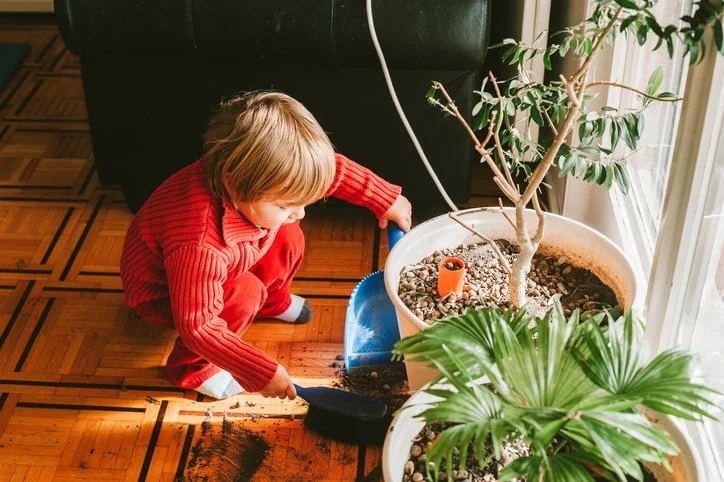
Young child watering a potted plant as part of a household chore

Your kids learn from watching you, they want to grow up and be just like you- and that includes cleaning the house!

Kids benefit from participating regularly in chores in many different ways. Chores teach children responsibility, pride in their belongings and their home, routine, and other lifelong skills that will help kids become more successful and organized later on in life. It’s important, however, for parents to find the right balance of appropriate chores based on their child’s age and ability. To begin teaching your child chores, start with clear communication. Your kids learn from watching you, they want to grow up and be just like you- and that includes cleaning the house! Sit down with your child and talk to them about how every family member contributes to chores and keeping the house clean, and tell them how excited you are to give them their very own chore! Talk about all the things that need to be done for the house to keep everything running smoothly. For example, after dinner, we put the dishes in the sink, rinse them, and load the dishwasher. What would happen if we didn’t do the dishes? (We wouldn’t have dishes to use for our next meal.)

Find out what your children are interested in learning or doing to contribute. If your child is fascinated with the vacuum cleaner, maybe they would like to vacuum the living room. Walk them through exactly what you expect them to do. The step before vacuuming is to pick toys up off the floor. (“Your stuffed animals go in the basket when you’re done playing with them”). Especially when your child is learning, notice and praise their effort. Try to let go of your standards of perfection, or that there is a right way to do it (your way). There are many ways to fold a towel. As long as the towels fit in the cabinet, can you let go of your “right way?” Help them to feel proud of themselves for doing their chores. They are a valuable part of the family, and we all can appreciate how everyone contributes.
When talking to your toddler about chores, keep it very simple. While your ten-year-old might be able to unload the dishwasher with very little direction, your three-year-old may need more simple and clear instructions, as well as gentle reminders and redirection to stay on task to pick up their toys off the floor. When your toddler is first learning, help them out. As they get better at their chore, gradually help less and less. Before you know it, they’ll be completing their tasks on their own!
As your child gets older and masters their original chores, begin adding in new ones. Consider varying chores week-to-week to mitigate frustration or boredom. If they’re pros at putting their toys in the basket, practice having them line their books on the bookshelf as well, and then put their plate in the sink after dinner.

Some kids thrive by seeing their chores written out in a chart, and others prefer being reminded at certain times of the day (for example, laundry gets taken out in the morning and toys are picked up after dinner). Find what works best for you and your family, and follow through with it. And as with anything, give your child lots of praise! Chores aren’t always fun for kids, but positive reinforcement gives them the encouragement they need to continue and be successful.
Chore ideas based on age:
Ages 2-3
● Put away toys
● Water plants
● Pile up books
Ages 4-5
● Unload utensils from the dishwasher
● Help put away groceries
● Make their bed
● Clear the table
● Fill up the pet’s food bowl
Ages 6-7
● Sweep floors
● Set the table
● Sort laundry
● Keep their room tidy
Ages 8+
● Load dishwasher
● Vacuum
● Put away their laundry
● Make their own snacks
● Take the pet for a walk
As with anything, focus more on your child’s efforts and less on perfection. If your child is trying their best and contributing to the household chores, provide them with plenty of praise consistently. They won’t always want to do their chores, and that’s normal. Try to make it fun by racing to see who can finish the quickest, or by helping them be silly during chores. Keep it fun!


Managing Stress as a Parent

Parent standing at a sink full of dishes looking stressed

High levels of stress can make it hard to be calm and consistent with our children.

Stress is a natural response to a threat or a challenge. It’s our mind’s and body’s way of preparing us to respond to something difficult or unexpected. When we experience stress, our bodies have a physical reaction, and our minds race. Family life can be overwhelming, and busy, and causes stress for all of us at times.

High levels of stress can make it hard to be calm and consistent with our children. We may find it challenging to spend enjoyable quality time with our kids when we’re experiencing stress; however, children thrive when their parents are responsive and calm in the midst of chaos, and they learn to adapt to stress by observing your reactions to it. Processing stress can be incredibly challenging, but there are many tools and techniques you can practice to help manage stressful situations.

How to Recognize Stress

When we experience a stressful event or situation, our brain processes that event with a physical, emotional, and mental reaction. Which response we notice first varies from person to person, but we all have patterns of response we learned in our formative years. The trick is to identify and respond to your early warning signs of stress and implement a calming strategy to return to equilibrium and a calm presence. Then you can thoughtfully respond to your child.

Your body delivers clear warning signs that communicate your stress levels:

  • Stiff muscles (shoulders or neck tight, jaw clenching)

  • Headaches or stomach aches or butterflies

  • Irritability or anger (negative thoughts or judgments)

  • Disturbed sleep (worried thoughts, tossing and turning)

  • Problems concentrating (intruding thoughts, worries)

  • Feeling overwhelmed or unable to keep up with everything (freeze response; where do I start?)

What do you notice first in your body? When you notice a physical response, that is the time to use a calming strategy.

How to Manage/Reduce Stress 

Notice the tension and relax 

The muscles in your body naturally tighten when you get stressed. You might feel tension in your shoulders, neck, jaw, or other parts of your body.

When you notice yourself getting into a cycle of stress leading to physical tension, relaxation techniques can help. There are many ways to reduce physical symptoms of stress.

  • Breathing: Take slow, deep breaths. Breathe in through your nose, deeply into your lungs, and out through your mouth, exhaling completely. When you’ve taken a full breath, hold it in for a moment and then breathe out slowly, being sure to let out all your breath.

  • Muscle Relaxation: When you notice a specific muscle set getting tense, try to find a quiet time to relax uninterrupted. Sit or stand with your feet flat on the floor, your head held straight and your hands resting on your thighs. The aim of this exercise is to intentionally tighten and then relax each set of muscles.

  • Mindfulness: With practice, we can become more aware of what we are thinking, feeling, and doing in the present moment. Mindfulness helps us pause briefly before responding or taking action, giving us time to make a choice about what we’d really like to do or say. The aim of mindfulness is to focus on the moment by paying attention to your breathing, and what you feel and hear. If and when your mind wanders, notice those thoughts and acknowledge them, then bring it back to your breathing. By practicing mindfulness during calm times, you’ll be able to better control yourself and react in more positive ways during high-stress situations.

When you’re feeling stressed, try to catch yourself and then challenge any unhelpful thoughts you may have. These thoughts might pop up with little or no warning, and while they may feel believable during a high-stress moment, they will often seem exaggerated later on. If you find yourself thinking “I’m a terrible parent,” try to catch that this is just a thought that will cause you more stress. This might take some practice but will be very helpful in managing your stress.

Once you acknowledge that you’re having an unhelpful thought, try to challenge the thought until you’ve reached a more helpful way of thinking. To challenge these, question whether or not what you’re saying is really true. Ask yourself if you’d say this to a spouse or friend in this situation. Are you really a terrible parent, or did you have a challenging time putting the kids down for bed tonight?

When you recognize signs of stress, are able to implement a successful calming strategy, and then respond to the stressor in a proactive way, you are teaching a positive life skill to your children. It can be helpful to walk through the experience out loud- for example, you might say, “Rats! I got distracted and burned the pancakes! I’m disappointed, but it’s not the end of the world. I’m going to slow down, take a deep breath, and start over.”

Parenting is challenging, and stressful situations will arise. When all is said and done, try to have compassion for yourself. Recognize what went well in your day, and congratulate yourself for those accomplishments. If things don’t go as planned, try not to be too hard on yourself. There are things that are out of control, and not every day can go exactly as planned. Utilize your coping and stress management skills, and treat yourself with kindness.

Triple P – Positive Parenting Program

Are you interested in receiving more parenting advice? Triple P Online – Positive Parenting Program could be for you! This online parenting program allows you to take a parenting class in the comfort of your own home!

If you live in Lane County, you can get Triple P Online for free by filling out the form on the Triple P page. A staff person from Parenting Now will send you an access code within 24 hours and you’ll be able to start using the program right away! For more information about the program and to sign up visit the Triple P page.

Getting Creativity Flowing with your Elementary Schoolers

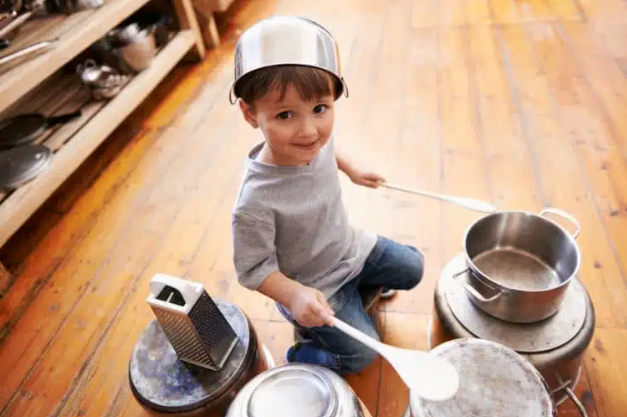
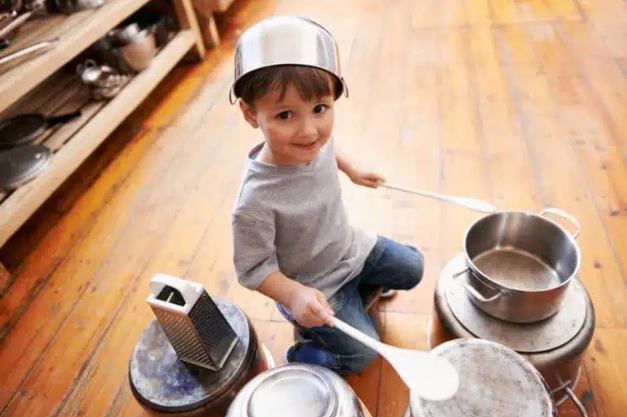
Child creatively drumming on pots and pans with a pot on their head

Giving your children opportunities to express their natural creativity enhances their brain development. When they have fun expressing themselves with activities like music, arts, and crafts, they learn to actively solve problems and look at situations in new ways. Creative expression is an important part of life! The arts provide opportunities to explore culture and develop thinking, communication, and social skills. Music promotes number and language skills. It also helps children develop rhythm, melody, and timing and is naturally calming. Drama and acting develop spoken language. Drawing and creative movement activities like dance help develop fine and gross motor skills. Encouraging and providing opportunities for creative expression helps develop confidence and healthy self-esteem. Through the arts, children learn more about their world!

It is important to focus on the process of creative expression, rather than the result. With practice, curiosity, and repetition, their skills will develop over time. The pure pleasure of putting crayons to paper, or manipulating a blob of clay in their hands is something to enjoy. Try to keep judgments out of your comments to your child. Instead, describe what you see and ask open-ended questions. For example, “There is a lot of red in your picture, can you tell me about your drawing?”

Creative expression can help children access and articulate their feelings. It may be easier to draw a picture of how they feel than to talk about it. You may hear them work out conflicts or challenges through their creative play. By expressing themselves through art, music, or drama, children can try out new ways of thinking and problem-solving, and sometimes come up with creative solutions.

How to Encourage Your Kids to be Creative Notice activities your child shows interest in

Often, things that our kids are interested in come out during playtime. Pay attention to repeated activities that they do during play times to see what might spark their creativity. If your child is always strumming on their toy guitar and banging on pots and pans, see if they are interested in a local music class. If they love to move their bodies any time a song comes on the TV, a dance group might be fun! Joining a group or class can be a way of encouraging and expanding their interest and skills.

Let your child try different things

You might find that the first activity you try isn’t the one your child is passionate about, and that’s all part of the learning process! Continue to pay attention to what they’re showing you they like through their play, and with time you’ll find creative activities they enjoy. Practice is how kids (and adults!) grow their confidence, so if you find something they enjoy, try to stick with it for a little while to see your child grow and thrive with a new, fun skill being developed. When you encourage your child to stick with an activity, even when it seems hard at first, you are building resilience!

Encourage your child’s interests

Incorporate creative play into your regular routine with your child. This could look like painting and coloring, singing and dancing together, playing dress up, and making up silly stories. Find whatever works best for your family!

When you’re out and about, make a point to talk about things around you that you find beautiful. Is there a building you pass on the way to daycare that has a beautiful mural? A cherry blossom tree that blooms near your house and creates a pink floor on your walks? Point out details such as colors, lines, and textures. This helps your child see the world through a creative lens!

And encourage your child’s attempts!

If you’ve put your child in music lessons to learn to play the violin, show an interest in it by listening to them play! When they bring home artwork they made at school, talk about what they love about it and hang it up for the family to enjoy. Try to avoid any criticism, such as “Dogs aren’t supposed to be taller than houses!” Let your kids express themselves freely, and give plenty of praise for trying hard and learning new skills!

Creative hobbies are excellent for self-expression, self-confidence, and connection with others who share the same interests as your child. Creative activities can be a source of pleasure and pride for many children and parents, and an enriching part of life!

Sharing is Caring

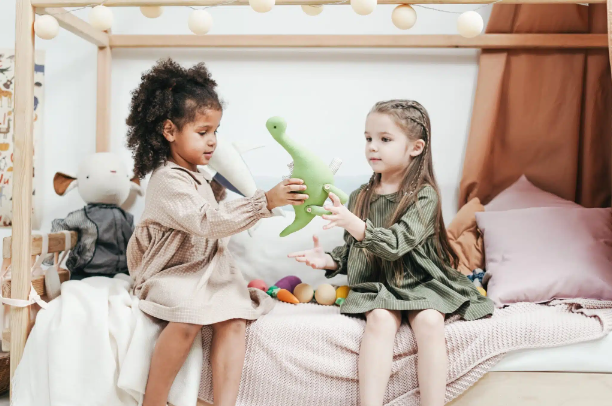
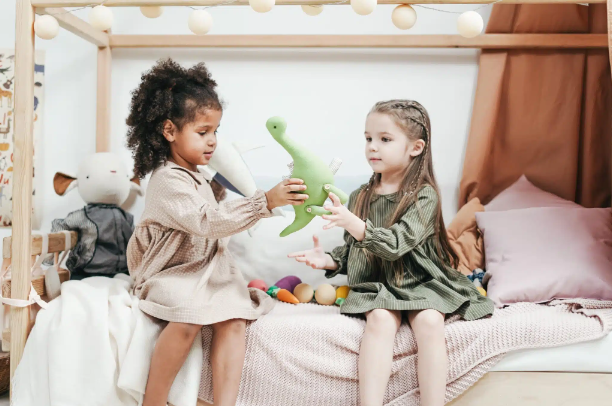
Two children sharing a toy dinosaur while sitting on a bed

Toddlers are just beginning to learn about ownership and belongings, so sharing is a difficult skill to master. In their mind, your toddler is the center of the world (or at least your world!) so working with others and sharing toys is a big concept for them to understand. They may grab things, push other kids away, or refuse to share a toy. Whether the ensuing fight is with siblings
or with friends, it can create tense situations that can feel difficult to work through. With a little time and effort, your toddler can begin to learn to share with others around them!

How to help your child share

Taking turns is often an easier concept to grasp than sharing. Taking turns means I play with the toy, then my friend plays with the toy, then I play with the toy again. Knowing the toy is not gone forever sometimes makes it an easier sell when learning this concept.

Set a good example for your child. Model how you share by offering them a piece of a snack that you’re eating or letting them have a turn with something you’re doing.

Choose activities that encourage your child to take turns. An activity like rolling or kicking a ball to one another or building with blocks will naturally lead your child to share. While watching them play, give your toddler plenty of praise so they understand that sharing is important! Help them feel proud of themselves for sharing. More than anything, they want to be grown up and
do grown-up things — like sharing.

Talk about why sharing is good for your child and others. One way we show our friends we like them is to share our toys. You can say something like, ‘When you share your things with your friend, everyone gets to have fun’.

Praise your child throughout the day as well! When you notice your toddler waiting their turn or letting others play with their things, tell them that you noticed and that they’re being a good friend by taking turns! While things are calm, talk to your child about why sharing is something that you value so that they can start to understand the reasoning behind the behavior.

How to respond to sharing issues

Be clear when talking to your child about what you would like them to do. If they’re grabbing a toy out of another child’s hand, clearly and calmly tell them that their friend wasn’t done using that toy and that they can have a turn when their friend is finished. If your child has trouble waiting for their next turn or giving up their turn, consider setting a timer.

If they are having trouble giving up their turn it might be helpful to ask your toddler/preschooler how they’d feel if someone took their toy, pushed them away, or didn’t let them have a turn.

Talking to your child about other people’s feelings will help your child understand things from someone else’s point of view which is the beginning of empathy.

You can also point out how nice it feels when we see our friend enjoying a toy we love. You are planting seeds for cooperative play, which develops as kids learn to trust each other, in part by taking turns.

Be realistic about a 2-4-year-old’s ability to share. At this age, most children are still learning and can find it hard to understand other people’s thoughts and emotions. Continue the conversation, and they will naturally learn through your guidance as their own emotional intelligence grows, in part, through positive sharing experiences.

Making Shopping With Your Preschooler a Breeze

Family shopping for produce together with a young child

Bringing your young kids along for a shopping trip can be a rewarding experience for the entire family, but it can come with challenges. Young children are still in the process of learning how to manage their emotions and behaviors, especially in new and unfamiliar situations like shopping. Without your guidance, your preschooler might be tempted to run in the aisles, touch items you aren’t purchasing, wander off, or insist on items that are not on your shopping list. While these moments can be frustrating for you, from your child’s perspective this is a new and exciting world to explore. With some planning and consistent responses, you can turn shopping into an enjoyable experience for everyone.

Preparing for Shopping Trips

Plan ahead! Shopping trips take practice for young kids. Whenever possible, plan short
trips where you spend a quick 10 minutes in the store and then leave. Take your child
with you for small errands like grabbing a gallon of milk or some wrapping paper; this gives them the chance to experience a successful shopping trip in a controlled environment.

Before heading to the store, discuss what you’ll be buying today with your child. Emphasize that sometimes you only buy items on the list, while other times you might be open to choosing one or two additional things. Stick to your decision during the shopping trip. If your child sees something they like, remind them to look with their eyes. This is an opportunity to practice self-regulation. Notice when they can contain their emotions and give them lots of positive praise.

Cover the Basics

Ensure that all your child’s physical needs are met before heading to the store. Avoid scheduling trips close to meal or nap times to prevent hunger or tired-related issues. Time your shopping when your child is typically in a positive mood.

Set Boundaries

Establish two or three simple rules for your child to follow during the shopping trip. Discuss these rules with your child before leaving for the store and ask them to go over them with you on the way. Examples include ensuring that they “stay where they can see you,” looking with their eyes only, walking feet only, and using an inside voice. If there’s a specific challenging behavior your child struggles with, address it explicitly and reinforce positive alternatives.

Plan Activities 

Keep your child engaged during the shopping trip with various activities, such as finding items on the shelf, counting items, identifying prices, and making choices. Even young children can point out colors and shapes. When you talk about what is happening and describe what you see, you are helping your child to connect words in their real-life context. When your child is actively involved, they are more likely to enjoy the experience and stay engaged productively and positively.

Other Considerations 

Even with careful planning, there may be instances where your child acts out
unexpectedly. Remember that this is part of the learning process for both you and your
child. Stay calm and consistent, and be prepared for potential reactions from other
shoppers.

When you sense agitation or potential upset, take a moment to connect with your child. Get down to their level, make eye contact, and ask them what they need. If your child is upset, name their feeling for them tell them you understand how they feel, and restate your boundary. Stay with them as they express their feelings. You may need to make eye contact with other concerned shoppers to let them know you have the situation under control. As you take deep breaths and remain calm during the upset, you are providing emotional regulation for your child. You are sending the message that you are there for them when they are struggling. If necessary, be prepared to cut the shopping trip short. Starting with short trips and gradually increasing the time spent in the store can help build your child’s ability to cooperate and maintain expected behavior.

Praise and Encouragement

Offer plenty of praise before, during, and after shopping trips to reinforce positive
behavior. Remember that shopping, like any other skill, takes practice: your family
will improve with time. Don’t hesitate to bring your kids along this holiday season; they are capable of learning to enjoy successful shopping trips.

Triple P – Positive Parenting Program

Are you interested in receiving more parenting advice? Triple P Online – Positive Parenting Program could be for you! This online parenting program allows you to take a parenting class in the comfort of your own home!

If you live in Lane County, you can get Triple P Online for free by filling out the form on the Triple P page. A staff person from Parenting Now will send you an access code within 24 hours and you’ll be able to start using the program right away! For more information about the program and to sign up visit the Triple P page.


Helping Kids with Behavior Struggles

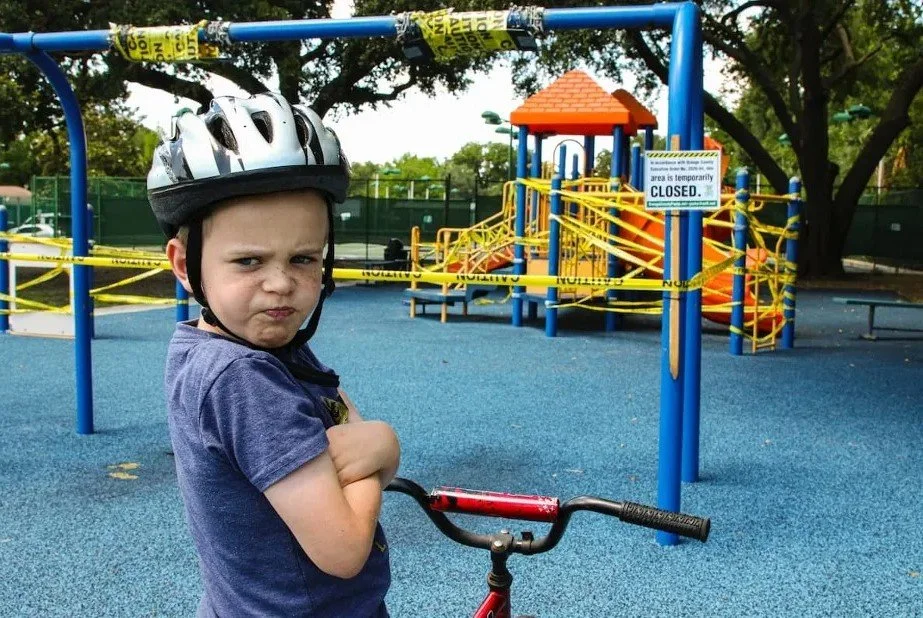
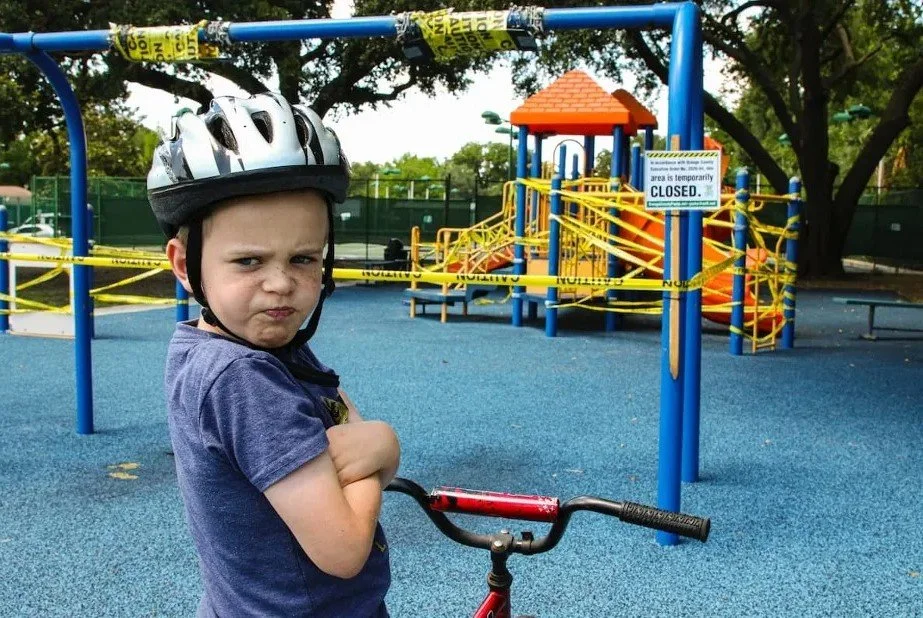
Child frowning with arms crossed next to a bike at a playground

Ugh, the dreaded phone call from school. Your kid’s teacher calls again to inform you that your child was disruptive during the school day. Not only is their behavior frustrating at home, but it is at school, too. No matter what you try, your kid is still acting up. What is going on? How can you help? Kids work through developmental phases of naughtiness and struggle with independence, but how can you help them?

Read on for research-backed methods that can support your child and family.

Understanding the Roots

All kids will test boundaries and need extra support through significant transitions. When my kids returned to school in the fall, my partner and I reminded ourselves that they would be tired, overwhelmed, anxious, hungry, and more. We needed to expect some big feelings and help create a soft landing place at home with some things to look forward to.

There are no “bad kids” or “good kids”. We’re all doing the best we can with the skills we have. We all make mistakes – especially when tired, hungry, and stressed. Rule those factors out first, and build eating and sleeping routines to keep your kid healthy. If your family has stressful conditions (such as health issues, a move, or other significant changes), do what you can to buffer your child. Remind them that the grown-ups are doing everything they can to keep everyone safe, and they will be okay.

Sometimes, neurodiversity can challenge a kid to fit into society’s expectations. Building self-regulation skills can benefit kids, especially those with ADHD, says Russell Barkley. If your child has a disability of any kind, talk with their care providers to learn if their behaviors are connected and how best to support them.

Teach the Skills

Sometimes, we assume our kids should know what to do in a situation, but we’ve never told them. It might help to think ahead and prepare our kids for our expectations. We might say to a preschooler, “Your friend is coming over to play. When they come over, it will be fun to play together. Are there any toys too special to share that we should put away? When your friend wants to play with your other toys, you can say ‘Okay!’” Older kids might need a short chat to tell them your expectations: “While we’re at Grandma’s today, please keep your phone off. She wants to spend time with us and will be offended if we look at our phones. Maybe we can play cards together.”

Look for the Good

Praising what you appreciate and being descriptive and transparent can help your child know what you are encouraging, says Lindsay Gerber, PsyD. You might tell a teenager, “You are being honest with me, and I appreciate that. Let’s talk through adjusting the time I asked you to be home.” A younger kid feels noticed when you say, “You came right over when I called you off the playground. Thank you!” Spending time together can also help your child feel connected and willing to work with you instead of against you. When one of my kids navigated a tricky time, I woke up ten minutes earlier to start our day with snuggles and help her feel loved. I was amazed at the difference it made in our days!

Consistent Expectations

If your child struggles at school, it might be helpful to conference with their teachers. Families and teachers can collaborate to pinpoint the top few skills to work on together. Using similar language and strategies can be helpful. Educators have great perspectives about what is typical and how to support more beneficial choices. If co-parenting is a barrier to consistency, explain to your child that they have different rules at your home than at their other parent’s home. Setting boundaries will be helpful. Professionals (pediatricians, educators, counselors) can help you create age-appropriate limits. Routines may also ward off struggles. If siblings know they take turns choosing which game to play, that may cut down on arguments, for example.

In the Moment

You know your child best and what has worked. We cannot reason with a child in the throes of a meltdown. Our job, then, is to ensure they are safe. Once the peak of the tantrum has passed, we can work with them. If we can stay calm and help co-regulate with our children, this will almost always help them if they can receive this. We can use calming techniques that our child can copy – deep breaths, lying down, drinking water, walking, rhythmic pats on the back – are all research-tested ways to soothe ourselves. With older children, we can ask them what may feel best. Dr. Vasco Lopes says, “By positively reinforcing compliance and appropriate responses to frustration, you’re teaching skills and—since you can’t comply with a command and tantrum at the same time—simultaneously decreasing that aggressive noncompliant tantrum behavior.”

We may have grand plans for gently reacting to our child’s tantrums. Thinking through new patterns for ourselves can be difficult when we are tired or stressed. Be gentle and forgiving with yourself when you react in a way you don’t want to. Changing our habits is hard work! You can always apologize to your child and repair your relationship. We can also do everything “right,” and our children will still melt down. Tantrums are not necessarily a reflection on you or your parenting. Our kids have hard days and don’t always have the resources to navigate them.

We can always right the ship. Making minor adjustments to our family patterns can keep us closer to loving, authentic relationships.

Resources

Child Mind Institute: Behavior Problems

Julia Cook’s books (variety of specific topics)

Lives in the Balance

Mindful Kids (cards) by Whitney Stewart

There’s Got to Be a Better Way! By Dr. Becky Bailey (for grown-ups)

By Megan McQueen. Spanish translation by IRCO’s International Language Bank.

Megan McQueen is a warmhearted teacher, coach, consultant, and writer. She grounds her work in empathetic education, imparting a strong sense of community and social skills to those with which she works. Megan prioritizes emotional learning and problem solving skills. When not at work, she is most likely playing with her husband, two children, and pup.

Learn more about the Oregon Parenting Education Collaborative and read our blog!

Developing Screentime Routines

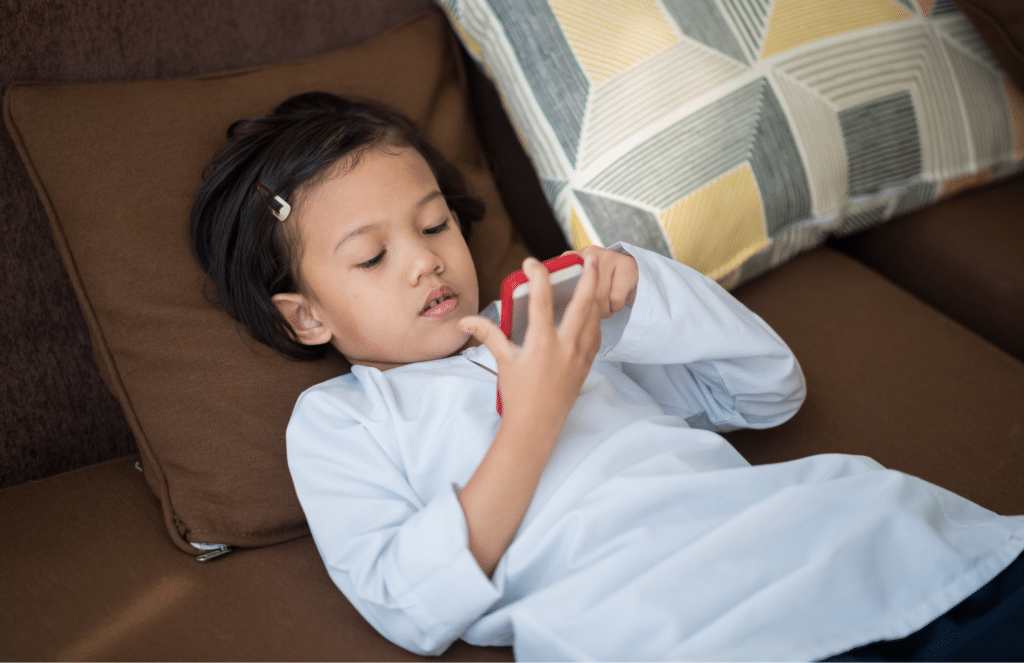
Child lying on the couch looking at a smartphone

These days it’s to be expected that toddlers will have at least some screen time, and that’s okay! Phones and tablets are a part of everyday family life and can be included in a healthy lifestyle for your child. Guidelines from The American Academy of Pediatrics include encouraging parents with children under 18 months to limit screen exposure to opportunities for interaction like video chatting. For toddlers over age two, guidelines include limiting screen time to around one hour a day of high-quality programming that you watch together. This is a great opportunity for interactive viewing such as music, stories, or movement. By watching together, you are there to answer questions and help them relate what they are seeing to their real life.

The key is to decide what type of screen time is right for your child and your family and to create a routine around that so your toddler will know what to expect. Finding out what works for your little ones takes time and experimentation – some kids will watch a few videos and then be done, while others may need encouragement to move on to a new activity.

Apps are engaging – they’re designed to keep your attention, so young children can’t be expected to self-regulate the amount of time they spend on electronic devices. You’re the most important factor in setting healthy screen time habits in your home! Don’t worry, there are plenty of ways to set your toddlers up for success when it comes to screen time routines.

How to set up healthy screen time routines

Set a good example

Do you open Candy Crush any time you have a moment? Your child notices this and will want to imitate you. Model healthy screen use, and when you’re spending time with your kids, give them your full attention. This is easier said than done for many of us. By putting down your screen and paying attention to your child, you are letting them know they are important to you. You want to hear what they are saying, and you want to share their experience. Remember you are your toddler’s whole world. The choices you make about where your attention rests have lasting impacts.

Have clear limits

Be clear about when and for how long screens are to be used. Rules like no screens during meals or an hour before bedtime help you underline the importance of face to face interaction and conversation. Give them a set amount of time during the day, and give them notice when the end of that time is approaching (ex: If they are allowed 20 minutes on a tablet after lunch, give them a 5-minute warning so they know this time is coming to an end).

Encourage free play

Keep in mind that playtime is more valuable for your child’s developing brain than watching electronic media. Children learn through their interactions with you and their environment. When they are curious they are learning. Help your kids explore and play by encouraging them to engage with their environment and find new things to do. This might mean playing with old toys in new ways, building a fort, or using kitchen pots and pans as musical instruments. When your little one is busy playing in creative ways, support them by giving them encouragement and asking them to tell you what they’re doing. When you join in the fun, it shows your toddler that you value spending time with them. Since children learn through their interactions with you, it is a great opportunity to expand their language by describing what is happening by using lots of descriptive words. When you can sense that your child is done playing with their musical pots and pans, you can gently introduce a new toy or activity before they can ask for electronics or say they’re bored.


Your child might whine or throw a tantrum when you tell them screen time is over, and that is a normal response! Transitioning from an enjoyable activity may bring up some difficult feelings. You can help your toddler by naming their feelings, and giving them boundaries. Be consistent and firm, and if you need to, remove the electronics from the situation and try to engage them in the new activity. Saying something like “I know it’s frustrating, but screen time is over now. Why don’t we play with blocks together?” will help them identify that they feel frustrated, regulate those emotions, and move on to another activity. At the end of the day, a mix of active play, calm play, rest/sleep, and screen time all go together to create your child’s routine, and all contribute to helping your child learn and grow in different ways!

Back to School Behaviors

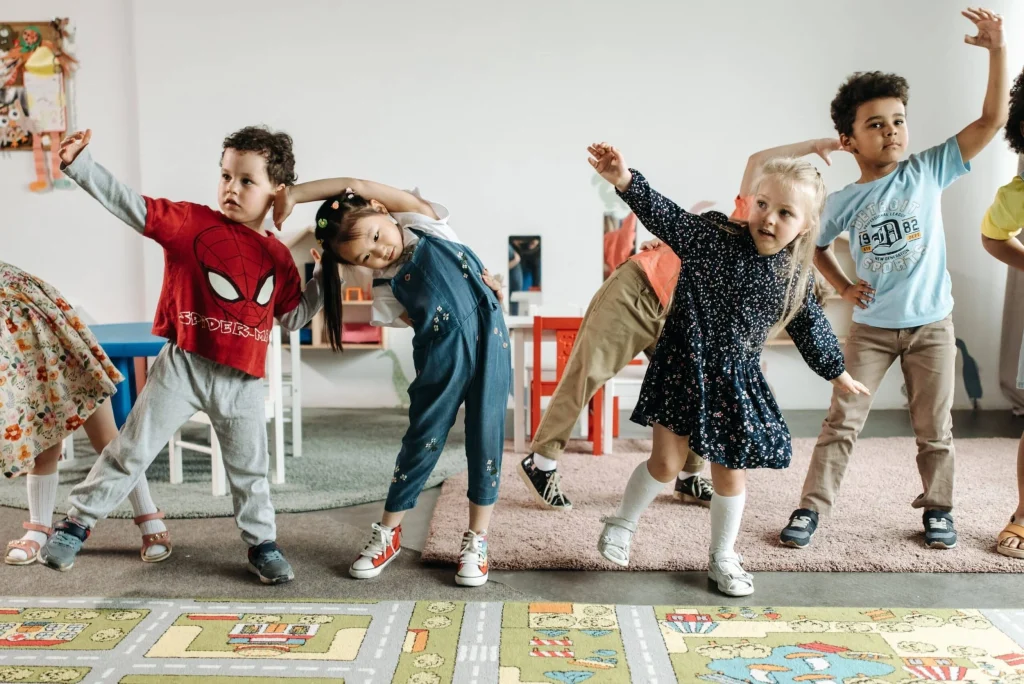
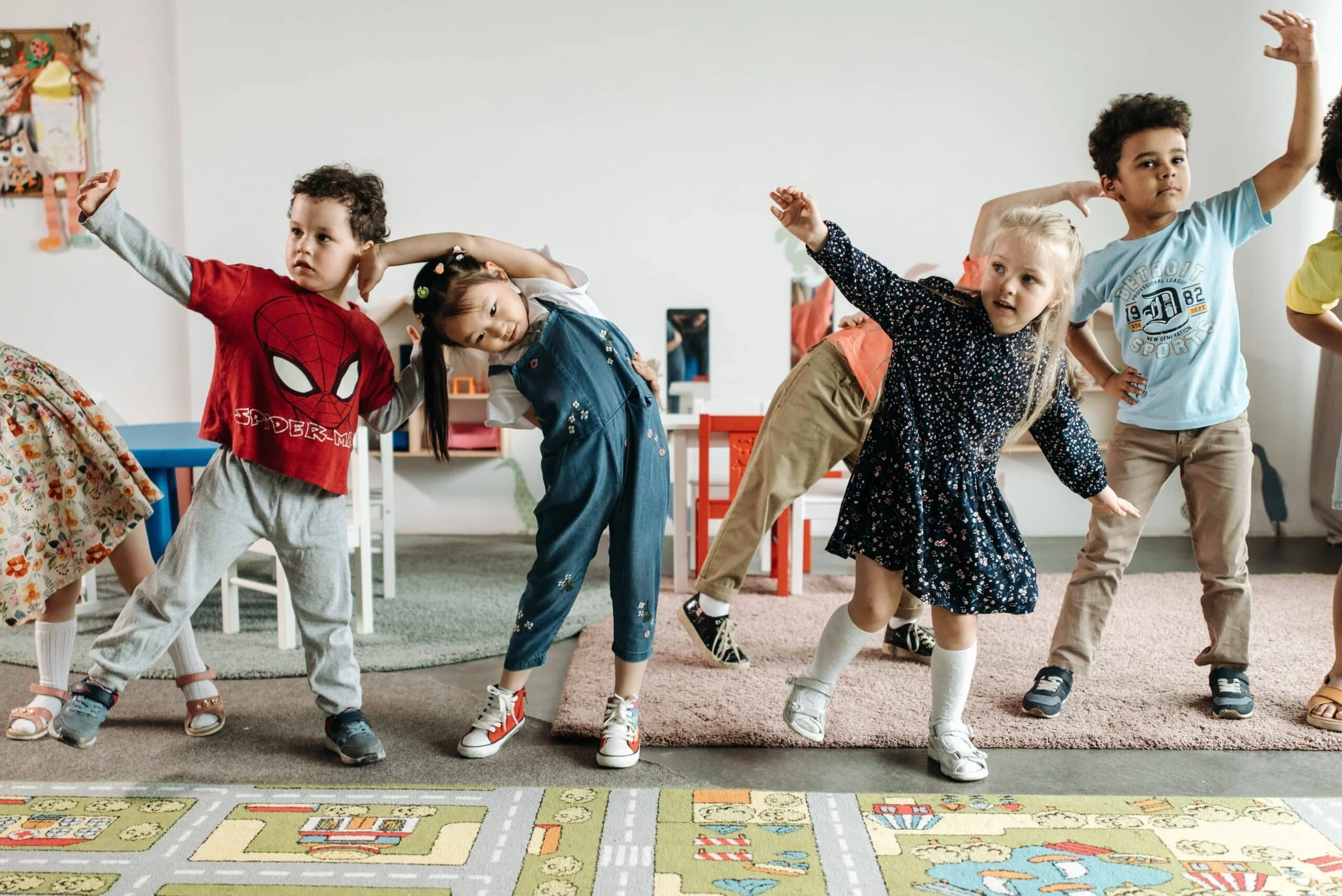
Group of children stretching and moving together in a classroom

What to do when your child is acting out at school?

School has been back in session for a little while now, and you think your child is doing great! But then you get a phone call from the teacher about some troubling behavior, and find out that they’ve been acting out at school – what do you do? Don’t worry, you can help your child succeed in school by being interested and involved in their learning and school life. By working together with your child and their teacher, you can encourage responsible behavior and cooperation!

Some common behavior issues that may concern teachers and be brought to your attention:

  • Distracting others

  • Not following instructions

  • Yelling

  • Not doing/finishing work

  • Getting into fights

So, why do these problems happen at school?

Elementary schools have rules and expectations for how kids should behave. However, young kids are still learning how to manage their emotions and navigate new situations, and this is where issues can arise. Your child might not know or understand the class rules, or may forget them. They might find that they get more attention when acting out in class, or that their behavior causes others to laugh or react in a way they see as positive. 

Challenging behaviors can also be your child’s way of coping with new situations or a sign that they’re struggling with school work. If the schoolwork is challenging, they might act out to avoid certain situations, or because they’re lacking the self-confidence to tackle the work. Inversely, if the work is too easy, your child might be bored and disruptive. If either of these seems to be the cause for behaviors, please talk to your child’s teacher about next steps and alternative options. 

How To Respond To School Problems

Discuss the problem with your child

Ask your child about what is happening, and encourage them to give you their point of view. You might learn that the situation feels very different from their point of view. Ask open ended questions and encourage them to share their feelings. You can validate how they feel without condoning the concerning behavior. Avoid lecturing or reprimanding them during this conversation. 

Discuss the problem with the teacher

After you’ve talked with your child, arrange time to speak with their teacher. Ask the teacher to share their views on the issue and what’s behind it. Try to stay calm and understand from their point of view, just as you did with your child. Find out if the teacher has any suggestions, workarounds, or learning supports that can be put in place. 

Get involved with your child’s school

Talk with your child about their day so you know what is going on from their perspective. This is a great way to stay in tune with your child, and also to avoid being blindsided should you get another call from the school about any more behaviors. Show a genuine interest in who they’re playing with and what they’re learning. Be supportive for them both emotionally and educationally. 

Try to maintain consistent communication with their teacher(s). Get to know each other and talk about your child’s achievements as well as any concerns. If you’re able to, consider volunteering at their school occasionally!

Create a plan to respond to persistent problems

You’ve talked to your kid and the teacher, now what? Suggest a plan that supports the behavior you want to see both at home and at school! Have their teacher clearly tell you what is expected of your child, and work from there. You could set up a behavior diary with the teacher, which can be filled out by the teacher for both troubling and positive behaviors, or create a consequences and rewards system based on behavior. Review progress with your child and with their teacher, and praise and reward your child for acting responsibly.

When you talk with your child about their day, point out when they handle a situation appropriately, and help them feel proud of themselves. When they have a good day, celebrate with them! Enjoying time with you is one of the things that is most rewarding for kids.

It’s important to remember that your child is still learning how to navigate situations such as school, and that their feelings and behaviors can be hard for them to manage at times. It isn’t helpful to blame yourself, your child, or the school in these cases. Be positive and encouraging, and make sure your child knows that you want them to be happy and successful in school!

Triple P – Positive Parenting Program

Are you interested in receiving more parenting advice? Triple P Online – Positive Parenting Program could be for you! This online parenting program allows you to take a parenting class in the comfort of your own home!


If you live in Lane County, you can get Triple P Online for free by filling out the form on the Triple P page. A staff person from Parenting Now will send you an access code within 24 hours and you’ll be able to start using the program right away! For more information about the program and to sign up visit the Triple P page.

Balancing Work and Family

Parent working on a laptop while holding a baby

As summer starts to wind down and families begin to adjust their school/work schedules, it’s important to consider how you balance work and family. Often, balancing work and family can feel challenging because stress from one may pour into the other. Ideally, your goal is that you feel calm and controlled regarding your time both with family and work, and your children will feel at ease whether you are at home or at work.

How can you prevent work from negatively affecting your family life?

Have realistic expectations

Avoid setting unattainable goals at work, such as finishing a huge project the first week your kids go back to school or cramming in a ten hour work day before the weekend. Expecting yourself to achieve something unrealistic may leave you feeling let down, and that feeling can be difficult to shake at the end of a work day.

Instead, think about what you can reasonably achieve at work, given the expectations you have for yourself as you support your children as they begin a new school year. 

Be open about your limits and needs.

Be open and honest with your employer about your family and childcare needs. Understand that if you have a sick child, an important family event, or an unexpected emergency, you may have to make special arrangements. Talk to your work about what support is available, such as PTO, family leave, and child care.

Use your transit time to create smooth transitions

When you leave work at the end of the day, switch yourself out of work mode. What will help you transition from work to home? You could use your travel time to listen to music or a podcast, relax, and mentally unpack your work day. Begin to plan for family time, and shift your mind to your parenting role. Your kids will appreciate you being 100% focused on them, and you’ll be happier being present when you arrive home. 

Plan activities outside of work

Balance is the key term in “Work/Life Balance.” Plan fun activities on the weekend, find things you and your family enjoy doing together, and don’t forget to address your personal needs as well! 

Try to leave work behind during family time

Whenever possible, unplug from work. Try not to respond to calls or check emails, and if you find your mind drifting to work related things, acknowledge that thought and then shift your focus back to the present. If you find yourself thinking about a particular project or something you want to follow up on, write it down; send yourself a text or an email to help yourself remember when you get back to work, and then you can return to being present with your family.

In addition to the above things that you can do, be sure to utilize other resources in your life. Work as a team with your partner and/or caregivers, and lean on your village when you need a little extra help. You can do it all with the help of your loved ones and support you have in place!

It may be helpful to sit down with your parenting partners and talk about the approaching transition. What do you need to get done before school starts? What would help each child be successful this school year? What can you set up to help everyone through the first week? Can you plan simple meals or set up systems for returning homework? Split up the tasks so that everyone contributes and everyone feels supported. 

It’s normal for parents to have mixed feelings about working. You may enjoy the social contact and mental challenges of work. At the same time, you may worry about leaving your kids with others or missing out on time with them. Both of these perspectives can be true at the same time. However you feel is normal and you can be successful at work and at home with thoughtful planning. Your children will feel supported as they begin a new adventure in learning, and you can cover all your bases both at work and at home.

Triple P – Positive Parenting Program

Are you interested in receiving more parenting advice? Triple P Online – Positive Parenting Program could be for you! This online parenting program allows you to take a parenting class in the comfort of your own home!

If you live in Lane County, you can get Triple P Online for free by filling out the form on the Parenting Now Triple P page. A staff person from Parenting Now will send you an access code within 24 hours and you’ll be able to start using the program right away! For more information about the program and to sign up visit the Parenting Now Triple P page.

Preparing Your Kids for Back to School

Two children lying on the floor writing together in a notebook

As summer winds down, some kids feel excited about school coming up and some feel anxious, but all kids sense that a shift in routine is coming, and that can bring up some big emotions. The good news is that, as a parent, there are some things you can do to help your children manage these emotions and get ready for back to school!

Start Talking About School

Begin discussing school earlier in the summer, especially if it’s your child’s first year! Talk about what a school day might look like, how they will get to and from school, and emphasize how fun learning new things and making new friends will be.

Check Out the School

Drive by your child’s school. If you’re able to, stop by and play on the playground or park in the parking lot as you will when the school year starts. Or, if your child will be taking the bus, point out where the bus may drop them off and where the front doors of the school are. 

Practice Getting Ready

Make a fun game of picking out a “school outfit” on a summer night, going to bed, setting an alarm, and getting up and ready like they will for school. Packing a lunch, reading a story about school, talking about your own memories of school, or even walking to the bus stop can all be a part of this make believe game. Base it off of what your real school mornings will look like!

Take Time to Connect

On the morning of the first day of school, your child may feel excited, scared, anxious, nervous, happy, or any combination of these emotions. While things may feel hectic, take a few moments to connect with your child, to remind them of qualities you love about them that will help them feel successful in school (i.e. you’re such a great friend, you always listen to others, you’re so kind!) Take a moment to breathe with your child. 

It’s time to send them off to school! You’ve given your child the tools they need to succeed, see them off to school safely and take some time to adjust yourself to this change in routine too. Parents and caregivers are going through a change this time of year as well!

Triple P – Positive Parenting Program

Are you interested in receiving more parenting advice? Triple P Online – Positive Parenting Program could be for you! This online parenting program allows you to take a parenting class in the comfort of your own home!

If you live in Lane County, you can get Triple P Online for free by filling out the form on the Parenting Now Triple P page. A staff person from Parenting Now will send you an access code within 24 hours and you’ll be able to start using the program right away! For more information about the program and to sign up visit the Parenting Now Triple P page.