

Outdoor Family Fun

Mother and young child sharing an affectionate moment outdoors on a country path

Although sunshine is a lovely backdrop for summer fun, many children don’t mind a little rain either. Children are usually their happiest outside, exploring among grass and trees. And while many of us adults may prefer to watch rainy days from inside, puddles usually only add to the fun for young ones. Be prepared with appropriate outdoor clothing that is durable and weather-resistant and watch the magic unfold!

There are lots of developmental benefits that come with outdoor play, making the effort worth it almost every time. The emotional, mental, physical, social, and behavioral health of children is fortified in natural settings. We see a marked increase in overall well-being, stress relief, resilience, restoration, emotional regulation, and mood enhancement when children have plenty of time outside. Their general health and immune function often improve with fresh air and sunshine. We often see children eating and sleeping better.

Active participation in outdoor play leads to better motor functioning. While staying inside on screens all day may improve kids’ gaming reflexes, time spent outside hones their real reflexes, benefiting their physical skills, strength, and coordination.

We also witness a boost to self-esteem, confidence, and agency. When children are engaged in fun outdoor activities they show heightened attention, attention restoration, memory, creativity, problem-solving, language development and executive functioning with mental control, self-regulation, and decision making. For school-aged children, academic functioning and attitudes toward school can significantly improve with more recess and outdoor experiences.

“The best classroom and the richest cupboard is roofed only by the sky,” says Margaret McMillan.

Parents and teachers often wonder how much time outside is enough. The simple answer is as much as possible. Several hours a day would be highly beneficial, and more is better. In the book, ‘Last Child in the Woods,’ author Richard Louv coined the term ‘nature-deficit disorder,’ which is a condition that may have serious implications for children who lack a connection with nature. Disconnection to the natural world has been linked to diminished sensory experiences, attention difficulties, obesity, vitamin D deficiency, increased aggression, higher rates of anxiety and depression, poor grades, reduced coping skills, higher levels of stress, and overall lower sense of well-being. In other words, time in nature is essential for health and wellness.

How can we do better? When adults place value on aesthetics, organization, thoughtfulness, provocation, communication, and interaction, children can learn a lot from being in the outdoor environment. The more care and attention paid to organizing the space

outdoors, the more this time can stimulate the imagination, creativity, exploration, discovery, engagement and sense of wonder for young children.

If you are looking for ideas, here are some ways to increase outside activity:

• Include children in gardening by planting seeds and nurturing plants, which supports their understanding of life cycles and teaches responsibility. Children may be more interested in eating vegetables that they had a hand in growing.

• Plan high-activity games with play equipment such as balls, bats, jump ropes, hurdles, tunnels, balance beams, targets, bean bags, balls, or hoops. Develop obstacle courses. Mark playgrounds with mazes, hopscotch, snakes & ladders, or other games. Support them to explore areas where they can climb, swing, move, and take reasonable risks to learn what they are capable of.

• Provide access to natural materials such as water, pinecones, stones, sticks, shells, sand, grass or flowers. Nature walks can be an engaging way to gather found treasures. Mud kitchens are hours of fun!

• Assure activities are enjoyable for the individual needs of children and adapt the spaces, as needed.

In the TED Talk, ‘The Best Kindergarten You’ve Ever Seen,’ Takahuru Tezuka shows us the benefits of designing indoor/outdoor spaces that are developmentally appropriate for young children.

Need some fun ideas to do with children? Check out the 50 Nature-based Outdoor Play Activities for Early Childhood Development compiled by Stepping Stone Childcare and Early Developmental Centers.

The Early Learning Hub of Lane County has a lot of resources at their link for Fun Family Activities & Lane County Activity Calendar.

Have fun!

Aoife Rose Magee, PhD, earned a doctoral degree in Special Education from the University of Oregon Early Intervention Program. Her personal and professional interests have been largely focused on the social-emotional development of young children and how positive parenting and teaching practices may contribute to healthy development, promote resiliency, and mediate risk factors. Aoife is professional development specialist for students and practitioners in the areas of Early Childhood Education, Early Intervention/Early Childhood Special Education and Parenting Education. Aoife serves as a Master Trainer for the Oregon Registry and frequently provides community based and private workshops for early childhood educators, parenting educators, and other professionals. For more than thirty years, she worked directly with families as a parenting educator, and she is a former Oregon Parenting Education Collaborative Hub Coordinator for the Parenting Success Network. She currently teaches as a full-time faculty in the Early Childhood Education Program at Lane Community College. She is also the mother of a fantastic young adult son and enjoys nature and creative pursuits in her spare time.


Summer Safety Tips for Kids

Young girl drinking water from a bottle outdoors on a sunny day

As temperatures rise, it’s essential to prioritize safety while kids enjoy the great outdoors. Here are some practical tips to keep your little ones safe during the summer months:

  • Protect Kids’ Skin:

    • Sunburn is a common concern. Apply sunscreen with at least 15 to 50 SPF before outdoor play. Reapply every two hours or after swimming, sweating, or toweling off.

    • Babies under six months should be kept out of direct sunlight. Dress them in lightweight clothing and use sun hats and umbrellas for shade.

    • Remember that harmful UV rays are strongest between 10 a.m. and 4 p.m., even when in the shade.

  • Hydrate, Hydrate, Hydrate:

    • Keep kids hydrated at all times. Encourage water consumption, especially before big activities or playdates.

    • Avoid soda, energy drinks, and fruit juices, as they may worsen dehydration.

    • Check the color of your child’s urine—it should be light yellow, not golden or dark.

  • Maintain Healthy Eating Habits:

    • Despite tempting summer treats, stick to healthy eating habits. Ensure your kids get the necessary vitamins and nutrients.

    • Abide by consistent eating patterns to fuel their summer fun.

  • Beware of Hot Cars:

    • Never leave a child unattended in a hot car. Even loving caregivers can forget a sleeping child in the backseat.

    • Create reminders (e.g., placing your phone or bag in the backseat) to prevent this tragic situation.

Remember, summer is about fun, but safety should always come first.

Take a Road Trip This Summer

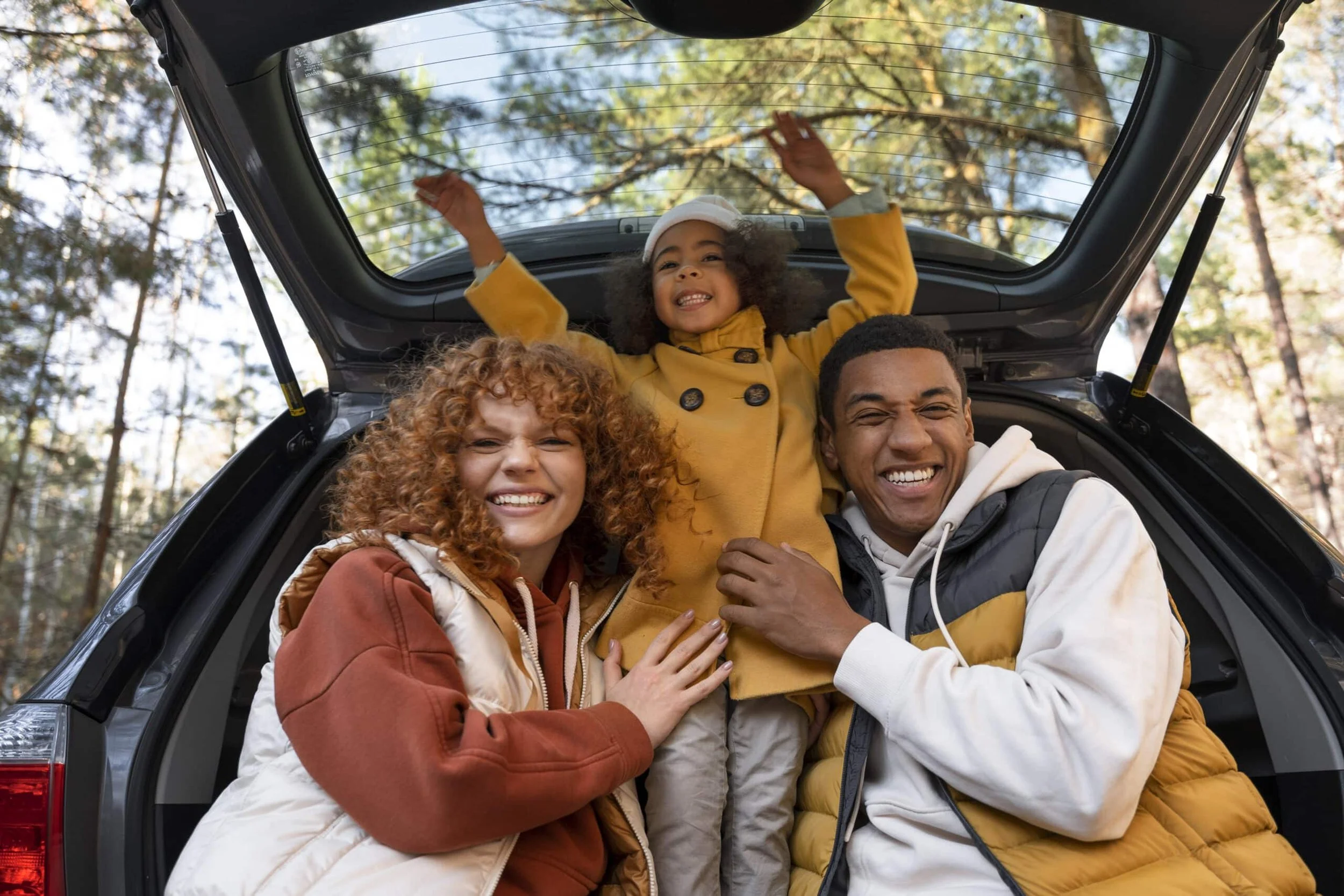
Family sitting in an open car trunk with arms raised during a road trip

Summer is already busy, so why should you prioritize taking a road trip with your young kids? The answer is simple – because life is busy. Road trips don’t have to be big or elaborate to make a big impact on your kids!

Road trips are a time to connect. The act of driving to the destination is a memory your children will remember with love for years to come. Road trips put your family in a position to sit and talk and play for hours, without distractions that might come up at home. The drive will create an opportunity for silly, low-key family moments together. You can play games by looking for letters of the alphabet, sing silly songs, tell stories, and talk about all the fun you’re about to experience together!

Fun Road Trip Activities

  • I Spy With My Little Eye (Something that is…purple!)

  • Counting game – Pick an item to keep track of and then count them together. (Count the number of red cars or the number of barns, train crossings, or speed limit signs.)

  • Guess the Animal – One person thinks of an animal and everyone else takes turns asking questions to try and figure out which animal it is. (Model asking broad questions first, such as does it walk on four legs or does it have fur, before moving onto the more direct questions, like is it a giraffe.)

  • The Alphabet Game – Take turns trying to find the letters of the alphabet (Find an “A” in a license plate, then a “B” on a road sign, a “C” at a gas station, etc.

Road trips also offer more flexibility than other modes of transportation, such as flying, trains, or public transportation. That might sound counterintuitive at first, but driving allows you to create or change your schedule as needs arise. If your toddler needs some fresh air or your baby needs a bottle, or you just want to explore a new area, you can make that happen at any time!

While a flight with kids is just something you aim to get through and finish, the road trip becomes its own unique adventure, something to enjoy. Even if it’s a simple drive a few hours away, the magic created from time together as a family will enhance your trip, instead of just serving as a way to get there.

Whether it’s a drive across the country or an hour away to a zoo, packing up the car and getting everyone together to drive to a destination is a positive bonding experience.

Triple P – Positive Parenting Program

Are you interested in receiving more parenting advice? Triple P Online – Positive Parenting Program could be for you! This online parenting program allows you to take a parenting class in the comfort of your own home!

If you live in Lane County, you can get Triple P Online for free by filling out the form on the Parenting Now Triple P page. A staff person from Parenting Now will send you an access code within 24 hours and you’ll be able to start using the program right away! For more information about the program and to sign up visit the Parenting Now Triple P page.

2021 Lane County Pumpkin Patch Guide

The changing leaves aren’t the only things reminding us that fall has arrived. Oregon is a little more on the orange side this season, as pumpkins pop up everywhere from grocery stores to road-side stands to neighborhood front porches. Although you can find great pumpkins outside of your nearest supermarket, the best way to get pumpkins with your family is picking them straight from the patch!While many farms have scaled back their usual fall fun and are implementing Covid social distancing guidelines, they still are open for business! Taking your family out to one of the local farms for a day of pumpkin picking and family bonding is a great way to get your pumpkin fix for the season while enjoying a fun, educational day outside together.We have put together a list of Lane County farms – where your family can go to get a fresh taste of farm life and welcome the fall season!

A&M Family Farms

October Hours:      9:00am – 4:30pm Thursday – SundayFamily Fun: Pumpkin patch, farm stand with meat and produce, incredible cinnamon rolls and baked goods, snack shack, photo ops, goats to feed, self guided farm tour.Location: 84735 Parkway Road, Pleasant Hill, 97455Contact:  (541)214-9127, www.amfamfarms.com; facebook.com/amfamfarms

Bush’s Fern View Farms

October Hours:      9:00am – 6:00pm daily

Family Fun: October finds our farm busy with our u-pick pumpkin patch and hay maze.

Location: 90536 Territorial Hwy, Junction City, 97448

Contact:  (541) 935-6362, facebook.com/BushsFernViewFarms

Detering Orchards

October Hours:        9:00am – 6:00pm* daily

                          *U-Pick closes one hour earlier

Family Fun:  Pre-picked and u-pick pumpkin patch. Every weekend of the month enjoy Tractor Rides, Cow Train Rides, Apple Blaster, Treasure Mining, Mechanical Bull, Corn Maze, Animal Corral, and Playground!

Special Events: Apple Daze – Detering Orchards’ fall harvest celebration, every weekend in October!

Location: 30946 Wyatt Drive, Harrisburg, 97446

Contact:  541-995-6341, deteringorchards.com and facebook.com/DeteringOrchards

Groundwork Organics

October Hours: 9:00am – 5:00pm Thursday – Sunday

Family Fun: Pre-picked pumpkins.

Location: 91360 River Road, Junction City, 97448

Contact:  (541) 654-4941, groundworkorganics.com

Harry’s Berries and Pumpkin Patch

October Hours: 9:00am – 6:00pm Thursday – SaturdayLocation: 90876 Coburg Rd, Eugene, 97408Contact:  (541) 799-6468, facebook.com/HarrysBerriesandPumpkinPatch

Hentze Family Farm

October Hours: 9:00am – 6:00pm Friday – Sunday

Family Fun: U-pick pumpkin patch opens later in October (either the weekend of the 9th or 16th, call to confirm). Picked pumpkins for sale.

Special Events: Octoberfest Weekend happens October 16th, 17th, 23rd and 24th. Tractor-drawn hay wagon rides and hay maze.

Location: 30045 Hentze Lane, Junction City, 97448

Contact:  541-998-8944, hentzefamilyfarm.com, facebook.com/hentzefamilyfarm

Herrick Farms

October Hours:     9:00am – 5:00pm daily

Family Fun: Pumpkins for sale. Pumpkin patch rides on weekends, starting October 9th for $1 per person.

Location: 88088 Millican Rd, Springfield, 97478

Contact:  (541) 741-1046, facebook.com/Herrick-Farms 

Hollyaire Farms

October Hours:     11:00am – 5:00pm Friday – SundayFamily Fun: Pumpkin patch and produce for sale.Location: 30747 Lone Pine Dr, Junction City, 97448Contact:  (541) 972-2264, facebook.com/Hollyaire-Farm-264962137504056/

Johnson Family Farms

October Hours:        10:00am – 6:00pm*  Monday – Saturday

                            11:00am – 4:00pm* Sunday

                            *U-Pick closes one hour earlier

Family Fun: In October Walt’s Wild Wagon Ride runs throughout the week (from 10am-5pm) where you can throw pumpkins at scarecrows and targets ($8/person). Free indoor hay maze. Pumpkins for purchase.

Location: 89733 Armitage Rd, Eugene, 97408

Contact:  541-343-9594, johnsonfarmseugene.com, facebook.com/JohnsonFarmsEugene

Mahaffy Ranch

October Hours:       12-6   Monday-Thursday10-6  Friday-SundaySpecial Events: 2021 Harvest Festival includes U-Pick Pumpkin Patches, River view Hay Ride, Corn Cannon, Corn Maze, Covered Maze, Farm Animals, Cider Barn, Snack Shack and more!Cost:  See ticket page for activity pricing, and food page for food pricing. Pumpkin Patches, Harvest Market, Cider Barn and Snack Shack do not require tickets for entry.Location: 10362 Hwy 241, Coos Bay, OR 97420Contact: (541) 269-3900; www.mahaffyranch.com; www.facebook.com/mahaffyranch

My Brothers’ Farm

October Hours:        10:00am – 2:00pm Saturdays10:00am – 2:00pm Sunday October 17 and 24Special Events: Fall Festival Sunday October 17 and 24. Easy walk on a gravel road, members of the My Brothers’ Farm team will be there to greet you. Throw apples to the pigs, view the bison, stop by the pumpkin patch and take home a pumpkin! The farm-stand will be open for purchases. Looking forward to seeing you!Location: 84674 Cloverdale Rd, Creswell, 97426Contact:  (541) 632-3071, www.mybrothersfarm.com; www.facebook.com/mybrothersfarm

Northern Lights Christmas Tree Farm

October Hours:        10:00am – 5:00pm daily

Family Fun: Autumn Harvest Days Oct. 1 –Oct 31!  Family friendly corn maze (reserve tickets ahead of time here). Shop our farm store for gifts and unique decorating items. Visit the Witch’s Brew for a hauntingly good drink. Local vendors with food, fresh local produce, and flowers. U-pick pumpkin patch.Cost: Corn Maze – Adults (13+) $10.00, Children (4-12) $7.50, Ages 3 and under are FREE. Purchase tickets here.

Location: 36777 Wheeler Road, Pleasant Hill, 97455

Contact:  541-746-5161, northernlightschristmastreefarm.com; facebook.com/northernlightschristmastreefarm/ 

Shady Oaks Plants and Produce

October Hours: 10:00am – 5:30pm Tuesday – Sunday (closed Mondays)

Family Fun: Pumpkins, hay maze and farm animals. U-pick pumpkin patch opens later in October (call farm for current information).

Location: 77380 Highway 99, Cottage Grove, 97424

Contact:  (541) 942-5004, facebook.com/ShadyOaksPlantsandProduce, my-site-shadyoaks.square.site

Thistledown Farm

October Hours: 9:00am – 5:00pm daily

Family Fun: Lane County’s largest pumpkin patch! The walk-up patch is open every day of the week. Horse-drawn ride to another patch available on Saturdays and Sundays (9am to 4:30pm).

Cost: Horse-drawn ride: $4.50 per person.

Location: 91455 River Road Junction City, 97448

Contact:  541-689-2019, thistledownfarm.net; facebook.com/thistledownfarmOregon

No matter which pumpkin patch you decide to explore with your family this year, you are sure to have a one-of-a-kind experience with your little ones. These local farms are a great place to teach your children about the exciting harvest season and to let them help you pick some fresh produce for the family to enjoy later. So pull on your favorite fall sweater and get outdoors with your family for an unforgettable day of fun at the farm this month!

Before you go call or check their website to confirm their hours and to find out what produce is available for u-pick. Check the LaneKids Activity Calendar for special events at the farm. Keep in mind it might be crowded on weekends and during special events.

The Center for Disease Control (CDC) recommends that when visiting pumpkin patches or orchards, people use hand sanitizer before touching pumpkins or picking fruit, wearing masks, and maintaining social distancing

Survival Tips for Summer Parenting

Summer is a busy time for parents. There’s swimming, camps, sleepovers, picnics, playgrounds—not to mention the everyday chores like laundry that need tending to. It can be hard to manage it all in one day!So what can parents do to juggle the demands of parenting, while still finding balance in their day and keeping their sanity? Trying to be all and do all is an impossible task. Setting realistic priorities and expectations will allow you to approach your day with more focus and confidence and allow you to be your best for your family. Below are more tips for juggling the demands of parenting, especially during the summer months.

Plan and organize

One of the first steps in managing all this summer fun is to get that information out of your head and onto paper. Decide what type of calendar will best keep you organized-would you prefer to use a digital or printed calendar? You and your child could even craft a calendar together that uses basic icons to show your activities for the week, such as “waves” for swimming, a “book” for the library, “slide” for the playground!Over the weekend, jot down the activities you have planned for the upcoming week, such as swim lessons, dinner at Grandma’s, blueberry picking, etc. Then, with your children, pick a few additional activities you want to do during the week. Examples could be: visit the library, go to the park, swim in a lake. How many additional activities you want to squeeze into your day/week is up to you. Planning ahead will keep you from overextending yourself. Remember, simple routines can simplify life. Be sure to leave time for resting and the lazy days that allow you and your children to recharge and your children to learn to occupy themselves.Having a plan for the week can also help your kids know what to expect. Routines and schedules have the advantage of creating structure and helping kids feel safe as they navigate their daily lives. 

Prep ahead of time

Look for other places in your life that could benefit from some prepping ahead of time. For example, if you know you’ll be at the pool several days of the week, have a designated swim bag—preloaded with towels, extra clothes, pool toys, goggles, sunscreen, snacks, water bottles—at the ready. Keep it by the front door.Other ideas include:

  • Meal plan: Before you head to the grocery store, pick the dinner meals you want to prepare Monday through Friday. Make a list of the ingredients you need.

  • Prepare crockpot meals in the morning, so they will be ready to go for dinner.

  • Some grocery stores have the option of purchasing groceries online, then either picking them up or having them delivered to your home. It’s a great time-saver and can be used in conjunction with your meal planning.

  • For kids in summer camps, pack lunches the night before and get their clothes ready for the next day.

  • Shower at night to ease your morning routine.

Secure time for self-care

Self-care for parents is important year-round, but can be especially important during times of stress or when you feel otherwise overwhelmed or burnt out. As parents, we do a lot for our kids and it can be easy to overlook our own needs. This summer, make room in your routine to care for your health and do something you enjoy!This could include:

  • Read a chapter in a book once per day or once per week.

  • Eat healthy, seasonal fruits and veggies.

  • Take a walk through your neighborhood or on a local trail.

  • Spend a few moments alone taking deep breaths—in the sunshine!

If your own needs as an adult are being met, it is much easier to be patient with your child and be available to them when they want to tell you about their soccer lesson or show you a “cool trick” they learned. It is also easier to stay calm during the hard moments.

This article is brought to you by Parenting Now Parenting Educators and authors Amanda Bedortha, Claire Davis and Lynne Swartz, and consultant Jay Thompson. Parenting Now offers parenting groups and drop-in programs for families with children 0-8, and is passionate about happy, healthy families. For more information about Parenting Now, please visit their website or contact us at info@parentingnow.org.

Triple P – Positive Parenting Program

Are you interested in receiving more parenting advice? Triple P Online – Positive Parenting Program could be for you! This online parenting program allows you to take a parenting class in the comfort of your own home!

If you live in Lane County, you can get Triple P Online for free by filling out the form on the Triple P page. A staff person from Parenting Now will send you an access code within 24 hours and you’ll be able to start using the program right away! For more information about the program and to sign up visit the Triple P page.

Backyard Pool Safety

Summer weather is upon us and parents and kids alike are chomping at the bit to get out the goggles and cannonball into the swimming pool. But with COVID-19 restrictions still in place, more families are opting for a backyard, above ground swimming pool or wading pool.Swimming and water play bring endless joy to kids and is a great source of exercise. However, when you have a body of water in your backyard, even if it’s only 1 foot deep, you need to be extra mindful of your children when they are swimming or playing near the pool. Here are some tips for keeping your kids safe this summer around the water.

Wise to Water Safety

First, the scary part: According to the American Academy of Pediatrics (AAP), drowning is the second leading cause of death in children ages 1-4. Even just 1 inch of water is enough to drown an infant or toddler. Now, the good news: With precautions in place and your eagle eye while on lifeguard duty, you and your kiddos can have a splashing good time this summer.

Precautions

If you have a backyard pool or wading pool, there are some precautions you may want to consider before diving in:

  • Set some rules: Talk to your children about the “rules of the pool,” such as “no one in the pool unless a parent is outside with you,” “no climbing on the ladder,” “a grownup must always be present when you play in the backyard,” “never swim alone,” and “no horseplay.”

  • Designate a “Water Watcher.” When family and friends are over for a summer BBQ, it’s easy to assume that someone—Grandpa? Mom? Aunt Maggie?—has their eyes on the children. However, more adults present doesn’t always equal better supervision. Designate a person to stay with the kids while they play in or near the water. Rotate out the job, just like lifeguards do.

  • Install fencing around your pool so the kids can’t climb in when you are not with them. The AAP recommends that backyard swimming pools, (including large, inflatable above-ground pools), be surrounded with a fence at least 54 inches high with a self-closing latch.

  • Motion sensors and alarms are also available for purchase that alert you to when a child has jumped or fallen in the pool. Even motion sensor lights provide some protection at night.

  • Before your child gets in the pool, bring everything you will need with you including a towel, change of clothes, snacks, water, and sunscreen. In the seconds it takes to run inside and grab a towel, drowning can happen.

  • Be honest with your kids about the dangers of swimming pools. Talk about it and work through how your children can be safe in and around the pool.

In the Pool

One of the most important rules of water safety is constant, vigilant supervision. If you have a backyard swimming pool, you will need to be near your kids while they swim—that means eyes up, book and phone down. The AAP recommends using “touch supervision” while kids are in the water, meaning that you stay within arms reach of your young child or non-swimmer when they are in or around water.Water wings or floating toys do not prevent your child from drowning, and even may make them more daring by providing a false sense of security. A proper flotation could include the use of personal flotation devices or lifejackets while in the pool.According to the USA Swimming Foundation, one month of formal swimming lessons reduces the risk of drowning in children by 88%. If possible, sign your child up for swim lessons to learn the basics of swimming, including rolling from front to back and floating. In addition, consider getting your CPR (cardiopulmonary resuscitation) certification. American Red Cross, Oregon CPR, Lane County CPR, and CPR & First Aid Training Center offer classes regularly in adult and pediatric CPR and First Aid. Contact your preferred center to schedule a class.Here’s to a safe and splashing good summer!

This article is brought to you by Parenting Now Parenting Educators and authors Amanda Bedortha, Claire Davis and Lynne Swartz, and consultant Jay Thompson. Parenting Now offers parenting groups and drop-in programs for families with children 0-8, and is passionate about happy, healthy families. For more information about Parenting Now, please visit their website or contact us at info@parentingnow.org.

Triple P – Positive Parenting Program

Are you interested in receiving more parenting advice? Triple P Online – Positive Parenting Program could be for you! This online parenting program allows you to take a parenting class in the comfort of your own home!

If you live in Lane County, you can get Triple P Online for free by filling out the form on the Triple P page. A staff person from Parenting Now will send you an access code within 24 hours and you’ll be able to start using the program right away! For more information about the program and to sign up visit the Triple P page.

Splash Into Safety: Water Safety Tips for the Summer

Children are naturally drawn to water. Makes sense—they float around in their mama’s fluids for nine months before joining us in the outside world. As infants and toddlers, many children enjoy splashing in the pool or other small bodies of water. Like most other aspects of their lives, water play requires a certain degree of caution, as well as safety measures.In this Triple P post, we break down some lesser-known water safety facts and provide tips for keeping your children safe this summer.

Water, Water, Everywhere!

During the summer months, many families like to have water tables, sprinklers, and small swimming pools available in their back or front yard for children to play in. Just like it is never safe to leave your infant or toddler alone in the bathtub, same goes for any small bodies of water, including baby pools.Less obvious places to be careful of include:

  •   Fishponds

  •   Ditches

  •   Fountains

  •   Rain barrels

  •   Watering cans

  •   Buckets filled with water

Because young children can drown in only a few inches of water, always empty out containers of water when you are not using them. (A bonus is that this also discourages breeding mosquitoes!)The American Academy of Pediatrics (AAP) recommends using “touch supervision” while in the water, meaning that you stay within arms reach of your child when they are in or around water.Precautions at a glance:

  •   Never leave young children unattended near water.

  •   Empty containers of water.

  •   Put away inflatable pools when not in use.

  •   Consider fencing around permanent, small bodies of water at your home, such as a fountain or pool. The AAP recommends that backyard swimming pools, (including large, inflatable above-ground pools), be surrounded with at least a 4-foot high fence with a self-closing latch at least 54 inches high.

  •   Do not use a pool cover in place of a four-sided fence.

  •   Lock away your pool chemicals and pool filtration equipment.

At The PoolLocal swimming pools can offer much delight for children. However, just like at home, children need constant supervision at the swimming pool. Many public pools have a separate baby pool designed for your littlest ones. This is designed for parents and toddlers to enjoy the water together.  Assure the toddlers and older kids alike follow “walk, don’t run” rules when near the pool, as well as have a good understanding of where the shallow and deep ends of the big pool are.You may see signs around the pool that say “No Diving.” They are there for good reason. Even the best swimmers can misjudge the depth of a pool, dive in, and hit the bottom, which can cause serious head and spine injuries. For your diving experts, show them where it is safe to dive and never let your older child dive into the shallow end.Life JacketsLife jackets have come along way since the days of old. Water wings, vests, vests with collars, learn-to-swim-aids—all brightly colored and even with fun characters—but they may not be approved personal flotation devices! PFDs are designed to help a person stay afloat in water, and should be marked as certified or approved. It can be hard to know what the appropriate choice for your child is. The first rule of thumb is that your child should always wear a life jacket that is an approved personal flotation device when he swims or rides in a boat. Life jackets are sized by weight:

  •       Infant: 8 to 30 pounds

  •       Child: 30 to 50 pounds

  •       Youth: 50 to 90 pounds

For infants and small children, a  life jacket should have:

  •       Padded head support to help keep the child’s head above water.

  •       Grab handle to easily pull a child out of water.

  •       Crotch strap to help keep the life jacket from riding up.

Other tips to follow:

  •   Make sure the life jacket is the right size for your child. If it is too loose, the life jacket will ride up around their face. If it is too small, it will not keep them afloat.

  •   Consider selecting a color that is bright and easy to see.

  •   Never use a life jacket as a cushion or toy—it can flatten the inner material.

  •   According to the AAP, blow-up water wings, toys, rafts, and air mattresses should never be used as life jackets or life preservers.

  •   Life jackets and life preservers should never be substitutes for adult supervision.

Not surprising, many infants and toddlers are not fans of wearing life jackets. Before hitting the pool or lake, let them get used to wearing it by trying it on at home.Next Level SafetyIf you want to take your water safety skills to the next level, consider getting your CPR (cardiac pulmonary resuscitation) certification. American Red Cross, Oregon CPR, Lane County CPR, and CPR & First Aid Training Center offer classes regularly in adult and pediatric CPR.

This article is brought to you by Parenting Now Parenting Educators and authors Amanda Bedortha, Claire Davis and Lynne Swartz, and consultant Jay Thompson. Parenting Now offers parenting groups and drop-in programs for families with children 0-8, and is passionate about happy, healthy families. For more information about Parenting Now, please visit their website or contact us at info@parentingnow.org.

Triple P – Positive Parenting Program

Are you interested in receiving more parenting advice? Triple P Online – Positive Parenting Program could be for you! This online parenting program allows you to take a parenting class in the comfort of your own home!

If you live in Lane County, you can get Triple P Online for free by filling out the form on the Triple P page. A staff person from Parenting Now will send you an access code within 24 hours and you’ll be able to start using the program right away! For more information about the program and to sign up visit the Triple P page.