
Teaching Cleaning Up Skills

Toddler using a dustpan and brush to sweep the floor

Taking care of your things and learning how to clean up after yourself is a skill that children typically can do themselves around the ages of 3 or 4. Here are some tips for supporting your child as they learn and practice this new skill.

Getting started

Throughout the day, toddlers love getting out all their toys. This turns into a big mess quickly. The next time your child is ready to move on to a new activity, tell them: “We clean up when we’re done with what we’re playing with.” When you have a specific place where toys live, it is easier for your toddler to put them away when they are done with them. In a shared space, like the living room or dining room, your child can learn to respect others in the family by keeping it tidy for the next person who uses it. A place that everyone uses in the house and not just your child’s room (although that can come later) is a great place to concentrate on this skill. This shows your child that the whole family uses this space and you need to keep it clean to be able to use it. That means putting our things away when we’re finished with them.

Teaching responsibility at an early age is a life skill that will help them once they start attending school and beyond. A value many families live by is to always “leave the place we are using better than when we found it.” 

Set a good example

Children learn from watching family members. If they see that you are cleaning up, then they will want to clean up, too. When you work on a hobby, read a book, or even when you eat lunch together, your child will see you putting items back where they belong when you are finished with them. This is a powerful example to set. Toddlers want to be grown up and “do it myself” more than just about anything. You can tap into this natural motivation by helping them learn to pick up after themselves, just like you do.

When teaching your child about cleaning up, start by setting a good example of what cleaning up looks like. This means when you spill something, you get a towel and wipe it up. You can hand a toddler a towel just as well when they knock something over. You will need to assist them, but let them try first. Show your child that messes happen; it is part of life, and when messes happen, we just clean them up. Show your child what you are doing step by step. Reassure your child that messes are a part of having fun but that cleaning up is important. Keep a positive attitude when you are cleaning up. If your child feels your positive attitude, then they will learn it is just part of what we do to clean up after ourselves. 

Set your child up for success

You can set your child up for success, by giving them enough time to put away their toys and setting expectations that are achievable.  

When you need to transition to a new activity, give your child “notice” before it is time to clean up. For example: “Leora, playtime will be 5 more minutes. Then, we need to put your blocks away.” Get them invested or excited about what is coming next. “After we put away the blocks, it will be time for lunch.” Give a three-minute warning that clean up time is coming, then a 1-minute warning. Remember, younger children between the ages of 2-3 will need your help cleaning up but gradually you will not need to help anymore. This goes for your warnings as well. As your child gets older, the fewer warnings you will need to give them to let them know it’s clean up time. 

When it is time to clean up, allow your child to pick what they want to clean up first. Give choices whenever possible. For example, “Do you want to pick up the red blocks for the blue blocks first?” Be their cheerleader when they pick up their toys by giving lots of positive comments. Help them to feel proud of themselves when they pick up their toys like a “big kid.” Once they start to get older, continue to give them positive feedback when they are cleaning up. Eventually, you may only need to thank them after they have finished. 

Cleaning up can be a time consuming process to learn. The key is to be consistent in your expectations for your child and for yourself. You and your child are learning this together.  Continue to show them that it’s OK to make a mess but we try to always clean it up before moving on to the next activity. Cleaning up together is always better!

This article is brought to you by Parenting Now Parenting Educators and authors. Parenting Now offers parenting groups and drop-in programs for families with children 0-8, and is passionate about fostering happy, healthy families. For more information about Parenting Now please visit their website (https://parentingnow.org/) or contact us at info@parentingnow.org.

Triple P – Positive Parenting Program

Are you interested in receiving more parenting advice? Triple P Online – Positive Parenting Program could be for you! This online parenting program allows you to take a parenting class in the comfort of your own home!

If you live in Lane County, you can get Triple P Online for free by filling out the form on the Triple P page. A staff person from Parenting Now will send you an access code within 24 hours and you’ll be able to start using the program right away! For more information about the program and to sign up visit the Triple P page.


Creativity Is All Around You

Grandparent teaching a child to play guitar together at home

There are all sorts of ways to encourage your child to express their creativity. Performance arts, such as dance, acting, or playing an instrument all begin with your baby moving to music or rhythm, or your toddler’s first games of make-believe. Visual arts like coloring, painting, drawing, using markers or different types of paints start with your child experimenting in a variety of mediums. Woodworking, sewing and design have their roots in block play and letting your child choose their clothes for the day. Storytelling and poetry, rhyming and songwriting all begin with encouraging your child to use their voice to tell the story of what happened, doing finger plays and singing together. Creativity is all around you and your family! 

One of the first steps in helping your child get creative is to give them a wide variety of experiences and exposure to different types of expression. It is important to let them tell you about what they have created or done, and to describe what you see. For example, “You really used a lot of red in your picture. Tell me about what you have drawn.” When we avoid putting our judgements on their creation (i.e. good, beautiful) it will be a true expression of themselves, rather than them learning to do it “right” or to please you.

Ask them if there are any types of art they are interested in learning or practicing. By giving them many “tastes” of different activities, they can figure out which activities and mediums they enjoy and would like to do more of. 

If your older child is showing an interest in learning a certain type of art, help them get involved and show them the process. Sometimes, children just want to do something but don’t understand how time consuming it might be or what is involved exactly. You are your child’s best resource of knowledge. If your child is interested in something that involves equipment or materials, take your child with you to go and see the equipment or go and find the materials. If it is out of your price range, see if your school, neighbors, or a company has access to the equipment or materials, even if you have to rent it.

Just because your child is interested in one activity doesn’t mean that they will stay interested in that activity. Remember, your child is still learning about the world around them and they are trying to figure out what they like and what they don’t like. This is a time for them to explore. 

One of the ways to instill resilience in our children is to encourage them to follow through on their commitments. We want to encourage persistence when an activity is challenging, so sticking with the activity is important. Sometimes this takes lots of encouragement from us, like, “you can do it!” If your child is feeling discouraged, talk it through and support them to share their feelings. When we can name our feelings, it helps our brain be able to regulate and we can stay calm and access our creative mind. Take a break and try again. Confidence comes with practice over time. Self confidence comes with being proud of what you can do, which takes practice and persistence.

Try to keep the focus of any creative activity on the process or experience rather than the outcome or product. We know that we will stick with an activity when it is enjoyable. This leads to more practice and experimentation, which over time leads to mastery. Creative expression helps your child integrate their experience of the world into their brain and make sense of their emotions. 

Some ways to help your child find an activity that will help them develop their creativity is taking your child to go and see a variety of ways others express themselves. If your child is interested in dance, attend a local performance, or sit in and watch a dance class.

Have a dance party together as a family and enjoy the rhythm of the music, the melody and harmony, or the timing. Sing along and have fun together! Try different types of music to see if your child likes one type of music over another. Have a make-believe day as a family and dress up. This encourages dramatic play.

Try going on a walk and talk about all the details of the world you see. These details will help you understand what your child sees and what else you can help them discover. Does your child see the pattern of trees or a bug floating on the breeze? What color are the leaves during different times of the year? When you return home, they can create a picture of what they saw, act out the movement of the leaves in the trees, or make a rhyme using what they saw.

There are many different museums and galleries in our community. Take your child to a gallery and talk about what they see and what feelings it may evoke for them. Since children learn and experience the world with their whole body, you will need to remind them to keep their hands to themselves, and that it is important to respect what other people have made by looking with our eyes only, not our hands. This experience might spark ideas for other creative outlets to try as a family. Taking your child with you to plays, concerts and performances will also spark creativity.

Going outside the norms and trying different types of art are not only fun for your child but also fun for your family. Remember, creativity is all around you and is something new for you and your child. Have fun together!

This article is brought to you by Parenting Now Parenting Educators and authors. Parenting Now offers parenting groups and drop-in programs for families with children 0-8, and is passionate about fostering happy, healthy families. For more information about Parenting Now please visit their website (https://parentingnow.org/) or contact us at info@parentingnow.org.

Triple P – Positive Parenting Program

Are you interested in receiving more parenting advice? Triple P Online – Positive Parenting Program could be for you! This online parenting program allows you to take a parenting class in the comfort of your own home!

If you live in Lane County, you can get Triple P Online for free by filling out the form on the Triple P page. A staff person from Parenting Now will send you an access code within 24 hours and you’ll be able to start using the program right away! For more information about the program and to sign up visit the Triple P page.

Making Shopping Trips More Fun and Manageable

Toddler reaching for fresh produce while grocery shopping

Remember the days of care-free shopping trips, or easily squeezing in a few errands during lunch break? Well, if you’re a parent, those days probably seem long behind you. 

Shopping can be fun with toddlers in tow, but it can also be challenging. There are yummy foods to grab at, things to touch, and toys to play with. And, to a toddler, everything is a toy! With all the sounds, colors, lights and interesting things, upsets and unwanted behaviors are likely to pop up.

Just like learning to walk, ride a bike, or take turns, teaching children how to manage their emotions and bodies in public is a learned skill, and with some patience and preparation you can support your child with this skill.

Challenges

When it comes to shopping with toddlers, common challenges include:

  • Whining

  • Touching things without permission

  • Running down the aisles

  • Not staying with their grownup

  • Upsets over not getting something they wanted

  • Overtired, or cranky

The good news is that there are strategies you can try for these different challenges! 

Before we talk about some strategies that can help, it is important to remember that toddlers have big emotions, and haven’t yet developed the self-regulation skills or language to cope with them. This is a learning opportunity for them, and for you. When your toddler has big feelings, remember it is your job to manage your own emotions first, and then help him to learn these skills. Every upset is an opportunity for him to know that he can count on you to be there for him when things are hard.

Before you get to the store

If possible, schedule your trips to the store around your toddler’s nap or mealtimes. If your child is fed and well rested, they will have an easier time managing their emotions and behavior in the store. We all do better when our basic needs for rest and food are met.

Toddlers also tend to do better with shorter trips, so when possible, plan for shorter, frequent trips to the store rather than one long one.

Before you head to the store, tell your child where you will be going, what you will be buying, and when you will be back. Decide on two or three simple rules for your shopping trip and share them with your child. Here are some ideas:

  • Stay with your grownup at all times. Use your walking feet only.

  • Hands stay by your side, unless asked to pick out an item, or given permission to touch something.

  • Some toddlers do better if they are riding in the shopping cart. You may need to stay in the center of the aisle in order to avoid the temptation for your toddler to reach out for items on the shelf.

  • Use a quiet, indoor voice.

You could also take a moment to explain that while “grocery stores do sell lots of yummy, fun things, we are going to stick to the items on our list.” Then, go over what you need to buy with your child. You could even have your child be “in charge of the list.”

At the store

If you can keep boredom at bay, your child is less likely to engage in disruptive behavior while at the store. By giving your child a “job to do” or turning shopping into a game, you can hold your child’s attention and engage them—and have fun in the process. Here are some activities to try while shopping:

  • “I Spy” games: “I spy with my little eye, something that is red.

  • Holding the grocery list.

  • Helping you find items or making simple choices: “Should we get purple grapes or green grapes?”

  • Getting non-breakable items from the shelves for you.

  • Handing items to your child to put in the cart.

  • Finding different colors, shapes, and sizes: “Let’s look for fruits that have a circle shape.”

  • Bring along some snacks. Some crackers or a favorite snack might keep your toddler busy (and full) while you get your shopping done.

Remember to tell your child when they are doing a great job: “Justin, you are doing a wonderful job staying with me while we shop. You are being a big help keeping our grocery list safe in your hand.”

Your new shopping buddy!

Toddlers love to be helpful, as well as do “grownup” things. Shopping with them has its challenges, but it’s also a teaching opportunity and a chance to bond with your chil

This article is brought to you by Parenting Now Parenting Educators and authors. Parenting Now offers parenting groups and drop-in programs for families with children 0-8, and is passionate about fostering happy, healthy families. For more information about Parenting Now please visit their website (https://parentingnow.org/) or contact us at info@parentingnow.org.

Triple P – Positive Parenting Program

Are you interested in receiving more parenting advice? Triple P Online – Positive Parenting Program could be for you! This online parenting program allows you to take a parenting class in the comfort of your own home!

If you live in Lane County, you can get Triple P Online for free by filling out the form on the Triple P page. A staff person from Parenting Now will send you an access code within 24 hours and you’ll be able to start using the program right away! For more information about the program and to sign up visit the Triple P page.

Guest Blog: Moms Demand Action – For Gun Sense in America

Marchers holding signs reading 'We Can End Gun Violence' at a Moms Demand Action rally

Sarah Micheli is a local mother of two, and the membership lead for Eugene/Springfield Moms Demand Action.

Though the name of this group is ‘Moms’, parents and caregivers of all gender identities are welcome, encouraged to join, and needed in the work to create safe communities for children.

In 2017, a dear friend of mine lost her niece in the Vegas shooting. Not even a year later, my cousin called me to let me know that her daughter was safe at Parkland High School. At that time I realized I could no longer sit idle. I joined my local chapter of Moms Demand Action for Gun Sense in America to learn how to take action to prevent gun violence. And now here we are four years later, and I learned of the Uvalde shooting while I was at my eldest son’s elementary school just minutes before his class was released for the day. I hugged him extra tight and fought back tears (that did not work) and vowed I would do my part. Is there any other option?

We live in a wonderful state. A state that I am proud to call home. That being said, gun violence is on the rise here as it is in the U.S as a whole. According to the most recent CDC data, Oregon has the 35th highest rate of gun deaths in the country with a rate of 13 per 100,00 people. The Ceasefire Oregon Education Foundation projects that this rate will climb through 2022. In the wake of the U.S Supreme Court’s ruling on states’ ability to regulate guns outside the home, advocacy for common-sense regulations is even more urgent. For these reasons, I am so grateful to be a part of Moms Demand Action.

Moms Demand Action was started by Shannon Watts, an Indiana mother of five and former communications executive. The day after the Sandy Hook tragedy she started a facebook group to reduce gun violence. Not solely for moms, but for all caring and concerned individuals (much like Mothers Against Drunk Driving).

Today, Moms Demand Action is a non-partisan grassroots movement with nearly 10 million supporters! We have helped pass stronger gun laws and are working to close the loopholes that keep our families safe. We also work on the local level to educate and encourage responsible gun ownership. The mission of Moms Demand Action is to prevent gun violence and increase public safety. We are committed to keeping our community, and our loved ones, safe!

We can and will support responsible gun ownership while doing much more to keep guns out of the wrong hands and create a culture of gun safety. That’s why we advocate for the following, evidence-based policies to keep our families and communities safe:

  • Keeping Guns Out of the Wrong Hands – A Better Background Check System. Right now in Oregon, if a background check takes longer than three days to complete, a buyer may go ahead and purchase the gun. This is known as the Charleston Loophole, because this is how the shooter who killed nine people at Emanuel AME Church in Charleston, SC purchased his gun. Lawmakers must close this and other deadly loopholes in the background check system.

  • Protecting Kids and Communities – Supporting Red Flag Laws and Responsible Access to Firearms. To keep our families safe from mass shootings and reduce gun suicides, lawmakers must pursue policies like Red Flag laws or Extreme Risk Protection Orders (ERPO), which allow family and law enforcement to intervene if someone poses a threat to themselves or others, before deadly tragedies involving firearms take place. Oregon passed an ERPO law in 2017. Implementation efforts are ongoing, to ensure that those who need it are aware of how to use it. Lawmakers must also limit easy access to firearms and accessories capable of inflicting mass casualties and encourage safe and responsible storage of all guns.

  • Addressing America’s Uniquely Lethal Domestic Abuse Problem – Disarming Domestic Abusers. More than half of women murdered with guns in America are killed by an intimate partner or family member, and women are five times more likely to be killed in a domestic confrontation when a gun is present. Lawmakers must strengthen laws that help keep guns out of the hands of domestic abusers.

  • Combating Daily Gun Violence – Supporting Research, Law Enforcement and Local Solutions. The government needs to support law enforcement, researchers and local communities in their efforts to combat daily gun violence by funding new research into gun violence; community-driven, evidence-based interventions to curb city gun violence; and new tools to help law enforcement collect evidence, trace all crime guns, reduce trafficking and solve gun crimes.

Several of these issues are addressed in the Bipartisan Safer Communities Act, which just passed in Congress and is the first federal piece of gun violence prevention legislation in almost 30 years. This law will save lives! It would not have been possible without the tireless work of volunteers over the last few decades. But it is still not enough. We need to urge Congress to continue addressing gun violence while our country is still in crisis.

However much time you have, wherever your interests and strength lie, we welcome you. Text READY to 644-33 to join a local Moms Demand Action chapter in your area. And click on these links for more options to get involved.

• Thank your Congresspeople for their YES vote on the Bipartisan Safer Communities Act

• Attend the virtual Eugene/Springfield member meeting on July 14

• Donate to support gun violence prevention activities in Oregon and nationwide

• Download the Demand Action app

Warmly,

Sarah B. Micheli

Membership Lead

Eugene/Springfield Moms Demand Action

Toilet Learning Tactics

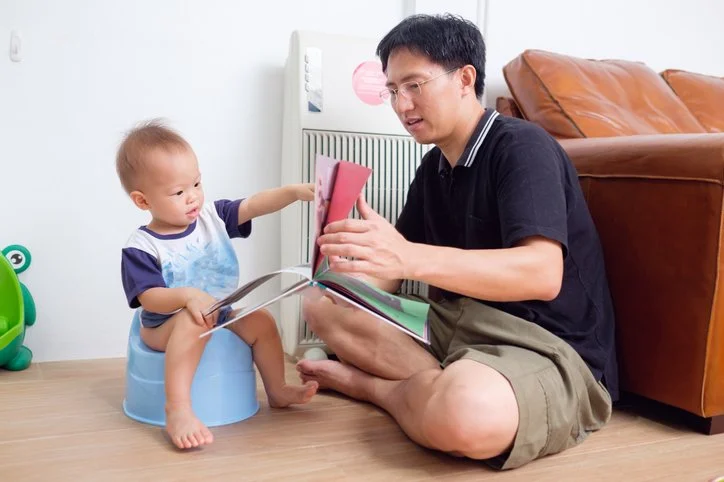
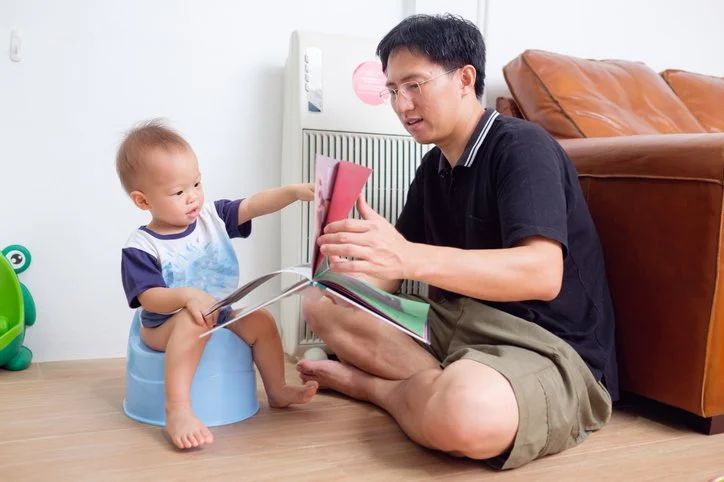
Toddler sitting on a potty-training seat while a parent sits nearby

Summer is here, and if you have a child who is ready to say goodbye to diapers, this might be the perfect time to try toilet learning!

While it’s important to have a relaxed approach to toilet learning and to follow your child’s cues, it’s also important to give yourself a realistic amount of time to devote to it, which is why summer, for some families, is a better time of year to start the process of their child learning to use the toilet.

This is an important milestone for you and your child! To make it fun and interesting, some families use toilet learning books to introduce the topic and encourage cooperation. A classic is Going to the Potty, by Mr. Rogers. Toilet Learning: The Picture Book Technique for Children and Parents, by Allison Mack and Everybody Potties: and I Can Do It Children’s Board Book by Cheri Vogel are a couple of other more recent ones, and there are many more! Some children love getting stickers on their hands or on a chart when they use the potty. However you introduce and work on this process together, encourage them to feel proud of themselves through every step of the process. Toddlers want to be grown up more than anything, and you can capitalize on this by celebrating every step.

For your child, learning to control their bodily functions takes time. And once the process of learning starts, it can take another 3 to 4 weeks (or longer) before your child is able to stay dry. There will be accidents, and that is part of the learning process. All children are different and develop this skill in their own time. Some children pick it up quickly, and some children need lots of opportunities for perfecting the skill.

Getting started with toilet learning

Look for clues

Children can be ready to learn to use the toilet at different ages, so it’s helpful to watch for signs that your unique child is ready. If your child shows an interest in family members using the “big” toilet; can stay dry for 2 or more hours; hates being in a wet diaper, is aware of and can tell you when they make a bowel movement—they might be ready for toilet learning.

Have a seat

Using a child’s size toilet or a toilet seat ring for learning can help your child feel safer on the toilet. Many children have a fear of falling in the toilet, so a child’s seat may help them feel more balanced and secure when they are sitting on it. If you use a toilet seat ring, you will likely need to have a stool or step under your child’s feet for climbing onto the seat and for support and stability. Many children enjoy picking out a toilet seat of their very own. Once you bring a toilet seat home, talk about what it is used for and let your child check it out and practice sitting on it.

Suns out, buns out

The wonderful thing about warmer weather and toilet learning is that your child can go diaper-free and pants-less at your home. An important part of toilet learning is your child noticing and recognizing when they are urinating or passing a bowel movement. To start the process of toilet learning, you could spend a few mornings or afternoons in your yard or home (in an area where you are OK with there being accidents) and let your child go diaperless. Help them notice when they go pee. If they don’t notice on their own, point it out. Then you can help them learn that peeing in the toilet is the goal. Diapers do a pretty good job of disguising this feeling for children, so it can be powerful for kiddos when they make the connection and that they can start to recognize the feeling before they go. 

Toilet time

When you are ready to start incorporating the toilet, pick a day to get started when you can be home for at least half the day. Dress your child in clothing that is easy to pull off and on, and encourage extra water throughout the day.

You may need to ask your child frequently if they need to try using the toilet, this could include after waking up, after meals, before going out, before bedtime. You know your child best, and it is likely you’ve noticed their signs that they need to go. These could include the squirming or the dancing around “potty dance.” When you think your child may need to go, let them sit on the toilet for 3 to 5 minutes. If it’s hard for them to sit still that long, have some books nearby that you can look at together. Turning on the tap water in the sink can sometimes help them to start. Remember, toilet learning is about holding and then learning to let go or relax those muscles when you choose. It can take time to learn to control both aspects of the process.

Some children are distressed when they see their pee or poop flushed away in the toilet; it is a part of them. You can help them understand that what is flushed away are the leftovers from what they eat and drink that their body doesn’t need any more.

Don’t force your child to sit on the toilet if they are anxious or upset. You want your child to have a positive experience using it, so you will need to have a relaxed and positive attitude when it comes to supporting your child to learn this skill.

Throw a parade when they are successful! Remember to celebrate every step of the process: learning to recognize when they need to go, running to the toilet, getting their clothes down, making it before they pee, peeing in the toilet, flushing, watching it get flushed away, pulling up their clothes, and washing their hands. Those are a lot of steps!

And if accidents happen—and they will—stay calm and help your child clean up: “Oops, you’re wet. Let’s get you some clean clothes.” Engage them in helping clean up in a matter-of-fact way. A few minutes after changing, remind your child about sitting on the toilet when they need to go to the bathroom.

Toilet learning is a process, filled with emotional highs and lows. Eventually, you and your child’s patience and effort will be rewarded with a newly mastered skill and a lot less messy diapers!

This article is brought to you by Parenting Now Parenting Educators and authors. Parenting Now offers parenting groups and drop-in programs for families with children 0-8, and is passionate about fostering happy, healthy families. For more information about Parenting Now please visit their website (https://parentingnow.org/) or contact us at info@parentingnow.org.

Triple P – Positive Parenting Program

Are you interested in receiving more parenting advice? Triple P Online – Positive Parenting Program could be for you! This online parenting program allows you to take a parenting class in the comfort of your own home!

If you live in Lane County, you can get Triple P Online for free by filling out the form on the Triple P page. A staff person from Parenting Now will send you an access code within 24 hours and you’ll be able to start using the program right away! For more information about the program and to sign up visit the Triple P page.

Team Parenting

Two parents laughing together while playing with their baby

As your child grows, it is likely that you and your partner will want to work as a team to most effectively guide your child to adulthood.  You have the common goal of raising your child to be healthy, happy, and successful, and in order to support your child growing to their potential, working together is the best way to get there.

Working as a team doesn’t mean you will never disagree. At some point, all parents differ or argue about parenting issues. It’s not, however, whether you disagree, but how you handle the disagreements. When you can listen calmly to each other in order to see one another’s perspective, you can more easily come to a compromise or united front. 

Even if you and the person you parent with have different parenting styles, you can still parent together effectively. In fact, evidence suggests that children benefit from having parents who compliment each other with different focuses and skills. Maybe one parent is creative and artistic, while the other parent is the rough-and-tumble playing parent. Both styles encourage your children to become well rounded and willing to try new things. 

Communication is key

Parenting together requires effective communication.

  • Before you sit down to talk through your issue, it is key to be calm and open to listening. Take some deep breaths together and reaffirm your common goal of supporting your child as they grow toward their independence.

  • Talk about what values are important to each of you. What values do you share?

  • When you have different values and strengths, you can support each other to grow that area of strength in your child. For example, if your partner values being active in the outdoors, and you would much rather be inside with a good book, you can still support both of those values together by each taking the lead in that area with your child.

  • Know and respect each other’s specific family and cultural history. What methods, values, or traditions do you want to keep? What would you like to do differently? How will you support each other in keeping your values alive?

  • Put aside time to come together to talk about general agreements about “daily” issues or routines – bedtime, meals, screen time, as well as major issues or persistent challenges.

  • We all make mistakes. Be kind to your partner and to yourself when you inevitably make some mistakes with each other.

  • In any relationship, with your partner and with your children, you will inevitably do or say something that you later regret; you create a rupture. Relationships become stronger when you can repair that rupture. Apologize and then resolve to handle it differently the next time.

Stretch your thinking

Parenting requires being flexible, both in your expectations of parenthood as well as how you parent. Consider what is important to you and your idea of parenting. For example:

  • Is learning to always say “please” and “thank you” important to your values?

  • Is restricting screen time something you feel is an absolute?

  • Is making a mess part of being creative?

Which things would you prefer to happen, but are willing to negotiate about? Can you be accommodating about your child’s bedtime if certain bedtime routines are important to your partner?

Appreciate each other’s viewpoints and needs. Be flexible and see where you both can compromise. When there doesn’t seem to be a compromise, is there a way for both of you to get your needs met around the issue? 

Working Through the Hard Moments

It can be easy to ignore your relationship when parenting seems to take all your focus, but addressing relationship challenges is essential in the long term. Working through your challenges will help you be able to work better as a team. Your role as a parent changes your couple relationship, and most parents agree that spending time nurturing yourselves as a couple is an essential component of successful parenting. Remember, you need to fill your cup emotionally both as individuals and as a couple in order to give your children what they need. 

It can be hard to come to parenting agreements if you and your partner have rigid parenting roles – such as one person who is always the “fun” parent and the other the “strict” parent. Try for flexibility. At the very least, a few rules or guidelines that you can both get behind and follow through with is essential so your child will know that a “no”, or “not yet” from one parent will be the same for the other parent. 

If your find yourself at a stalemate on an important issue, or if you seem to be always in conflict about parenting issues, you and your partner might may consider outside help:

  • Consider seeing a counselor who specializes in supporting parents.

  • Join a parenting group where you can talk with other parents and get support and information from professional Parenting Educators on issues of discipline and more, as well as positive ways to communicate with your parenting partner.

At the end of the day

It’s important, especially for younger children, to see that their parents are united and working as a team. Stability and consistency make children feel safe and confident. 

Your child will benefit if they see you as a team working together and you will create a more harmonious home.

This article is brought to you by Parenting Now Parenting Educators and authors. Parenting Now offers parenting groups and drop-in programs for families with children 0-8, and is passionate about fostering happy, healthy families. For more information about Parenting Now please visit their website (https://parentingnow.org/) or contact us at info@parentingnow.org.

Triple P – Positive Parenting Program

Are you interested in receiving more parenting advice? Triple P Online – Positive Parenting Program could be for you! This online parenting program allows you to take a parenting class in the comfort of your own home!

If you live in Lane County, you can get Triple P Online for free by filling out the form on the Triple P page. A staff person from Parenting Now will send you an access code within 24 hours and you’ll be able to start using the program right away! For more information about the program and to sign up visit the Triple P page.

Managing The Stresses of Parenting

Exhausted parents resting on the couch while their baby sleeps nearby

If you are a new parent, you know the answer to the redundant question, “Are you stressed?” 

Parenthood can be incredibly joyful, but it is also demanding and stressful for every parent. The good news is there are ways to help you handle the very real stresses of parenting.

New baby, new priorities

Maybe you used to prioritize keeping the kitchen spotless and taking a long run every morning. Now taking care of your baby and yourself means new priorities.

Think about what is most important and what you can let go of. 

  • Run in the morning? Don’t give up exercising. If possible, bring your baby with you. Both of you will benefit from being outside and a walk in the stroller or baby carrier may even help your baby sleep better. Instead of a long run in the morning, break your exercise up into two shorter power walks during the day that work around baby’s feeding and napping times.

  • Relax your standards. Your kitchen doesn’t have to be spotless, but it can be “reasonable.” For now, some dishes in the sink and some not put away are good enough.

Prioritize your time, too.

  • Baby napping? If you can, sleep while baby sleeps.

  • Can’t sleep while your baby’s asleep? Do a few needed chores, but also take the time to rest – text a friend, listen to music, sit in the sunshine, read a chapter or two.

Say Yes

It’s not always easy to say “yes” when a family member offers to help with baby or around the house. You may feel uncomfortable or overwhelmed having extra people in your home, especially in the first few days/weeks/months after giving birth. Or it may be that you are used to managing everything yourself. Sometimes it’s just hard to admit you even need the help.  But you can relieve some stress by saying yes to offers of help, but schedule it around what is convenient and helpful for you.

Family and friends might love to hold your baby or take her for a walk. During this time, you can get a break or do errands if you want to get out of the house. Some days, asking someone else to do an errand for you may be more helpful.

Some people may not have the time (or inclination) to spend time with your baby, but they are more than happy to bring a home cooked meal (or takeout) or pick up a few things for you at the store.

Family and friends who are far away can help too! Gift certificates to diaper services or food delivery services, with a choice of restaurants, can help lessen the demands of your day. Ask them to send you a quick text, cartoon or voice message periodically. That can remind you of their support and lift your mood. 

If your friend volunteers to fold your laundry or load your dishwasher, you may need to give up on your “right” way of doing it. Either way, the clothes will be folded and the dishes will get clean. You may prefer your own way of doing things, but keep an open mind and just say “thanks” when things get done a different way. 

Sometimes well-intentioned people want to see the new baby or help in ways that are not helpful. Perhaps they show up at a time your child generally naps and you are able to get some down time. Instead, your baby is overstimulated and you are making coffee for guests. Set limits on visitors. Be clear and kind about what’s helpful and what’s not. People who really want to help will understand. 

Consider making a sign for the door that says, “shhh, baby sleeping” to remind your visitors to keep their voices down. 

Connectivity

Make sure you have time for adult relationships.

  • Spend time with your spouse or partner. A quick “check in” or hug can do wonders. Take a few minutes after the baby is down to do some deep breathing together and express your gratitude.

  • Stay connected with friends. Meeting in person is great, but sometimes even a quick text can be helpful.

  • Try a video chat with those far away who can provide support. This is particularly important for military families who are separated.

  • Join a parenting group, a playgroup, or find online parent chats. Library story times are back up and running. These are great ways to spend time with other parents and babies. Baby Connection at Parenting Now offers a chance for families to connect, and will be offered both in-person and virtual starting June 1!

Basic self-care

It’s hard to take care of yourself when caring for your baby, but experienced parents will tell you it’s harder when you don’t take care of yourself. When you are tired or hungry or lonely, it’s easier to let stress get to you.

  • Eat healthy. Have easy to grab snacks around like carrot sticks and fruit. Get pre-made mixes of frozen or fresh cut vegetables that you can easily add a protein to for dinner. When you do cook, make extra to put in the freezer for a meal at a later time.

  • Exercise body and mind. Take ten minutes to meditate, stretch, run up and down the stairs, or read that article you’ve been waiting to look at.

  • Rest. Take the opportunity to rest when you can. Try to sleep when your baby does. Don’t always do chores when someone is with your child – take some needed downtime, too. Ten minutes of rest here or there can make a difference.

  • Emotional health. Being a new parent creates all sorts of emotions. You might be overcome with joy that your baby smiled, then saddened that you can’t go out with friends tonight, and then worried you are not that “perfect parent.” High-running emotions are pretty normal for almost every new parent. Remember to take time to laugh.

Make sure if you are feeling depressed or anxious and not able to handle the stress and changes of having a new baby, seek help. It’s quite common for both moms and dads to feel this way. Talk with a healthcare professional about your feelings or check out WellMama, a local nonprofit that provides pregnancy and postpartum mental health support services to women and their families. 

Hang in there, it will get easier

A new baby is stressful for all parents, but you can handle the stress. Parenting is a marathon and you want to go the distance. Managing your stress will help you be more available to your infant and relationship!

This article is brought to you by Parenting Now Parenting Educators and authors. Parenting Now offers parenting groups and drop-in programs for families with children 0-8, and is passionate about fostering happy, healthy families. For more information about Parenting Now please visit their website (https://parentingnow.org/) or contact us at info@parentingnow.org.

Triple P – Positive Parenting Program

Are you interested in receiving more parenting advice? Triple P Online – Positive Parenting Program could be for you! This online parenting program allows you to take a parenting class in the comfort of your own home!

If you live in Lane County, you can get Triple P Online for free by filling out the form on the Triple P page. A staff person from Parenting Now will send you an access code within 24 hours and you’ll be able to start using the program right away! For more information about the program and to sign up visit the Triple P page.
Boost Your Child’s Problem-Solving Skills

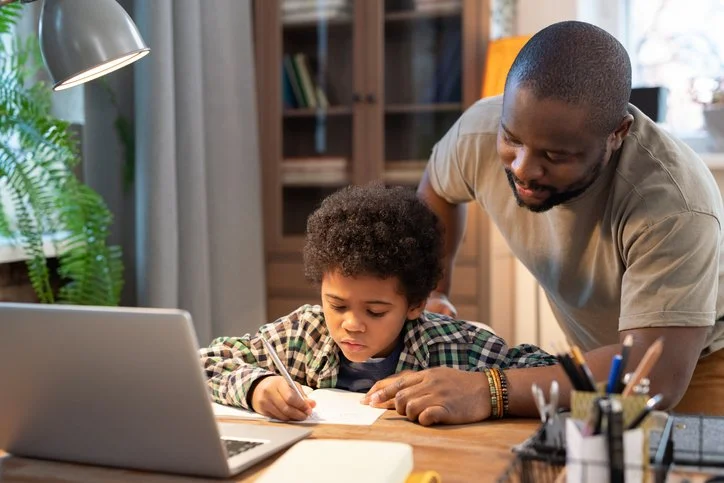
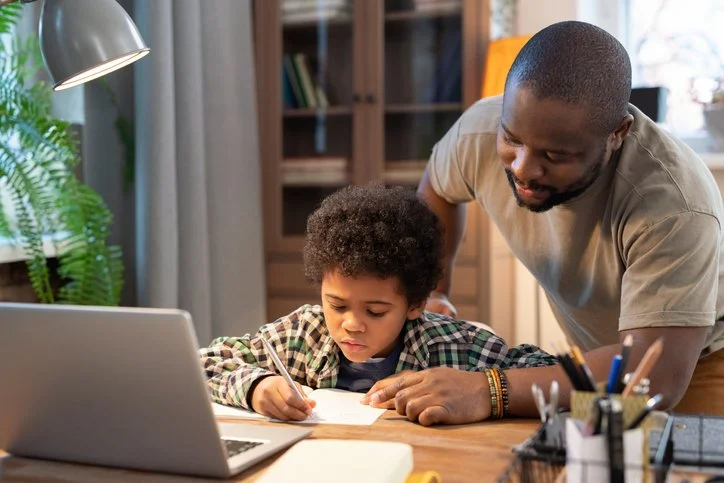
Parent helping a child with homework at a desk

At all stages of life, we have challenges and problems we must approach and solve. From the moment babies are born, they learn that when they feel hungry they must use vocal and physical cues to let their caregiver know–that’s problem solving! When an infant sees a ball across the room that she wants, she must either move her body in the direction of the ball or communicate to her caregiver (through pointing or vocal cues) that she wants the ball – again, that’s problem solving!

As children get older, their problems change. Instead of problem-solving how to share a toy, it might be how to tackle a big homework project or overcome stage fright. All of us can benefit from learning the skills we need to help us better solve problems.

Model problem solving

Children learn a lot through watching others. Let your child see how you approach your daily challenges or problems. Talk about how a challenge can be broken down into smaller parts that we can work out one at a time. When you have a problem or challenge, talk together about how you could meet it. For example, “I forgot to get veggies at the store this morning. What could we do about that? What are some ideas? We could make another trip to the store, or use canned or frozen ones for tonight’s dinner. What solution do you think we should choose?” 

Involve your child in family problem solving meetings

Framing a problem as a challenge we can meet can be a good place to start. There may be times when you can involve your child in the process of solving a problem or facing a challenge that affects the whole family, such as screen time rules, chores, or planning the weekend’s outings. Start with a challenge that is easily solved, and encourage your child to share their ideas. When your child expresses an opinion about a possible solution to the problem, use encouraging comments such as, “Yes! You’re really thinking about this! What other ideas can you think of?” Try to keep from judging or dismissing their ideas. Brainstorming is about coming up with a list — and an out-of-the-box idea may just spark the perfect solution.

Problem solving step-by-step

When a challenge or problem presents itself, try these steps:

  • State the problem clearly.

  • Brainstorm some possible solutions.

  • Choose a solution you want to try.

  • Try out the new solution.

  • Review how the solution worked and make any necessary changes.

Take a step back before stepping in

As parents and caregivers, it’s hard to see children struggle and sometimes we step in to help when it may be more helpful to take a step back. Think about the baby learning to roll over or crawl. They see the toy just out of their reach, and they are figuring out how to move their body to grasp it. They need to attempt different solutions until they find one that works.

Before you step in, encourage your child to go through the problem-solving steps with you: state the problem; then have your child make a list of some solutions. Ask your child to pick one of their solutions and try it out. From there, ask them whether they would like more support with their problem or whether they’ve solved it themselves! Then remember to evaluate how their solution worked. 

Celebrate the process! Point out how your child solved their problem themselves. “You thought about what you wanted, thought of how you could get it, and made it happen. How do you feel about that?”

Different challenges are going to require different solutions and approaches. By helping your child work through a problem, supporting their problem-solving skills, and being available when they need you, will give your child the confidence and assurance they need to tackle many of life’s challenges.

This article is brought to you by Parenting Now Parenting Educators and authors. Parenting Now offers parenting groups and drop-in programs for families with children 0-8, and is passionate about fostering happy, healthy families. For more information about Parenting Now please visit their website (https://parentingnow.org/) or contact us at info@parentingnow.org.

Triple P – Positive Parenting Program

Are you interested in receiving more parenting advice? Triple P Online – Positive Parenting Program could be for you! This online parenting program allows you to take a parenting class in the comfort of your own home!

If you live in Lane County, you can get Triple P Online for free by filling out the form on the Triple P page. A staff person from Parenting Now will send you an access code within 24 hours and you’ll be able to start using the program right away! For more information about the program and to sign up visit the Triple P page.
Screen-time Rules and Your Family

Parent and child smiling together while looking at a tablet

Many of us have loosened our screen time rules during the COVID-19 pandemic. If you’re looking to get your family’s media usage back on track or start a new media plan for your family, you’re in the right place. Now that the world is opening up, and more alternative activities are available for you and your family, it may be time to take a look at your media usage.

At some point, as a parent, you’ll likely want to develop a plan for media usage in your household. You might find that “no limits” work just fine for your kiddo. Other families may need to limit exposure. For most families, finding the balance between media and other important activities takes time, experimentation, and patience. When we can be intentional about what we watch, how much and when we use media, we can monitor our kids’ usage and help them to keep agreements that we make together. For younger kids, of course, parents will decide the guidelines based on their developmental age and needs. Here are some things to consider while navigating the digital realm with your family.

Ninety-eight percent of households with children 8 and under have access to a mobile device, such as a tablet or smartphone. Media is here to stay!

The American Academy of Pediatrics (AAP) encourages parents to develop personalized media use plans for their children. Media plans should take into account each child’s age, health, personality, and developmental stage. The AAP has a tool you can use to create a personalized media plan for your family.

In general, the AAP recommends:

  • 18 months and younger: No screen media other than video-chatting with relatives or friends. There are many studies that support this stance, although it may be challenging to implement. Screens are pervasive in our lives, but with some forethought and planning you can get closer to this recommendation in your family.

  • 18 to 24 months: Choose high-quality programming/apps and use them together with children. Children learn by interacting with you, especially social emotional skills like self regulation.

  • Older than 2 years: Limit screen use to no more than 1 hour or less per day of high-quality programming. Co-view or co-play with your children, and find other activities to do together, such as reading or playing outside.

Another tool you could use is the a “5 W’s” approach – Who? What? When? Where? And Why?

WHO: Your decision about screen time may come down to your child’s age or personality. Some children have an easier time balancing screen time with their other activities. For others, it can potentially heighten undesirable behavior. Also, if your child is having a hard time with social interactions or learning to read social cues, it might be a good idea to limit their screen exposure and spend more time working on those skills with friends and family. Remember that children learn through relationships with the people around them. Try to set aside time for interacting with others.

WHAT: As part of your media plan, you’ll want to decide what types of media your child can have access to. Do they have access to the family computer? TV? Netflix? YouTube? None of the above?

A carefully selected list of apps and video games can go a long way in helping you feel comfortable about your child’s media usage. If your child comes home from school, raving about a game that everyone is talking about, take the time to learn about it and then decide whether it’s age and developmentally appropriate; perhaps even consider what your child has to gain from it.

Common Sense Media has a helpful list of educational apps for kids ages 5-8. They recommend:

  • GoNoodle Kids: Videos that encourage kids to get moving.

  • Crazy Gears: A STEM-based app that lets kids freely create, problem solve, and explore physics.

WHEN AND WHERE: If you’re looking to keep screen time to a minimum or just want to monitor it more carefully, you may want to choose the time of day and for how long your child can watch. An example could be 1 hour of screen time after school and an additional 2 hours on the weekend after chores are completed. A best practice is to make sure screen time happens in a family area, such as the living room, where you can keep tabs on how they are using their time and review content if you’re concerned.

Your kids may be asking you for access to media in their bedroom. Whether or not to allow a TV or other media in the kids’ bedroom has both pros and cons. On the plus side, the kids may not have as many disagreements about what to watch. On the other hand, more TVs available will likely lead to more TV viewing. You will not be able to monitor what they watch as closely, and could lead to less interaction with other family members.

WHY: There’s no denying that technology is going to be a part of our children’s future. That being said, not all media is created equal. Many tech experts emphasize quality over quantity.

When selecting educational apps, there are some easy-to-follow guidelines:

  • The app is distraction-free, including no advertisements.

  • The app has clearly defined learning objectives.

  • The app is interactive and offers feedback.

Finding Balance

Think about your own media usage and take an honest look at how it may be affecting your family. Are you able to put your phone down when your child is talking to you or needs your attention? Are you finding yourself getting frustrated when you’re trying to get something done online and your child needs you right then? Do you turn off your phone during meals? Letting your child see you enjoying other activities outside of any media is a great way to model what you would like for them… 

One approach to media usage is to think of it like any other hobby. If your child wanted to practice soccer all day, you would likely step in and make sure she was spending a healthy amount of time doing other activities. When considering your media plan, make sure your child is making time for reading, exercise, spending time in nature, interacting with others, etc. If you’re finding that the media is interfering, renegotiate until you get the balance right for you and your child.

Also consider this tip from Common Sense Media: “Don’t feel guilty. With each wave of the pandemic, we’re experiencing disruptions to our routines, shock, and even trauma. When families are navigating high-stress situations, counting screen minutes should be low on the list of concerns.”

This article is brought to you by Parenting Now Parenting Educators and authors Amanda Bedortha, Claire Davis, and Lynne Grilley. Parenting Now offers parenting groups and drop-in programs for families with children 0-8, and is passionate about fostering happy, healthy families. For more information about Parenting Now please visit their website (https://parentingnow.org/) or contact us at info@parentingnow.org.

Triple P – Positive Parenting Program

Are you interested in receiving more parenting advice? Triple P Online – Positive Parenting Program could be for you! This online parenting program allows you to take a parenting class in the comfort of your own home!

If you live in Lane County, you can get Triple P Online for free by filling out the form on the Triple P page. A staff person from Parenting Now will send you an access code within 24 hours and you’ll be able to start using the program right away! For more information about the program and to sign up visit the Triple P page.

Teaching New Skills and Behaviors

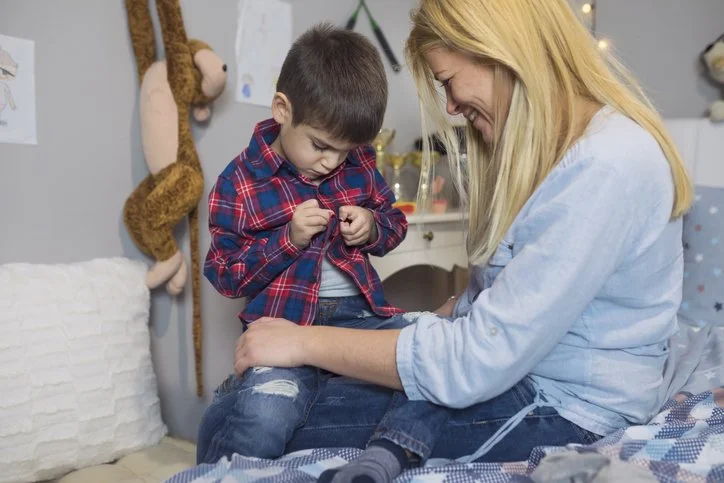
Parent helping a child button their shirt in the bedroom

Growing up involves learning many new and complex skills such as brushing teeth, getting dressed, cleaning up after yourself, managing school work, and strategies for problem solving. There are many ways you can support your child to learn and build these skills. Here are some ideas:

Set a good example (all ages)

Our children don’t always do what we say, but they always do what we do. You can’t expect your child to follow the house rules, if there are different rules for you. Take a minute to consider the rules of your house or the behaviors you expect from everyone in your family. Then, think about whether you yourself are also following those rules and modeling the behavior you want to see in your child. Whether it’s “quiet voice in the house,” “roll the ball in the house,” “clean up after yourself,” “use kind words,” it’s important to check in with yourself to make sure you are setting a good example for your child. You are their #1 role model. 

Tell your child why the skills are important

Just like you tell your child why you have a rule, let them know how it will benefit them to learn the skill. Whether it is for safety, or to learn polite conversation to get along with others, your child will more likely follow the rule if they know why. We brush our teeth because it is part of taking care of our body, so we can stay healthy. 

Show and tell (all ages)

We all learn through watching others. If you want to teach your child a new skill or behavior, let them watch you. If the skill is putting their toys away, show your child how you would like them to do it. Using words, describe what you are doing and let your child copy you. If your child needs help, provide it, but also encourage your child to try again. And remember to use supportive words and praise to let your child know that you think they are doing an awesome job, and encourage them to be proud of themselves.

Incidental teaching (1-12 year olds)

When your child comes to you to ask a question or get help, they are often ready and open to learning something new. This is called incidental teaching. The first step to successfully mastering a new skill is curiosity. We want our children to be curious and ask questions. We can use their natural curiosity to help them think about the task in a deeper way. We can also highlight their excitement and joy in doing something new. A pleasurable activity is more likely to be repeated. 

Instead of just answering their question for them, ask your child questions that help them think on a deeper level. Here’s an example: Your toddler asks you what color the firetruck is. Instead of answering back “red,” you could ask your child, “What color do you think it is?” If they answer “red,” follow up with “Yes! You got it right. What else is red? Why do you think firetrucks are red?”

Ask-say-do teaching (3-12 year olds)

As parents, we know that sometimes it is just easier (and faster, and less messy) to do things ourselves rather than letting our toddler pour their own glass of milk or feed the pet. But if your child is showing interest in doing things themselves, it’s a good time to teach the skill rather than always doing it for them. We want to capture that curiosity and excitement, and encourage them to develop competence around that passion. We can provide just enough assistance so they can be successful.

Ask-say-do is a good way to help your child learn to do things for themselves. It can help you teach new skills such as getting dressed, getting ready for bed, preparing a snack for themselves, or chores. When a task is challenging, break down into steps and teach your child one step at a time using this process:

  • Ask: Ask your child what the first step is – “What is the first thing we do when we get ready for bed?”

  • Say: If your child is unable to answer the question, gently tell them what they need to do – “The first step for getting ready for bed is to put on pajamas.”

  • Do: Let your child try the task by themselves first, but step in for help when they need it. Stop helping once the task is started to let your child finish by themselves.

Let your child rise to the challenge. When they struggle just a bit, and overcome the challenge, they are building resilience. It’s similar to when they were first learning to roll or crawl and you put an object they wanted just out of their reach. Remember how they were so pleased when they got it! You will see that same pleasure again and again as they rise to each new challenge.

Learning new skills and behaviors is something we develop all throughout our lives. The #1 thing you can do for your child is be supportive of the process, and encourage them as they continue to grow and flourish throughout their childhood and beyond. 

This article is brought to you by Parenting Now Parenting Educators and authors Amanda Bedortha, Claire Davis, and Lynne Grilley. Parenting Now offers parenting groups and drop-in programs for families with children 0-8, and is passionate about fostering happy, healthy families. For more information about Parenting Now please visit their website (https://parentingnow.org/) or contact us at info@parentingnow.org.

Triple P – Positive Parenting Program

Are you interested in receiving more parenting advice? Triple P Online – Positive Parenting Program could be for you! This online parenting program allows you to take a parenting class in the comfort of your own home!

If you live in Lane County, you can get Triple P Online for free by filling out the form on the Triple P page. A staff person from Parenting Now will send you an access code within 24 hours and you’ll be able to start using the program right away! For more information about the program and to sign up visit the Triple P page.