


Step 5 of Positive Parenting: Take Care of Yourself as a Parent

Parent relaxing with a warm drink and a book at home

The last in the 5 Steps to Positive Parenting is one of the easiest steps to overlook: Taking care of yourself as a parent.

Some days, between cluster feedings, an infant who will only sleep in your arms, and toddler potty training and upsets, you’re lucky if you can eat a piece of leftover, cold pizza for lunch or manage a shower.

But, as the saying goes, you can’t pour from an empty glass. It’s important that you look after your own needs too, whether that means asking for help, spending time with friends, or spending some quiet moments alone. It is not selfish to take good care of yourself. On the contrary, it is vital to your health and the health of your family.

Because Science Says So

The research is in! A recent study revealed that moms who have a solid support system in place have toddlers who perform better on cognitive tests, demonstrating that there is a connection between a mom’s support system and a baby’s brain development. So whether it’s friends, family, or peers in a parenting group, having 3 or 4 people in your life who you can turn to for support can positively impact your well-being, as well as your child’s.

But it’s not uncommon for parents to feel alone in their parenting journey and many things can contribute to this: living far from extended family, taking a break from your job to be a stay-at-home parent, moving to a new town, not having friends with young children.

If this sounds like your situation, there is hope for you. Locally, there are lots of options for making new parent friends. A parenting group, such as those offered at Parenting Now!, is a great place to not only meet new parents but also learn about your child’s development. If you’d like more casual drop-in programs, you could try storytime at the library, Baby Pop music time or the nursing nook at Daisy C.H.A.I.N, Playtime for Children and Parents at Parenting Now, or a toddler playtime at one of our local gymnastic centers. Try out a few activities and find one that both you and your child enjoy. It can be helpful to stay consistent with your activity of choice so you have the opportunity to see familiar faces week after week.

Help is on the way

As a new parent, it is helpful to have more than just social support. Bringing home a new baby can feel scary, especially if you are worried that your newborn isn’t feeding properly or you are experiencing a postpartum mood disorder. Never feel afraid to ask for help. Your doctor or child’s pediatrician is a good place to start, but you can also reach out to local resources that are well-equipped to help with a variety of circumstances:

  • Baby Connection: A free drop-in feeding clinic and lactation support group offered at Parenting Now.

  • WellMama: Support for parents experiencing postpartum mood disorders, such as postpartum depression and anxiety.

  • Daisy C.H.A.I.N: In-home postpartum recovery, as well as lactation consulting.

  • Healthy Families: Support that comes to you. You can access prenatally, and need to enroll before baby turns three months old.

For a full list of resources, visit the Parenting Now Resources for Families Website.

Other ways to support yourself

Being a parent doesn’t mean putting your own needs aside for the next 18 years. Yes, infants and toddlers require a lot from us—as it should be—but there are little things you can do in your day to help maintain your sense of self, as well as your sanity!

  • Get moving: Whether it’s a brisk walk or indoor dance party on a raining day, exercise is proven to improve your mood and keep you healthy.

  • Get outside: Sure it rains on average 210 days a year in Lane County, but finding those pockets during the day when the rain lets up can be a great time for getting in a walk or spending time at the park. Remember to take in some deep breathes in the fresh air. Even on cloudy days, just getting some natural light releases feel-good, calming chemicals in your body and helps to balance your mood.

  • Carve out time for your hobbies: Love to read, dance, or paint? Don’t give up on what makes you happy. Schedule time every week to cozy up in a bookstore or attend a dance class.

  • Set realistic expectations: This is not the season in your life to “Marie Kondo” your house or become a gourmet chef. Clean when you have time, but don’t stress that your house has to be picture perfect at all times. And know that your family will survive without a 4-course meal for dinner every night. If you can manage grilled cheese and tomato soup, then consider it a win. Especially during high stress times, it is helpful to simplify routines.

This article is brought to you by Parenting Now Parenting Educators and authors. Parenting Now offers parenting groups and drop-in programs for families with children 0-8, and is passionate about fostering happy, healthy families. For more information about Parenting Now please visit their website (https://parentingnow.org/) or contact us at info@parentingnow.org.

Triple P – Positive Parenting Program

Are you interested in receiving more parenting advice? Triple P Online – Positive Parenting Program could be for you! This online parenting program allows you to take a parenting class in the comfort of your own home!

If you live in Lane County, you can get Triple P Online for free by filling out the form on the Triple P page. A staff person from Parenting Now will send you an access code within 24 hours and you’ll be able to start using the program right away! For more information about the program and to sign up visit the Triple P page.
Step 4 of Positive Parenting: Have Realistic Expectations

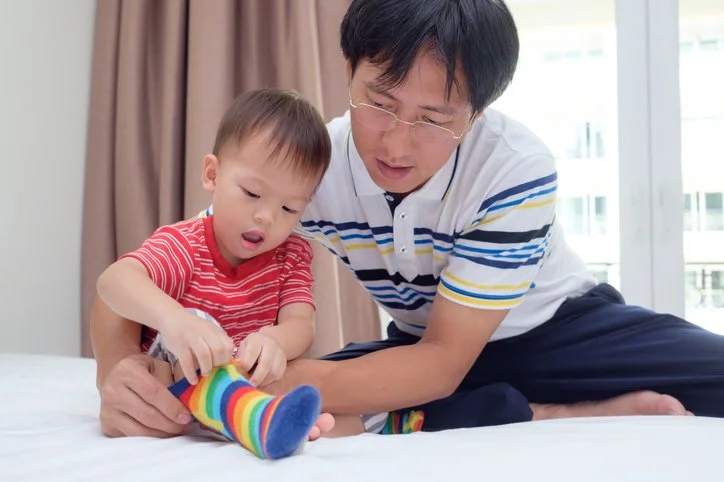
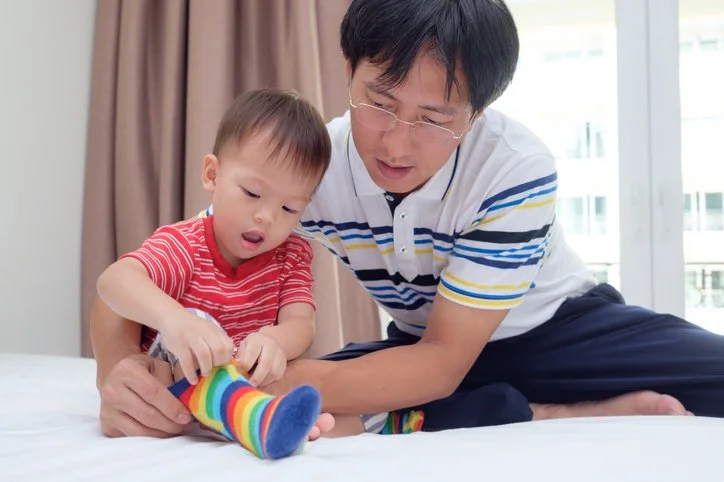
Parent and toddler playing with a toy together on the bed

One of the primary goals of the Triple P-Positive Parenting Program is show that parenting education is for every family. Whether you’re currently experiencing high levels of stress or have found a good balance in your life, we can all benefit from learning the basic principles of positive parenting.

Stranger Than Fiction: When The Realities of Parenting Don’t Match Expectations

Let’s be real: We’ve all witnessed a toddler meltdown at a store and thought to ourselves, “When I have children, I will never let them act that way in public.” It’s easy to envision the type of parent you’ll become and what your child will be like while they are still nesting cozily in the womb.

But the demands of parenthood, the temperament of your child, how much support you have, and your child’s normal developmental phases will likely create a different reality for you—and that’s OK!

Parenting is one of the hardest jobs there is, but having realistic expectations of yourself and your children is one of the best choices you can make in easing the process. And next time you see an exhausted mom carrying her screaming toddler out of the store, you might give her a nod in solidarity or offer to carry her groceries out to the car instead of rushing to make judgments.

Each child Is unique

As parents, we love to gush about our children’s successes: Jonah’s first word, Molly’s dance recital, Elijah’s game-winning pitch… and social media is the perfect place for us to share updates and pictures of all those beautiful moments, right? The downside to this ease of sharing is the potential for comparing your child’s development and milestones to other children. If you find yourself questioning why your infant isn’t walking yet or getting frustrated that your older child can’t throw a curve ball, here are some points to keep in mind:

  • All children develop at their own rate.

  • Each child has unique strengths.

  • Children are individuals with their own personalities. Just because your favorite pastime was softball as a child, does not mean your child will love it too.

  • Children make mistakes, but most mistakes are unintentional and part of their learning process.

  • It’s OK to let your child try and fail; it is an opportunity for them to learn persistence or acceptance.

Above all, be sure that your standards of behavior (such as being able to stand still in a line for 10 minutes) or demands (such as chores) are age-appropriate. While it’s no fun to wait in line at the post office with a wiggly 3-year old, it’s developmentally appropriate for a toddler to want to move and explore the area. Finding ways to work within your expectations and your child’s age and abilities is one key to happy parenting.

Perfectly (un)perfect parents

Remember when you or your partner was pregnant, and you had all those grand visions in your mind about parenting, such as: no screen time; only organic, homemade baby food; teaching baby sign language; sleeping through the night by 6 weeks. Flash forward a couple years and now your toddler is eating cheesy puffs and watching Paw Patrol while you nurse your newborn for the 100th time today, dishes are piled high and you haven’t showered in 3 days. Sound familiar? We’ve ALL been there because this is the reality of parenting young children. It’s hard. It’s all-consuming. But we survive! Just remember:

  • You will make mistakes.

  • It’s OK to not have all the answers and to admit you don’t always know what you are doing.

  • Don’t compare yourself to the mom at school drop-off with freshly laundered clothes and a full face of makeup. She once sported a messy bun and sweatpants just like the rest of us.

  • Every moment with your child is a positive learning experience for you.

  • The demands of parenthood will change over time. Some things will get easier (yay, no more accidents in public!), and some will get harder (first breakup).

  • Remember, the days are long now, but the years will be short. Your child will be this age only once; relax and enjoy the process as much as you can!

Along the way, it’s important to take care of yourself just as much as you do your child. In the next step, we will go over ways to take care of yourself as a parent.

This article is brought to you by Parenting Now Parenting Educators and authors. Parenting Now offers parenting groups and drop-in programs for families with children 0-8, and is passionate about fostering happy, healthy families. For more information about Parenting Now please visit their website (https://parentingnow.org/) or contact us at info@parentingnow.org.

Triple P – Positive Parenting Program

Are you interested in receiving more parenting advice? Triple P Online – Positive Parenting Program could be for you! This online parenting program allows you to take a parenting class in the comfort of your own home!

If you live in Lane County, you can get Triple P Online for free by filling out the form on the Triple P page. A staff person from Parenting Now will send you an access code within 24 hours and you’ll be able to start using the program right away! For more information about the program and to sign up visit the Triple P page.

Step 3 of Positive Parenting: Use Assertive Discipline

Parent talking closely with a child sitting on the couch

From telling little fibs to pulling their sibling’s hair, addressing challenging behavior is something parents do every day. A common thread in the Positive Parenting Program is how to manage the behavior you don’t want to see in the moment and ways to prevent it in the future.

As parents, we strive to find the most efficient, effective, and healthy ways to discourage undesirable behavior, such as lying, stealing, fighting, whining, or interrupting.

Children crave a predictable, stable environment. Clear rules, boundaries, and follow-through with appropriate consequences will help your child feel safe. When they know what will happen, they can use the thinking part of their brain to make a conscious choice about how they behave.

Family Values and Expectations

Toddlers are known for testing limits. They are just beginning to understand they are separate from you, and their job is to work toward mastering their own autonomy. Sometimes it’s because they want to see what you will do, or they think it’s a funny game. If your reaction to their behavior is inconsistent (say, you laugh the first time they call their brother a “fart face” but then scold them the next time), it’s going to send mixed messages. They won’t know what to expect, so they will continue to experiment with the limits.

As a family, discuss your stance on topics such as potty talk, swearing, physical contact, etc. Be clear with your toddler or older child what the family rules are. Yes, you’ll probably sound like a broken record, but, especially, toddlers need to hear the message over and over consistently before they learn. Other points to consider:

  • Repeat your rules calmly and consistently

  • Use clear, short, and direct messaging: “Hands to yourself,” “No running in the store.”

  • Be inclusive in your message: “We do not hit,” rather than “You do not hit.”

  • Say what you want your child to do instead. “We use our walking feet in the store.”

  • Use a firm, calm voice when managing consequences.

Consequences for Misbehavior

It happens to even the best of parents: There are going to be times when you have to dish out consequences for misbehavior.

  • Choose a consequence that fits the behavior, such as removing a toy that your children are fighting over: “You need to take turns with the race car. To help you learn to take turns, you need to take a break for 5 minutes to think about that. Then, let’s try using a timer.”

  • Used planned ignoring for whining and protests.

  • Return the toy or activity once the time is up. Set the timer for each turn. When it’s time for the other child’s turn, facilitate the exchange until they can do it independently.

  • Don’t feel discouraged if the consequence didn’t prevent your child from pulling the cat’s tail or dumping the contents of her dresser all over the floor. It will take repeated tries before she gets it.

Encourage Desirable Behavior

In between moments of cleaning up toy messes, making snacks, finding the correct episode of Peppa Pig they asked for, find moments in the day to praise your child when you see desirable behavior. Those little moments really help to build a child’s confidence, trust, and self-esteem, so it’s worth taking time out of your day to point out when they are using a nice quiet voice, petting the dog gently, doing a good job of sharing, etc.  

Managing challenging behavior can also be a good time to reflect on your own behavior. Are you modeling behavior that you want your child to follow? If not, then look at ways you can make improvements for the betterment of the whole family. Remember, they may not always do what you say, but they will surely do what you do.

This article is brought to you by Parenting Now Parenting Educators and authors. Parenting Now offers parenting groups and drop-in programs for families with children 0-8, and is passionate about fostering happy, healthy families. For more information about Parenting Now please visit their website (https://parentingnow.org/) or contact us at info@parentingnow.org.

Triple P – Positive Parenting Program

Are you interested in receiving more parenting advice? Triple P Online – Positive Parenting Program could be for you! This online parenting program allows you to take a parenting class in the comfort of your own home!

If you live in Lane County, you can get Triple P Online for free by filling out the form on the Triple P page. A staff person from Parenting Now will send you an access code within 24 hours and you’ll be able to start using the program right away! For more information about the program and to sign up visit the Triple P page.

Step 2 of Positive Parenting: Have a Positive Learning Environment

Parent reading a picture book together with a child on their lap

Children are sponges for information, using every opportunity to learn something further about their world. Even when you don’t think your child is paying attention, be assured that they are! Babies learn about their world by manipulating toys in their hands and mouthing any nearby objects they can get their hands on; Toddlers use their bodies to learn through play and asking a million questions a day.

Between answering questions about why cats have whiskers to responding to the 20th request of the day for snacks, let’s face it: As parents, it’s easy and normal to feel burnt out and not give it our all 100% of the time.

But it’s still important that, as parents, our children feel that they can come to us with their questions, ideas, or just when they need some extra attention. When your child comes to you for help or to talk, they’re ready to learn. Give them positive attention, even if only for a minute or so.

Ways To Create A Positive Learning Environment

Monkey See, Monkey Do

You’ve no doubt heard the expression “Monkey See, Monkey Do.” If you want your child to use their “kind words” when requesting a snack, they need to also observe you using the same type of language. Or, say, for instance, you want your older child to spend more time reading and less time playing video games, be mindful or your own screen time habits and find time together as a family to read. As parents, you are your child’s first teacher: Model the behavior and traits you want to see in your own child, and find opportunities throughout your day to teach your child about the world around you, including:

  • Go on nature hunts in your neighborhood, collecting a variety of leaves, flowers, rocks, etc.

  • Use grocery store trips or car rides to point out words you see. For younger children, narrate as you go through the store, naming and describing what you see.

  • Explore the library and pick out new books.

Creativity Is Key

Art offers children the chance to explore their own identity, develop thoughts, feelings, and opinions, as well as just have fun. Having outlets in your home to get creative is a great way to support a positive learning environment.

It’s never too soon to incorporate creativity and the arts into your child’s life. It could start with singing a lullaby to your newborn, then move on to finger paints with your toddler, and eventually a song and dance routine with your elementary-age child! The beauty of getting creative with your child is that there are so many fun—and inexpensive—ways to do it:

  • Use household items to play dress up, such as bed sheets for superhero capes.

  • Make a collage out of nature items found in your backyard.

  • Use a cardboard box and stuffed animals to come up with a puppet show.

  • Remember good, old fashioned blank paper and crayons!

If you want your child to harness the power of their expressive side, accessibility is the name of the game. In the home, have washable markers, crayons and paints, as well as paper out, where your older child can get to them easily.  It can make your job easier if you have a corner where these are set out for ready use. If your child wants to take dance classes or learn to play an instrument, be open to the idea and start by asking a studio if you can sit and observe a class in-progress to see if it’s a good fit for your child.

Help Develop Healthy Self-Esteem

If you were told over and over again that your paintings weren’t very good, would you want to continue painting? Probably not.

Children are sensitive, and prone to giving up easily when things are tough or they think they are not good at it. A lack of praise, affection, or attention can cause a child to have low self-esteem. But a child who receives plenty of praise and encouragement is going to feel good about themselves. Praise the effort, not the product, “You are working really hard on that painting; tell me about it.”

Let’s say your toddler excitedly calls you over to look at their painting of a cat. All you see is giant blobs of paint, so soaked that the paper is ripping and paint is running onto the table. Beaming, your child is watching you for your response.

Before you complain that they used too much paint or made a big mess, stop yourself and first praise them for their efforts and what they did well: “I love how you incorporated so many colors into your painting.” Then, using kind words, help them with the mess. “It’s looks like your paper got soggy in some areas. Let’s clean up together, and then I can show you how to use just the right amount of paint.”

Having a positive learning environment also includes encouraging your child to express their ideas and emotions. Listen to your child’s ideas, feelings, thoughts, and hopes without judgement. They need to know that you are their safety zone for unloading whatever is on their mind.

This article is brought to you by Parenting Now Parenting Educators and authors. Parenting Now offers parenting groups and drop-in programs for families with children 0-8, and is passionate about fostering happy, healthy families. For more information about Parenting Now please visit their website (https://parentingnow.org/) or contact us at info@parentingnow.org.

Triple P – Positive Parenting Program

Are you interested in receiving more parenting advice? Triple P Online – Positive Parenting Program could be for you! This online parenting program allows you to take a parenting class in the comfort of your own home!

If you live in Lane County, you can get Triple P Online for free by filling out the form on the Triple P page. A staff person from Parenting Now will send you an access code within 24 hours and you’ll be able to start using the program right away! For more information about the program and to sign up visit the Triple P page.

Step 1 of Positive Parenting: Create a Safe, Interesting Environment

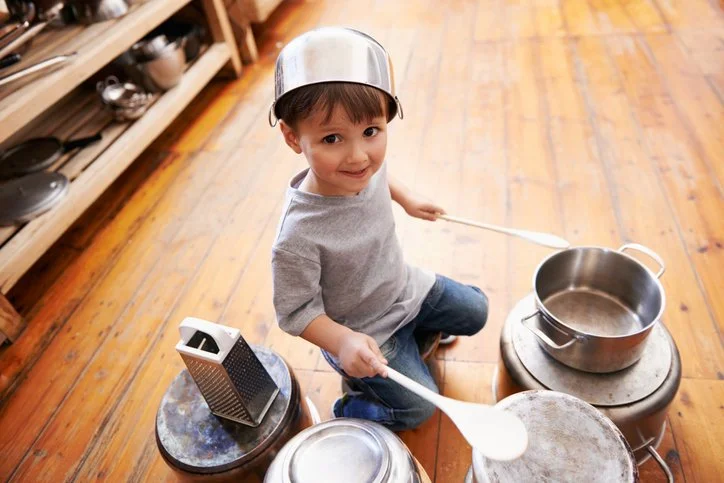
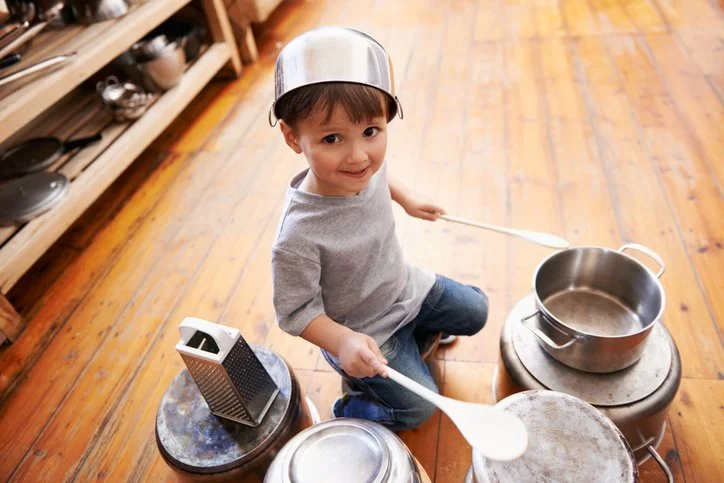
Child playfully drumming on pots and pans with a pot on their head

If you are new to Triple P Online, it is an online course distributed through the Early Childhood Hub of Lane County for parents of children ages 2-12. Information is delivered via online videos and is supplemented with blog posts on a variety of topics, from toilet training to coping with stress.

Whether you are new to Triple P Online or just need a refresher, it’s always worth taking a moment to explore the core values of the Triple P (Positive Parenting Program). This review helps us to stay grounded in our value of supporting our children to become the best they can be, while taking care of ourselves along the way.

What Does It Mean to Have a Safe Environment?

Creating a safe environment for your child to explore will set you and your child up for success when it comes to learning and exploration.

First, let’s talk about home safety.

How you childproof your home will largely depend on the age of your child. Guidelines for all ages of children include:

  • Have smoke detectors outside each bedroom

  • A lockable medicine cupboard

  • Cleaning products and other poisons out of reach

  • A hot water heater with a thermostat set below 120 degrees F.

  • If there is a weapon in the home, keep it locked, out of reach and out of sight

When it comes to infant and toddler safety, consider:

  • Moving the crib away from the window

  • Keeping curtain cords up and out of reach

  • Using corner covers to pad sharp edges of tables and other furniture

  • Covering electrical outlets

  • Using safety gates for stairs or other off-limit rooms

  • Following the toy manufacturer’s age recommendations and checking regularly for broken parts.

  • Keeping small toys, such as marbles and magnets, out of reach.

  • Using latches in the kitchen to keep cupboards, the stove, refrigerator, and dishwasher locked up

As your child matures, the safety latches and corner covers can go, but now you have other household items to be aware of:

For older children:

  • Continue to keep cleaning products and poisons out of reach

  • Other possibly dangerous items to keep inaccessible, include: matches, lighters, cigarettes, alcohol, firearms and other weapons

  • In case of a fire, come up with a route to safely exit your home and practice it with your children

There’s No Place Like Home

There’s no doubt about it: a toddler is happiest while in the comforts of their own home with the people they love. Of course, for everyone’s sanity, it’s important to have interesting toys, games, and crafts to keep kids busy.  

You don’t need the latest and greatest toys with all the bells and whistles to entertain your children. Kids, especially toddlers, love sensory play that allows them to use their hands to explore and (sometimes) get messy.

Rotating out these activities in your own home is a great way to stimulate your child’s imagination:

  • Soft dough with cookie cutters and rollers. Consider making your own batch from scratch and adding sparkles or even a scent, such as peppermint, to it!

  • Fill a bin with sand and play with sand tools, construction vehicles, dinosaurs… you name it!

  • Fill a large bowl with water and dish soap, and use it as a washing station for toys

  • Fill a large bin with shaving cream. Add food coloring for fun swirls of color

  • Give your child a pile of your clean recycling, tape, scissors, and markers and see what happens!

When it’s time to get the wiggles out but the weather isn’t cooperating, try these indoor activities:

  • Set up an obstacle course using pillows and couch cushions

  • Use removable tape to create a hopscotch or course on the floor for your child to jump into

  • Make your own bowling set using a ball, stuffed animals, paper towel tubes or empty water bottles

  • Decorate cardboard boxes to make robots, racecars, or rocket ships

  • Walk like your favorite animal: bear, crab, elephant, frog

  • Blow up some balloons and bounce them around

  • Play freeze dance

  • Make a scavenger hunt

Knowing your home is safe for your child to play and explore in, will help set your mind at ease so you can focus your energy on having fun and making memories.

This article is brought to you by Parenting Now Parenting Educators and authors. Parenting Now offers parenting groups and drop-in programs for families with children 0-8, and is passionate about fostering happy, healthy families. For more information about Parenting Now please visit their website (https://parentingnow.org/) or contact us at info@parentingnow.org.

Triple P – Positive Parenting Program

Are you interested in receiving more parenting advice? Triple P Online – Positive Parenting Program could be for you! This online parenting program allows you to take a parenting class in the comfort of your own home!

If you live in Lane County, you can get Triple P Online for free by filling out the form on the Triple P page. A staff person from Parenting Now will send you an access code within 24 hours and you’ll be able to start using the program right away! For more information about the program and to sign up visit the Triple P page.

Teaching Patience and Waiting

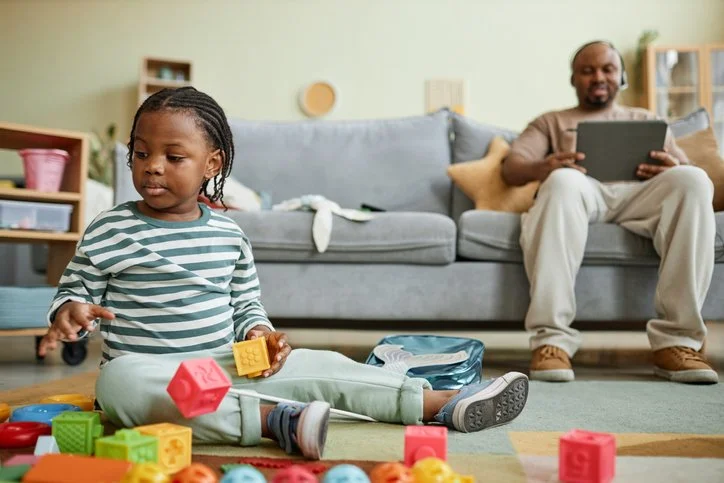
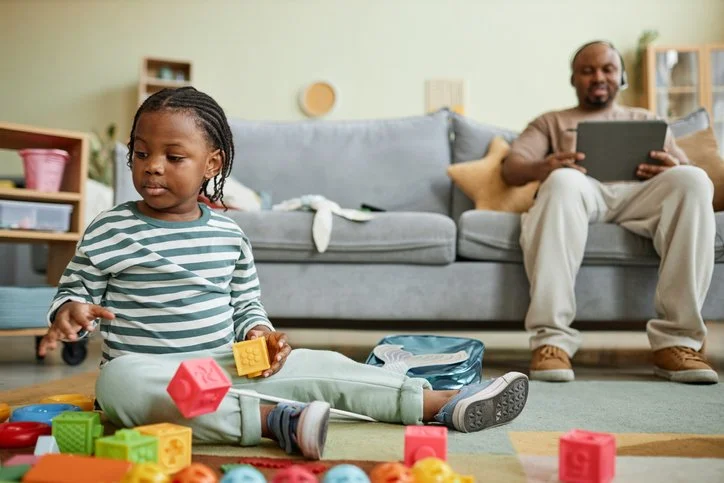
Toddler stacking colorful blocks on the floor while a parent works nearby

Interrupting is a very normal stage in child development. 

Being able to teach your child how to get your attention in a matter that is respectful and age appropriate takes some time. There will be learning from both parents and children during this time. But with practice and patience you can teach your preschooler to “wait their turn” and interrupt less often.

Interrupting defined

Interrupting is stopping the momentum of an activity, such as a preschooler interrupting their parents during a work call. It is common for preschoolers to interrupt their parents or a trusted adult, such as their teacher. Children often approach adults for:

  • information or answers to their questions

  • a need, such as hunger

  • help

  • when they have something to share

  • your attention

Interruption only becomes a problem when parents are busy, or parents can’t help children with their needs at that moment.

Teaching your child to say, “excuse me” and then wait to get the attention of whom they are talking to is a skill that needs to be taught patiently. You can start by giving your preschooler opportunities to practice not interrupting by learning to wait for short periods of time. Some opportunities to practice waiting might be: When your child asks for a snack, getting out the door, when you are attending to a sibling, writing an email, texting a friend, etc.

Tell your child that you are going to make an important phone call. Follow with: “Is there anything you need from me right now?” Then make a plan for what your child will be doing when you are on the phone, such as playing with soft dough, looking at books, or coloring.

Your best defense against interruptions is usually some form of entertainment. Give yourself a few minutes to help your child choose and set up the activity they want to play.

Children interrupt because they feel that what they need or want to say is very important and to the child it is very important. It is difficult for children to know when they can and can’t interrupt. They have not learned those social skills yet. Many children want to speak right away because, if they don’t, they might forget what they were thinking about. Having your child wait to speak until it is their turn is a great tool to use to help your children wait. When it is their turn and they can’t remember what they were saying, then you can remind them that as soon as they remember they can let everyone know.

Sometimes, parents might expect their preschooler to wait for a long time before they can give them back their attention. Parents might be on a call, working, or concentrating on something very important. If children do not get attention when they interrupt politely, they may learn to interrupt loudly and rudely. Remember to set realistic expectations for you and your child.

Preschoolers can:

  • Play quietly for short periods of time.

  • Can learn 2 or 3 rules to follow regarding interrupting.

Don’t expect:

  • Preschoolers to play independently for over 30 minutes.

Talking on the phone for an hour might not be a realistic expectation at this stage in your child’s development. Talking on the phone for 15 minutes is a realistic expectation that your preschooler can handle.

Always be prepared to answer your child right away when they are hurt or feeling unwell.

This article is brought to you by Parenting Now Parenting Educators and authors Amanda Bedortha, Claire Davis, and Kalina Glover-Moresi. Parenting Now offers parenting groups and drop-in programs for families with children 0-8, and is passionate about fostering happy, healthy families. For more information about Parenting Now please visit their website (https://parentingnow.org/) or contact us at info@parentingnow.org.

Triple P – Positive Parenting Program

Are you interested in receiving more parenting advice? Triple P Online – Positive Parenting Program could be for you! This online parenting program allows you to take a parenting class in the comfort of your own home!

If you live in Lane County, you can get Triple P Online for free by filling out the form on the Triple P page. A staff person from Parenting Now will send you an access code within 24 hours and you’ll be able to start using the program right away! For more information about the program and to sign up visit the Triple P page.
Understanding Your Child’s Fears

Parent comforting a child with a reassuring hug

Fears are very common in children and are a part of growing up. Children can have fears that are mild to extreme at different ages and as they learn to cope with new and different experiences. Children can learn to overcome their fears with practice by talking through the fear with a trusted adult. Some fears are much stronger and can become paralyzing. If this is the case, it may be time to consider professional help, such as counseling. 

Every child is different in how they experience and deal with fears. People may experience the same event differently and their reactions can be different too. That is why not everyone is scared or worried about the same things. When we experience an event as threatening or harmful, our built in protective response to that event is fear. This leads us to action. Our brain moves us quickly into our fight, flight or freeze response to protect us.

Encourage your child to name and talk about their fear so that they can continue to do the things they enjoy doing. When we talk about what we are afraid of, it doesn’t seem so scary. You can assure your child that they are safe, and you are there to help them through their big emotions. Let them know you believe in them, and are there to support them.

Some children are fearful when they are beginning something new such as school, camp, or an after-school activity. This is a fear of the unknown. You can help your child by validating their feelings, and by giving them information about what they can expect. The more information we have, the less our fears can take over.

Some children have a strong reaction to a scary event or anticipated event, and try to avoid the feeling and not talk about it. They may not be sure why they are fearful, or they may not have the vocabulary to talk about it. Asking questions and checking for understanding will help you understand why your child feels this way. Even if you think they are being irrational or unreasonable, validate their feelings and tell them you understand. That will help their brain move through their fear and then they can access the thinking part of their brain to come up with coping strategies.

Some children show their fear in subtle ways. They may avoid doing something that they used to love, they may cry a lot more, become more sensitive to minor upsets, or scream and run to you or people they trust. They may want to leave the situation and be very insistent about it. If your child is expressing themselves in this way, check in with them to determine what they are feeling. Always be willing to listen to your child’s concerns and validate them. As children get older their fears will change and will become more wrapped up in fearing what others might think of them. They may experience embarrassment at the thought of talking in front of the class, or reading out loud. They may feel embarrassed about their changing body. These fears are a normal part of growing up, and knowing you are there to help them negotiate their fears will go a long way in giving your child the confidence and skills to cope with them. 

Fear is a healthy response to danger,  and can keep your child safe from things such as animals that are unfriendly, or deep water. If the fear becomes too large, then the fear will take over and it will not match the real danger. When the fear becomes overwhelming, and your child has trouble negotiating all the things they need to do in their daily life, that is the time to seek professional support. It can take time for children to overcome their fears. Patience, support, and practice will help your child overcome what they are afraid of. You can help your child by teaching them how to cope with their fears and encourage them to gradually approach the activities they fear. It’s ok to be afraid and to have fears. If those fears become overwhelming, seeking help is powerful and will help you and your child in the long run.

This article is brought to you by Parenting Now Parenting Educators and authors Amanda Bedortha, Claire Davis, and Kalina Glover-Moresi. Parenting Now offers parenting groups and drop-in programs for families with children 0-8, and is passionate about fostering happy, healthy families. For more information about Parenting Now please visit their website (https://parentingnow.org/) or contact us at info@parentingnow.org.

Triple P – Positive Parenting Program

Are you interested in receiving more parenting advice? Triple P Online – Positive Parenting Program could be for you! This online parenting program allows you to take a parenting class in the comfort of your own home!

If you live in Lane County, you can get Triple P Online for free by filling out the form on the Triple P page. A staff person from Parenting Now will send you an access code within 24 hours and you’ll be able to start using the program right away! For more information about the program and to sign up visit the Triple P page.
Encouraging Your Child to Play Sports

Parent and child playing soccer together on a front lawn

Playing a sport gives your school age child an opportunity to develop physically through exercise. It also helps your child make new friends, and learn about teamwork, responsibility, and hard work. Sports are a great way to have your child try something new!

If your child is new to trying sports or has expressed interest in starting one, here are some tips to get started.

Build coordination and muscle development at home

To set your child up for success  in a sport, you can help them build their confidence and skills in their muscle development, coordination, and physical fitness.  Moving their body as they run and play while they are toddlers and preschoolers, will build these skills. There is no pressure to get your children into a sport. Some children might not even know they are interested in sports until you try playing some games with them!

Here are some fun games you can both play together and to work on some coordination skills:

  • Rolling a ball back and forth

  • Playing catch

  • Kicking a ball

  • Hopping

  • Skipping

  • Jumping

  • Balancing

  • Climbing

  • Dancing

  • Bouncing a ball

  • Swimming

  • Playing hopscotch

  • Running

  • Learn to ride a bike

Introduce a variety of sports

Pay attention to sports that your child is interested in. Take them to a baseball game or watch a soccer game on TV. Ask them if there is a sport their friends are participating in that they might want to try too. These are some ways to help your child choose a sport to try.  Some kids’ sports organizations will let families attend training sessions, or take one free class to try it out.

Kids can be quick to change their minds, or switch from one activity to the next. If this is the case, you may decide on a family rule that your child needs to finish their season before switching to a new sport. In the meantime, make sure they still go to practice and arrive on time. This is a way children learn to follow through on their commitments. With continued effort, they may even decide they like it better once they have mastered some of the skills through consistent practice. Keep encouraging them, even when you know they may not continue after the season. They are learning the life lesson of the importance of showing up for others who are counting on them, and keeping their word. 

Team sports are a great way for children to learn to work together and rely on one another. If one person isn’t there to participate, then the team is not as strong. Responsibility is important to teach children at every age of development. And responsibility helps build confidence in your child. Making sure that your child follows through is very important in helping them have confidence. Confidence comes through practice and is a good way to teach and demonstrate for our children.

Playing a sport is a great way for you and your child to do something new together.

This article is brought to you by Parenting Now Parenting Educators and authors Amanda Bedortha, Claire Davis, and Kalina Glover-Moresi. Parenting Now offers parenting groups and drop-in programs for families with children 0-8, and is passionate about fostering happy, healthy families. For more information about Parenting Now please visit their website (https://parentingnow.org/) or contact us at info@parentingnow.org.

Triple P – Positive Parenting Program

Are you interested in receiving more parenting advice? Triple P Online – Positive Parenting Program could be for you! This online parenting program allows you to take a parenting class in the comfort of your own home!

If you live in Lane County, you can get Triple P Online for free by filling out the form on the Triple P page. A staff person from Parenting Now will send you an access code within 24 hours and you’ll be able to start using the program right away! For more information about the program and to sign up visit the Triple P page.
Enjoy Family Meals With Your Toddler

Toddler smiling in a high chair while being fed by a parent

Have you noticed your toddler eyeing your plate at mealtimes or showing signs that they want to feed themselves? If so, they may be ready to eat what the rest of the family eats, as well as use a spoon, and sit at the table with others. 

Every child is different, but typically around 12-months old babies are ready to eat meals with the rest of the family. Anywhere between 12-months and 2-years old your baby can learn to use a spoon—a fork and knife skill will come much later. 

Toddlers learn a great deal about eating and mealtimes through watching others. When possible, place your child at the table with the rest of the family for meals. 

Remember that eating meals together is about much more than eating. A characteristic most strong families have is that they share meals together. Why would this be the case? Mealtime is about connecting, reconnecting, and building strong bonds with each other. When parents strive to make meals fun and enjoyable, children are more likely to develop life long good eating habits. They are more likely to try a new taste in the positive, encouraging tone the parents set for meal time, and parent’s expectations play a big part in this. Knowing that it typically takes around eight tries for a child to enjoy a new food, and that something they like today may become abhorrent to them tomorrow is all part of the process of growing.

Your child is also learning about your family’s culture and traditions through the meals and variety of foods you serve. They are experiencing a sense of belonging when you share your traditional diet or special foods for holidays. From green mashed potatoes on St. Patrick’s day to potato latkes for Hanukkah, your child is becoming a part of your culture.

Preparing for mealtime

It can be helpful for toddlers to have a daily mealtime routine, including three meals and a morning and afternoon snack. Limiting snacking and drinks other than water throughout the day will set up your toddler for successful meals. During routine snacks and meals, you can introduce new foods to your toddler to increase the variety of foods they eat.

There are other ways to make mealtime a success:

  • Have everything ready, including food and plates, before you sit your child in their high chair or booster seat.

  • Serve small portions, offering more as your child asks for it. This helps them tune into their internal feelings of hunger and fullness, and learn to follow their body’s signals.

  • Offer finger foods that can easily be picked up with your toddlers’ hands. This will help them to feel successful because they can feed themselves. These foods include:

    • Avocados, mashed (for dipping other foods in) or in small pieces

    • Ripe Banana or other fruits

    • Cooked soft broccoli

    • Soft, cooked protein like turkey or whatever your family prefers, cut in small bits

    • Bite size pieces of cheese

    • Bread or toast squares

Encouraging independent eating

In addition to offering finger foods, you can also encourage your child to feed themselves by letting them use a toddler-safe spoon.

Once your child is ready to use a spoon, remember to praise them when they successfully get the food to their mouth. They may need to hold the spoon in their fist at first, rather than how you might hold the spoon. This is okay; as their fine motor skills develop, they will learn to hold the spoon “properly.” At first you might have to help your toddler put food on the spoon and move it from the plate to their mouth. It is common for a toddler to use their fingers to put food on the spoon. Expect that it will take some time to learn this skill, and  always remember to praise when your child is successful. This will take several tries before they become an expert on getting food on the spoon to in their mouth. Expect plenty of spills and a lot of messes. If your toddler is getting frustrated using a spoon, make sure they know that using their hands is still a way to feed themselves. Also, continue to feed them, and show them how you feed yourself with a spoon; this helps their brain to make connections and see how a spoon works. Practicing the motion of holding a spoon and bringing it up to their lips will help your baby learn this skill. 

Since your toddler will be trying new foods for the first time, fad foods might become a common thing in your home. A fad food is something that your toddler wants every time they sit down for a meal. If it seems that your toddler only wants to eat one food item for every meal just know that this will not always be the case and things will change. Toddlers can be fussy eaters and they just might like their one meal, but this is common and typically short lived. As long as you set the tone of excitement and fun, and you encourage your toddler to try a variety of healthy foods, the fad food will eventually fade.

It is helpful to remember that our job as parents is to offer and encourage a variety of healthy foods, and it is your toddler’s job to decide what and how much they eat. This will set them up for developing healthy eating habits. 

Mealtime is an enjoyable time to socialize and reconnect. This is a time for families to slow down, enjoy what you are eating, and spend time together with the family. Mealtime for toddlers is very busy and sometimes even chaotic but slowing down and taking your time to eat and spend time together, even if your dining room and kitchen are a mess at the end, will be well worth it. 

This article is brought to you by Parenting Now Parenting Educators and authors Amanda Bedortha, Claire Davis, and Kalina Glover-Moresi. Parenting Now offers parenting groups and drop-in programs for families with children 0-8, and is passionate about fostering happy, healthy families. For more information about Parenting Now please visit their website (https://parentingnow.org/) or contact us at info@parentingnow.org.

Triple P – Positive Parenting Program

Are you interested in receiving more parenting advice? Triple P Online – Positive Parenting Program could be for you! This online parenting program allows you to take a parenting class in the comfort of your own home!

If you live in Lane County, you can get Triple P Online for free by filling out the form on the Triple P page. A staff person from Parenting Now will send you an access code within 24 hours and you’ll be able to start using the program right away! For more information about the program and to sign up visit the Triple P page.
Parenting Is Not One Size Fits All

Parent laughing together with a child outdoors

There is no rulebook when it comes to being the perfect parent. In fact, there is no such thing as a perfect parent. Every family has their own traditions, values, customs, and routines. There isn’t one “right way” to raise your child. You get to decide the values, skills, and behaviors you want to encourage and discourage and what approaches you want to take. 

Being a parent is challenging and important work. There are sleepless nights, toddler upsets, concerns for the future… Just know that if you are trying to be a good parent, you are already on the road to being a great parent to your child. The effort and time you are putting into yourself and your child will be worth it in the long run. 

Sometimes, we idealize the type of parent we want to be to our child, or what life will be like once baby is born. And sometimes, we put expectations on ourselves because of the way we were parented. Perhaps, we want to do things differently  or live up to what we saw growing up. 

While our parenting approach is influenced by how we were raised, it is also influenced by:

  • Beliefs

  • Expectations

  • Media

  • Life experiences

  • Opinions of family and friends

You want to be the best parent you can be and you know parenting is important work.  The unrealistic expectations we see in the media or expectations others put on us sometimes leave us disappointed  in ourselves as parents. Our job as parents is to support our children to grow into healthy, resilient, and fully functioning adults. Everyone, it seems, has an opinion as to how best to achieve that. 

There are great resources for us as parents as we learn and grow in the parenting role. Parenting groups are a great source of evidence-based strategies that have been shown to work. A parenting group is also a place to find other parents who may be struggling with similar challenges, and a place to find a peer group of support. You can learn to work with your child’s temperament and developmental stage to provide the support they need to grow and learn within your unique family, in alignment with your values. 

Sometimes we learn by trial and error while our child continues to surprise us with new challenges. Just when we find a strategy that seems to be working, our child grows and changes and we need a new strategy.We all make mistakes as parents, and it is in how we repair those mistakes that growth and trust is built with our child. When we admit we made a mistake, or that we wished we had reacted differently to our child, we are teaching them how to build trusting relationships. We are teaching them that we are human, and we can learn and do better.

It takes time to become a good parent and to learn and develop the skills to support your child’s physical and emotional needs. When you show up for your child every day, you are showing them that you care  and love them, and you are a family that learns together.

There is no right way to be a parent. Every family is different, and every child has their own needs. The best way to become a good parent is to find an approach that works for you and you feel comfortable with and that will work for your family. 

This article is brought to you by Parenting Now Parenting Educators and authors. Parenting Now offers parenting groups and drop-in programs for families with children 0-8, and is passionate about fostering happy, healthy families. For more information about Parenting Now please visit their website (https://parentingnow.org/) or contact us at info@parentingnow.org.

Triple P – Positive Parenting Program

Are you interested in receiving more parenting advice? Triple P Online – Positive Parenting Program could be for you! This online parenting program allows you to take a parenting class in the comfort of your own home!

If you live in Lane County, you can get Triple P Online for free by filling out the form on the Triple P page. A staff person from Parenting Now will send you an access code within 24 hours and you’ll be able to start using the program right away! For more information about the program and to sign up visit the Triple P page.