


Managing The Stresses of Parenting

Exhausted parents resting on the couch while their baby sleeps nearby

If you are a new parent, you know the answer to the redundant question, “Are you stressed?” 

Parenthood can be incredibly joyful, but it is also demanding and stressful for every parent. The good news is there are ways to help you handle the very real stresses of parenting.

New baby, new priorities

Maybe you used to prioritize keeping the kitchen spotless and taking a long run every morning. Now taking care of your baby and yourself means new priorities.

Think about what is most important and what you can let go of. 

  • Run in the morning? Don’t give up exercising. If possible, bring your baby with you. Both of you will benefit from being outside and a walk in the stroller or baby carrier may even help your baby sleep better. Instead of a long run in the morning, break your exercise up into two shorter power walks during the day that work around baby’s feeding and napping times.

  • Relax your standards. Your kitchen doesn’t have to be spotless, but it can be “reasonable.” For now, some dishes in the sink and some not put away are good enough.

Prioritize your time, too.

  • Baby napping? If you can, sleep while baby sleeps.

  • Can’t sleep while your baby’s asleep? Do a few needed chores, but also take the time to rest – text a friend, listen to music, sit in the sunshine, read a chapter or two.

Say Yes

It’s not always easy to say “yes” when a family member offers to help with baby or around the house. You may feel uncomfortable or overwhelmed having extra people in your home, especially in the first few days/weeks/months after giving birth. Or it may be that you are used to managing everything yourself. Sometimes it’s just hard to admit you even need the help.  But you can relieve some stress by saying yes to offers of help, but schedule it around what is convenient and helpful for you.

Family and friends might love to hold your baby or take her for a walk. During this time, you can get a break or do errands if you want to get out of the house. Some days, asking someone else to do an errand for you may be more helpful.

Some people may not have the time (or inclination) to spend time with your baby, but they are more than happy to bring a home cooked meal (or takeout) or pick up a few things for you at the store.

Family and friends who are far away can help too! Gift certificates to diaper services or food delivery services, with a choice of restaurants, can help lessen the demands of your day. Ask them to send you a quick text, cartoon or voice message periodically. That can remind you of their support and lift your mood. 

If your friend volunteers to fold your laundry or load your dishwasher, you may need to give up on your “right” way of doing it. Either way, the clothes will be folded and the dishes will get clean. You may prefer your own way of doing things, but keep an open mind and just say “thanks” when things get done a different way. 

Sometimes well-intentioned people want to see the new baby or help in ways that are not helpful. Perhaps they show up at a time your child generally naps and you are able to get some down time. Instead, your baby is overstimulated and you are making coffee for guests. Set limits on visitors. Be clear and kind about what’s helpful and what’s not. People who really want to help will understand. 

Consider making a sign for the door that says, “shhh, baby sleeping” to remind your visitors to keep their voices down. 

Connectivity

Make sure you have time for adult relationships.

  • Spend time with your spouse or partner. A quick “check in” or hug can do wonders. Take a few minutes after the baby is down to do some deep breathing together and express your gratitude.

  • Stay connected with friends. Meeting in person is great, but sometimes even a quick text can be helpful.

  • Try a video chat with those far away who can provide support. This is particularly important for military families who are separated.

  • Join a parenting group, a playgroup, or find online parent chats. Library story times are back up and running. These are great ways to spend time with other parents and babies. Baby Connection at Parenting Now offers a chance for families to connect, and will be offered both in-person and virtual starting June 1!

Basic self-care

It’s hard to take care of yourself when caring for your baby, but experienced parents will tell you it’s harder when you don’t take care of yourself. When you are tired or hungry or lonely, it’s easier to let stress get to you.

  • Eat healthy. Have easy to grab snacks around like carrot sticks and fruit. Get pre-made mixes of frozen or fresh cut vegetables that you can easily add a protein to for dinner. When you do cook, make extra to put in the freezer for a meal at a later time.

  • Exercise body and mind. Take ten minutes to meditate, stretch, run up and down the stairs, or read that article you’ve been waiting to look at.

  • Rest. Take the opportunity to rest when you can. Try to sleep when your baby does. Don’t always do chores when someone is with your child – take some needed downtime, too. Ten minutes of rest here or there can make a difference.

  • Emotional health. Being a new parent creates all sorts of emotions. You might be overcome with joy that your baby smiled, then saddened that you can’t go out with friends tonight, and then worried you are not that “perfect parent.” High-running emotions are pretty normal for almost every new parent. Remember to take time to laugh.

Make sure if you are feeling depressed or anxious and not able to handle the stress and changes of having a new baby, seek help. It’s quite common for both moms and dads to feel this way. Talk with a healthcare professional about your feelings or check out WellMama, a local nonprofit that provides pregnancy and postpartum mental health support services to women and their families. 

Hang in there, it will get easier

A new baby is stressful for all parents, but you can handle the stress. Parenting is a marathon and you want to go the distance. Managing your stress will help you be more available to your infant and relationship!

This article is brought to you by Parenting Now Parenting Educators and authors. Parenting Now offers parenting groups and drop-in programs for families with children 0-8, and is passionate about fostering happy, healthy families. For more information about Parenting Now please visit their website (https://parentingnow.org/) or contact us at info@parentingnow.org.

Triple P – Positive Parenting Program

Are you interested in receiving more parenting advice? Triple P Online – Positive Parenting Program could be for you! This online parenting program allows you to take a parenting class in the comfort of your own home!

If you live in Lane County, you can get Triple P Online for free by filling out the form on the Triple P page. A staff person from Parenting Now will send you an access code within 24 hours and you’ll be able to start using the program right away! For more information about the program and to sign up visit the Triple P page.


Boost Your Child’s Problem-Solving Skills

Parent helping a child with homework at a desk

At all stages of life, we have challenges and problems we must approach and solve. From the moment babies are born, they learn that when they feel hungry they must use vocal and physical cues to let their caregiver know–that’s problem solving! When an infant sees a ball across the room that she wants, she must either move her body in the direction of the ball or communicate to her caregiver (through pointing or vocal cues) that she wants the ball – again, that’s problem solving!

As children get older, their problems change. Instead of problem-solving how to share a toy, it might be how to tackle a big homework project or overcome stage fright. All of us can benefit from learning the skills we need to help us better solve problems.

Model problem solving

Children learn a lot through watching others. Let your child see how you approach your daily challenges or problems. Talk about how a challenge can be broken down into smaller parts that we can work out one at a time. When you have a problem or challenge, talk together about how you could meet it. For example, “I forgot to get veggies at the store this morning. What could we do about that? What are some ideas? We could make another trip to the store, or use canned or frozen ones for tonight’s dinner. What solution do you think we should choose?” 

Involve your child in family problem solving meetings

Framing a problem as a challenge we can meet can be a good place to start. There may be times when you can involve your child in the process of solving a problem or facing a challenge that affects the whole family, such as screen time rules, chores, or planning the weekend’s outings. Start with a challenge that is easily solved, and encourage your child to share their ideas. When your child expresses an opinion about a possible solution to the problem, use encouraging comments such as, “Yes! You’re really thinking about this! What other ideas can you think of?” Try to keep from judging or dismissing their ideas. Brainstorming is about coming up with a list — and an out-of-the-box idea may just spark the perfect solution.

Problem solving step-by-step

When a challenge or problem presents itself, try these steps:

  • State the problem clearly.

  • Brainstorm some possible solutions.

  • Choose a solution you want to try.

  • Try out the new solution.

  • Review how the solution worked and make any necessary changes.

Take a step back before stepping in

As parents and caregivers, it’s hard to see children struggle and sometimes we step in to help when it may be more helpful to take a step back. Think about the baby learning to roll over or crawl. They see the toy just out of their reach, and they are figuring out how to move their body to grasp it. They need to attempt different solutions until they find one that works.

Before you step in, encourage your child to go through the problem-solving steps with you: state the problem; then have your child make a list of some solutions. Ask your child to pick one of their solutions and try it out. From there, ask them whether they would like more support with their problem or whether they’ve solved it themselves! Then remember to evaluate how their solution worked. 

Celebrate the process! Point out how your child solved their problem themselves. “You thought about what you wanted, thought of how you could get it, and made it happen. How do you feel about that?”

Different challenges are going to require different solutions and approaches. By helping your child work through a problem, supporting their problem-solving skills, and being available when they need you, will give your child the confidence and assurance they need to tackle many of life’s challenges.

This article is brought to you by Parenting Now Parenting Educators and authors. Parenting Now offers parenting groups and drop-in programs for families with children 0-8, and is passionate about fostering happy, healthy families. For more information about Parenting Now please visit their website (https://parentingnow.org/) or contact us at info@parentingnow.org.

Triple P – Positive Parenting Program

Are you interested in receiving more parenting advice? Triple P Online – Positive Parenting Program could be for you! This online parenting program allows you to take a parenting class in the comfort of your own home!

If you live in Lane County, you can get Triple P Online for free by filling out the form on the Triple P page. A staff person from Parenting Now will send you an access code within 24 hours and you’ll be able to start using the program right away! For more information about the program and to sign up visit the Triple P page.

Screen-time Rules and Your Family

Parent and child smiling together while looking at a tablet

Many of us have loosened our screen time rules during the COVID-19 pandemic. If you’re looking to get your family’s media usage back on track or start a new media plan for your family, you’re in the right place. Now that the world is opening up, and more alternative activities are available for you and your family, it may be time to take a look at your media usage.

At some point, as a parent, you’ll likely want to develop a plan for media usage in your household. You might find that “no limits” work just fine for your kiddo. Other families may need to limit exposure. For most families, finding the balance between media and other important activities takes time, experimentation, and patience. When we can be intentional about what we watch, how much and when we use media, we can monitor our kids’ usage and help them to keep agreements that we make together. For younger kids, of course, parents will decide the guidelines based on their developmental age and needs. Here are some things to consider while navigating the digital realm with your family.

Ninety-eight percent of households with children 8 and under have access to a mobile device, such as a tablet or smartphone. Media is here to stay!

The American Academy of Pediatrics (AAP) encourages parents to develop personalized media use plans for their children. Media plans should take into account each child’s age, health, personality, and developmental stage. The AAP has a tool you can use to create a personalized media plan for your family.

In general, the AAP recommends:

  • 18 months and younger: No screen media other than video-chatting with relatives or friends. There are many studies that support this stance, although it may be challenging to implement. Screens are pervasive in our lives, but with some forethought and planning you can get closer to this recommendation in your family.

  • 18 to 24 months: Choose high-quality programming/apps and use them together with children. Children learn by interacting with you, especially social emotional skills like self regulation.

  • Older than 2 years: Limit screen use to no more than 1 hour or less per day of high-quality programming. Co-view or co-play with your children, and find other activities to do together, such as reading or playing outside.

Another tool you could use is the a “5 W’s” approach – Who? What? When? Where? And Why?

WHO: Your decision about screen time may come down to your child’s age or personality. Some children have an easier time balancing screen time with their other activities. For others, it can potentially heighten undesirable behavior. Also, if your child is having a hard time with social interactions or learning to read social cues, it might be a good idea to limit their screen exposure and spend more time working on those skills with friends and family. Remember that children learn through relationships with the people around them. Try to set aside time for interacting with others.

WHAT: As part of your media plan, you’ll want to decide what types of media your child can have access to. Do they have access to the family computer? TV? Netflix? YouTube? None of the above?

A carefully selected list of apps and video games can go a long way in helping you feel comfortable about your child’s media usage. If your child comes home from school, raving about a game that everyone is talking about, take the time to learn about it and then decide whether it’s age and developmentally appropriate; perhaps even consider what your child has to gain from it.

Common Sense Media has a helpful list of educational apps for kids ages 5-8. They recommend:

  • GoNoodle Kids: Videos that encourage kids to get moving.

  • Crazy Gears: A STEM-based app that lets kids freely create, problem solve, and explore physics.

WHEN AND WHERE: If you’re looking to keep screen time to a minimum or just want to monitor it more carefully, you may want to choose the time of day and for how long your child can watch. An example could be 1 hour of screen time after school and an additional 2 hours on the weekend after chores are completed. A best practice is to make sure screen time happens in a family area, such as the living room, where you can keep tabs on how they are using their time and review content if you’re concerned.

Your kids may be asking you for access to media in their bedroom. Whether or not to allow a TV or other media in the kids’ bedroom has both pros and cons. On the plus side, the kids may not have as many disagreements about what to watch. On the other hand, more TVs available will likely lead to more TV viewing. You will not be able to monitor what they watch as closely, and could lead to less interaction with other family members.

WHY: There’s no denying that technology is going to be a part of our children’s future. That being said, not all media is created equal. Many tech experts emphasize quality over quantity.

When selecting educational apps, there are some easy-to-follow guidelines:

  • The app is distraction-free, including no advertisements.

  • The app has clearly defined learning objectives.

  • The app is interactive and offers feedback.

Finding Balance

Think about your own media usage and take an honest look at how it may be affecting your family. Are you able to put your phone down when your child is talking to you or needs your attention? Are you finding yourself getting frustrated when you’re trying to get something done online and your child needs you right then? Do you turn off your phone during meals? Letting your child see you enjoying other activities outside of any media is a great way to model what you would like for them… 

One approach to media usage is to think of it like any other hobby. If your child wanted to practice soccer all day, you would likely step in and make sure she was spending a healthy amount of time doing other activities. When considering your media plan, make sure your child is making time for reading, exercise, spending time in nature, interacting with others, etc. If you’re finding that the media is interfering, renegotiate until you get the balance right for you and your child.

Also consider this tip from Common Sense Media: “Don’t feel guilty. With each wave of the pandemic, we’re experiencing disruptions to our routines, shock, and even trauma. When families are navigating high-stress situations, counting screen minutes should be low on the list of concerns.”

This article is brought to you by Parenting Now Parenting Educators and authors Amanda Bedortha, Claire Davis, and Lynne Grilley. Parenting Now offers parenting groups and drop-in programs for families with children 0-8, and is passionate about fostering happy, healthy families. For more information about Parenting Now please visit their website (https://parentingnow.org/) or contact us at info@parentingnow.org.

Triple P – Positive Parenting Program

Are you interested in receiving more parenting advice? Triple P Online – Positive Parenting Program could be for you! This online parenting program allows you to take a parenting class in the comfort of your own home!

If you live in Lane County, you can get Triple P Online for free by filling out the form on the Triple P page. A staff person from Parenting Now will send you an access code within 24 hours and you’ll be able to start using the program right away! For more information about the program and to sign up visit the Triple P page.

Teaching New Skills and Behaviors

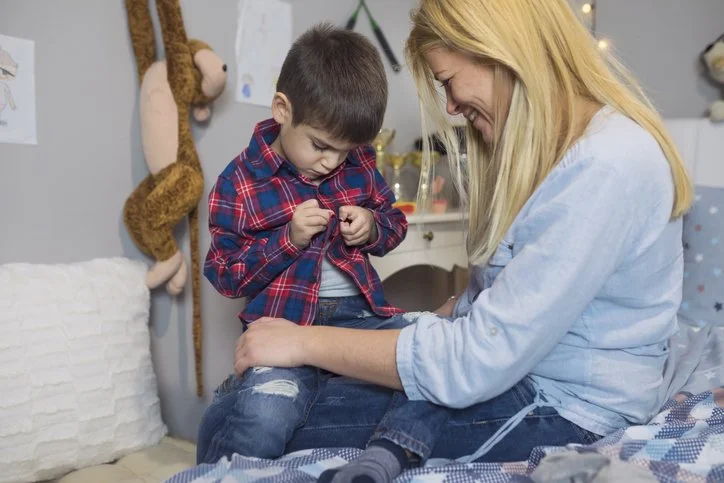
Parent helping a child button their shirt in the bedroom

Growing up involves learning many new and complex skills such as brushing teeth, getting dressed, cleaning up after yourself, managing school work, and strategies for problem solving. There are many ways you can support your child to learn and build these skills. Here are some ideas:

Set a good example (all ages)

Our children don’t always do what we say, but they always do what we do. You can’t expect your child to follow the house rules, if there are different rules for you. Take a minute to consider the rules of your house or the behaviors you expect from everyone in your family. Then, think about whether you yourself are also following those rules and modeling the behavior you want to see in your child. Whether it’s “quiet voice in the house,” “roll the ball in the house,” “clean up after yourself,” “use kind words,” it’s important to check in with yourself to make sure you are setting a good example for your child. You are their #1 role model. 

Tell your child why the skills are important

Just like you tell your child why you have a rule, let them know how it will benefit them to learn the skill. Whether it is for safety, or to learn polite conversation to get along with others, your child will more likely follow the rule if they know why. We brush our teeth because it is part of taking care of our body, so we can stay healthy. 

Show and tell (all ages)

We all learn through watching others. If you want to teach your child a new skill or behavior, let them watch you. If the skill is putting their toys away, show your child how you would like them to do it. Using words, describe what you are doing and let your child copy you. If your child needs help, provide it, but also encourage your child to try again. And remember to use supportive words and praise to let your child know that you think they are doing an awesome job, and encourage them to be proud of themselves.

Incidental teaching (1-12 year olds)

When your child comes to you to ask a question or get help, they are often ready and open to learning something new. This is called incidental teaching. The first step to successfully mastering a new skill is curiosity. We want our children to be curious and ask questions. We can use their natural curiosity to help them think about the task in a deeper way. We can also highlight their excitement and joy in doing something new. A pleasurable activity is more likely to be repeated. 

Instead of just answering their question for them, ask your child questions that help them think on a deeper level. Here’s an example: Your toddler asks you what color the firetruck is. Instead of answering back “red,” you could ask your child, “What color do you think it is?” If they answer “red,” follow up with “Yes! You got it right. What else is red? Why do you think firetrucks are red?”

Ask-say-do teaching (3-12 year olds)

As parents, we know that sometimes it is just easier (and faster, and less messy) to do things ourselves rather than letting our toddler pour their own glass of milk or feed the pet. But if your child is showing interest in doing things themselves, it’s a good time to teach the skill rather than always doing it for them. We want to capture that curiosity and excitement, and encourage them to develop competence around that passion. We can provide just enough assistance so they can be successful.

Ask-say-do is a good way to help your child learn to do things for themselves. It can help you teach new skills such as getting dressed, getting ready for bed, preparing a snack for themselves, or chores. When a task is challenging, break down into steps and teach your child one step at a time using this process:

  • Ask: Ask your child what the first step is – “What is the first thing we do when we get ready for bed?”

  • Say: If your child is unable to answer the question, gently tell them what they need to do – “The first step for getting ready for bed is to put on pajamas.”

  • Do: Let your child try the task by themselves first, but step in for help when they need it. Stop helping once the task is started to let your child finish by themselves.

Let your child rise to the challenge. When they struggle just a bit, and overcome the challenge, they are building resilience. It’s similar to when they were first learning to roll or crawl and you put an object they wanted just out of their reach. Remember how they were so pleased when they got it! You will see that same pleasure again and again as they rise to each new challenge.

Learning new skills and behaviors is something we develop all throughout our lives. The #1 thing you can do for your child is be supportive of the process, and encourage them as they continue to grow and flourish throughout their childhood and beyond. 

This article is brought to you by Parenting Now Parenting Educators and authors Amanda Bedortha, Claire Davis, and Lynne Grilley. Parenting Now offers parenting groups and drop-in programs for families with children 0-8, and is passionate about fostering happy, healthy families. For more information about Parenting Now please visit their website (https://parentingnow.org/) or contact us at info@parentingnow.org.

Triple P – Positive Parenting Program

Are you interested in receiving more parenting advice? Triple P Online – Positive Parenting Program could be for you! This online parenting program allows you to take a parenting class in the comfort of your own home!

If you live in Lane County, you can get Triple P Online for free by filling out the form on the Triple P page. A staff person from Parenting Now will send you an access code within 24 hours and you’ll be able to start using the program right away! For more information about the program and to sign up visit the Triple P page.

Guest Blog: Creating Routines at Home

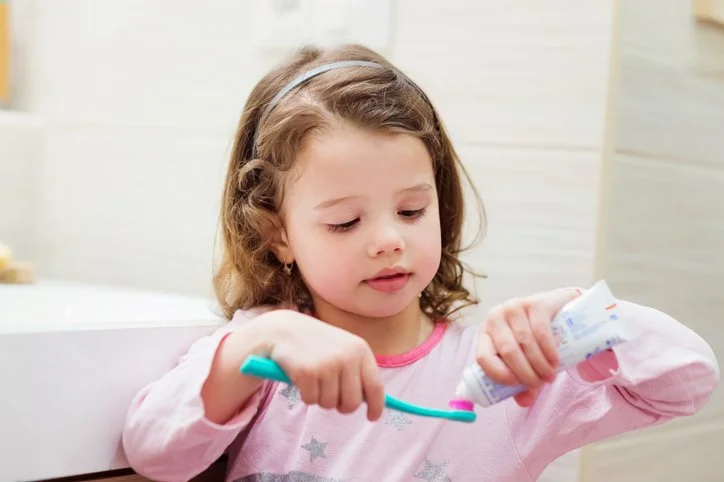
Child brushing their teeth as part of a bedtime routine

This was adapted from a virtual Parent Chat presented by Rachel Taylor and Ivy Kruse with Early Childhood CARES. A recording is available at this link https://uoregon.zoom.us/rec/share/0uj1JzWol0LUuqRTtO8av4hOzNl2MHprJxCL3-kevNDSePNUcmIRCoTfQLYvKJCc.YcM8p4Po4TUnGxMl?startTime=1638835535000

Though it may sound strange, most children like routines. Routines provide predictable, consistent patterns that help kids understand what’s going to happen. Caregivers benefit from routines because they help keep expectations positive and clear, and can build independence and self-esteem in their children. When children have the opportunity to practice a new skill or task as part of their normal routine, they can learn without experiencing too much stress.

How to Create Routines

First, think about your child’s day. What happens regularly? Are some things harder than others; like getting ready in the morning, dinner time, or bedtime?

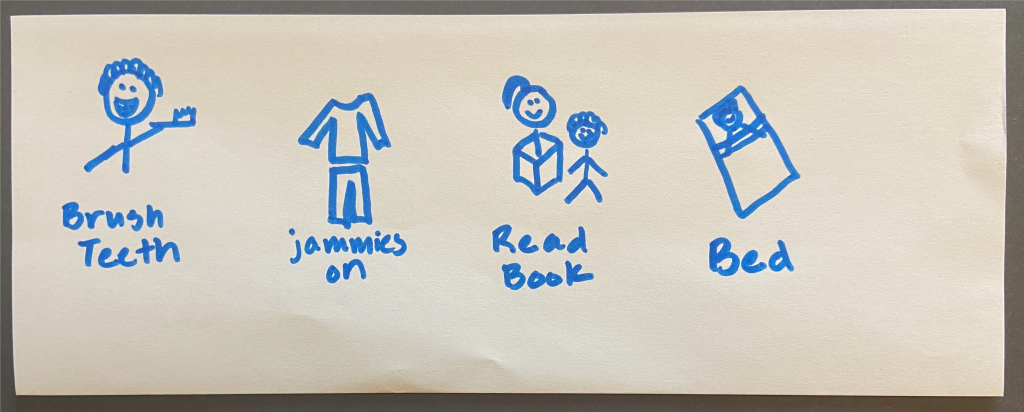
Pick one of the more challenging parts of your child’s day, think about the tasks that need to be done and make a list of each one. Bedtime, for example might look like: brush teeth, put pjs on, read a book, and get in bed.

Use the list to create a visual schedule, which is a series of pictures that show activities in a certain order. You can make your own by drawing simple pictures and labeling them. You can also find free, printable versions of common routines online. Another idea is to take pictures of your child as they do each step and use that as your visual schedule.

When planning the routine, consider these key points:

  • What is your child’s developmental level? Can they actually do the task in the routine, like getting dressed independently? Make sure your expectations are realistic.

  • Build in choices. Some parts of the routine are not a choice, like putting on pajamas. But, can they pick out the pajamas they want to wear?

  • Try to make the last step in the routine something your child will enjoy. If getting into bed is hard, have a special goodnight hug and kiss, or a song once they are in bed to end on a loving and fun note.

How to Teach Routines

Teach Expectations First

  • Get down at your child’s level and gain their attention. If your child seems distracted or can’t focus, join in their activity and then try again.

  • Use simple language, and positive and clear directions.

  • Make a statement, not a question. Avoid asking if they are ready to brush teeth, instead state what you want them to do, “It’s time to brush teeth.”

  • Use those visual schedules! If the pictures are not working, show your child the actual objects associated with that task, like a washcloth or toothpaste.

Other tips for teaching routines:

  • Be consistent. Approach the routine the same way each time so your child knows and can predict what will happen and can eventually do things independently.

  • Use “first/then” language. You could say, “first wash your hands, then you get your snack”. Or, to build in choice, “first get dressed, then you can pick milk or juice with breakfast”.

  • Praise every attempt and step they complete. Stay positive and point out how hard they are trying along the way.

  • Try to make it fun. Making up a song or dance for the routine can make this time together silly and upbeat.

Trouble Shooting

Challenges may come up as you are setting, teaching, and practicing the routine. Remember when those difficult moments arise to take a pause and breathe. Recognize your emotions and acknowledge how you are feeling. Be patient with your child and yourself. You can do this! It may be hard along the way, but you will get there. If you are struggling:

  • Try using more encouragement. If you are focusing on what they are not doing right, shift to sharing all the things they are doing well. For example, if brushing their teeth is really hard but they were able to put the toothpaste on the brush, praise that! You and your child will feel so much happier if you call out the things that are working well.

  • Ignore their challenging behaviors and re-state the expectation calmly and clearly. For example, when you say it’s time to brush your teeth and they run into their room, follow them calmly and say, “it’s time to brush teeth,” and gently redirect them. Sometimes challenging behaviors are used to avoid a situation, so minimize giving attention to what they shouldn’t be doing, and focus on what you’d like them to do.

  • Make sure they understand. If needed, restate your expectations using simple language and show them the visual schedule or reminder objects.

  • Give a “heads up” before starting the routine, like, “two more minutes to play, then it’s time to brush teeth”. You can set a timer on your phone so that everyone knows what’s happening.

  • Give plenty of time to complete the routine, especially at first. Rushing through routines can create stress and increase challenging behavior. Waking up a little earlier or starting bedtime sooner will give you more time to get through each step.

If it Really Isn’t Working

All children are different and learn in different ways. If you have developed and taught your child the routine, but find things are not working out, here are two things to consider:

  • Is part of the routine too difficult? Modify a step, or give assistance so that your child can be successful.

  • Is something else getting in the way? Are there sensory processing challenges? Be a detective to understand what is happening around that time that might be stressful, and make changes where needed.

Additional Resources

Early Childhood CARES provides early intervention and early childhood special education to infants, toddlers and preschool age children in Lane County. All services are free of charge to eligible children. Visit https://earlychildhoodcares.uoregon.edu/ to learn more.

Toddler Emotions: Ups and Downs and All Arounds

Toddler crying while being comforted with a hug

Your toddler is talking more, exploring more, and acting more independently. There are new and exciting things to experience, whether it is going to storytime in the library, playing in the park, or planning a trip to see Grandpa! Along with new experiences and activities will, inevitably, come frustration, disappointment, anger, sadness, and other strong emotions. Toddlers are known for their “big” feelings and you can help your toddler during this big leap in their development. The part of our brain that processes big feelings and emotions (the limbic system) is developing rapidly in toddlers. We can help shape healthy patterns for responding to big feelings. Built on the structure and wiring of the brainstem, all the times you met your baby’s physical and emotional needs form the foundation of trust that their needs will be met as they grow. When a big feeling arises (or rears its ugly head), just naming the feeling helps your toddler’s brain relax and eventually with consistency, they will be able to name their own feeling and move into their thinking brain to solve the problem. Here are some ideas to help with managing these big emotions! 

First, it can be helpful to notice when your child is struggling with their emotions and step in before the situation escalates. You might see your child:

  • Quieting or whining or otherwise shifting their mood

  • Throwing things, such as toys or food

  • Hitting or biting other children or adults, or themselves

  • Refusing options they usually like – they are offered apples or pears for a snack, but refuse both.

  • Quickly and angrily give up working on a “project,” such as a favorite puzzle.

When your child is having a hard time managing their emotions:

  • Name your child’s feelings. By naming the feeling, you are building emotional vocabulary so that eventually they will be able to recognize and name their own feelings. This is the first step to regulation.

  • Validate your child’s feelings and experiences. Show sympathy and understanding. Even if you can’t understand why your toddler is so upset that you gave them the red cup instead of the green cup, just remember that your toddler’s feelings are very real to them

    • “We didn’t get to go to the park this morning because it’s raining. It’s really fun to go to the park and play on the swings and in the sandbox. You feel really angry because we can’t go and play. Let’s hope we can try again another day when it is not raining so hard.”

  • Find safe and appropriate ways for your child to process their emotions.

    • Angry – How about punching a pillow or having a special “biting toy?” Make sure to emphasize hitting or biting people or animals is not okay.

    • Sad – “Would you like to cuddle up in my lap while I read you a special story?”

    • Frustrated – Try the “Smell the flower, blow out the candle” breathing technique for calming down.

  • Find time to get outside and exercise every day. Toddlers, like us, need lots of time and opportunity to let off steam. Toddlers learn with their whole body and through interaction with you. Just kicking a ball back and forth or playing chase will prevent or tone down some of those inevitable upsets.

Everyday ways to help toddlers with their emotions

You don’t need to wait for an epic upset to teach your child about feelings and emotions! There are things you can do in your everyday routine to help your child work through their emotions. 

  • Practice patience:

    • Mark time with music – If your child needs to wash their hands thoroughly, have them sing the birthday song and keep washing until the song is finished.

    • Teach your toddler about taking turns – Switch off using different color crayons. Use a kitchen or phone timer to mark how much time you can use each color. Let them know how great they are doing waiting to use the next color or acknowledge that it’s hard to wait sometimes.

  • Pay attention to transitions. Give a five minute warning, and a two minute warning when changing activities. Aim to get your toddler invested in the new activity. “In five minutes, it will be time to put the crayons away. Then we’ll go to the park for our play date with Sammy.”

  • Make a habit of naming emotions:

    • Is there an angry, sad, happy, or excited character in a movie or book? Point out and name the emotion – “Jameson is angry because he didn’t get to pick out a toy.” “Look how excited Alex is about going to the library with his Grandma.”

  • Talk about your emotions and how you handle them – “Daddy is disappointed there are no more bananas left to buy in the store. Let’s buy apples instead.”

    • Even your pets can help – “The dog feels happy with her new toy!”

The toddler years can sometimes feel like an emotional rollercoaster. One minute, you’re up, the next you’re down—and once you think you’ve got everything figured out, your toddler throws you for a loop! It’s not always an easy ride, but it’s worth it.

This article is brought to you by Parenting Now! Parenting Educators and authors Amanda Bedortha, Claire Davis and Lynne Swartz, and consultant Jay Thompson. Parenting Now! is passionate about happy, healthy families. For more information about Parenting Now! please visit their website or contact us at info@parentingnow.org.

Triple P – Positive Parenting Program

Are you interested in receiving more parenting advice? Triple P Online – Positive Parenting Program could be for you! This online parenting program allows you to take a parenting class in the comfort of your own home!

If you live in Lane County, you can get Triple P Online for free by filling out the form on the Triple P page. A staff person from Parenting Now will send you an access code within 24 hours and you’ll be able to start using the program right away! For more information about the program and to sign up visit the Triple P page.
Put a Stop to Swearing

Parent and child having a conversation together on the couch at home

It’s not easy to shield your child from the use of strong language. They might hear it on TV, a YouTube video, video game, or from other peers or adults, and at some point your child might experiment with it. The language and words you use (and don’t use) in your home can be thought of as part of your family’s value system. You and your partner can decide what words you consider “off limits” in your family, as well as words that would be unacceptable to use at school and in the community. Be prepared to go over this list of words with your child if their swearing increases. You may need to say something like: “I understand that you hear other kids use that word, but that word is not allowed in our home.”Your first line of defense is setting a good example at home, making sure you aren’t using language at home that you don’t want your own child to use. Remember, your kids are always listening even if it might not seem that way.In addition, here are some other strategies to try when your child starts using strong language:

  • Planned Ignoring: Use this strategy the first time your child uses a swear word at home. It’s possible that ignoring their chosen words will be enough to get them to stop using swear words. The key is to not overreact or laugh, which takes the excitement away, and when they don’t see you react, they may remove it from their vocabulary.

  • Discuss The Problem: Pick a time when everyone is calm to talk to your child about swearing. “Diya, I don’t like it when you use swear words. From now on those words are not allowed.” Ask your child to give you some reasons why swear words are not OK to use, such as “Swearing can get you in trouble at school, or at a friend’s house,” or “Words have power and can hurt people’s feelings.” Then, ask them to make a list of words they can use instead to express what they are feeling.

  • Name Emotions: Encourage your child to name the emotion they are feeling. Naming the emotion instead of using a swear word will be a positive step toward regulation. When we can identify a feeling, it helps the emotional part of the brain to calm, and then we can more easily think about how to respond to the problem. Work through the problem and talk about the swearing when they are calm. Then, you can teach your child acceptable ways to express themselves when feelings are high.

  • Keep A Swear Jar: Grab a small jar and some small items of your choice (beans, or craft pom poms). Explain that for every swear word that the child uses, a “bean” will go in the jar. Once the jar is full, they will lose a privilege. Another option could be, if they are able to keep the jar “bean-free,” they can earn a reward at the end of the day, weekend or week, such as a special activity with mom or dad. You might consider having a jar for everyone, and agree on a family activity ahead of time if all of you can go the whole day, weekend or week using only acceptable language. Teenagers especially respond to being able to help keep their parents accountable to the family.

  • Encourage Positive Alternatives: Come up with some words to use in place of swear words. If your child uses foul language when you tell them it’s time to turn off their video game, offer other words they can use when they feel frustrated like “phooey!” The sillier, the better!

  • Establish The Source: Did your child pick up their newfound vocabulary from school, an older sibling, a TV show, social media, or even yourself? Depending on the source, you may need to limit exposure to that particular show or book, as well as be mindful of the language you use yourself. If your child watches YouTube or plays online video games, you may also want to turn off the comments and chat features.

  • Give Praise: Did you notice your pre-teen stop herself before she let a bad word slip? Let her know that you appreciate her efforts to use appropriate language rather than swear words.

Being a positive role model goes a long way in establishing appropriate word usage in your home and discouraging those words you never want to hear come out of your child’s mouth. With planning and consistent responses, you can address the issue right away, and your child can learn ways to express himself with language that is easier on the ears.

This article is brought to you by Parenting Now! Parenting Educators and authors Amanda Bedortha, Claire Davis and Lynne Swartz, and consultant Jay Thompson. Parenting Now! is passionate about happy, healthy families. For more information about Parenting Now! please visit their website or contact us at info@parentingnow.org.

Triple P – Positive Parenting Program

Are you interested in receiving more parenting advice? Triple P Online – Positive Parenting Program could be for you! This online parenting program allows you to take a parenting class in the comfort of your own home!

If you live in Lane County, you can get Triple P Online for free by filling out the form on the Triple P page. A staff person from Parenting Now will send you an access code within 24 hours and you’ll be able to start using the program right away! For more information about the program and to sign up visit the Triple P page.
Wandering Woes – Encouraging Your Toddler to Stay With You

Toddler walking alone along a garden path

As soon as babies are mobile, they start to explore their environment. When they become walkers, they graduate to being a toddler – and it’s a whole new level of  wandering around. Wandering can occur on shopping trips, playgrounds, or on a walk through your neighborhood. In a blink of an eye, a toddler can dart off or find a good hiding spot. It’s no wonder that safety and careful supervision are concerns for parents at this stage of parenthood.Some parents find it challenging to balance encouraging their toddler’s growing independence while also keeping them safe. In this article, we discuss why toddlers wander and what you can do when it happens.

Why Toddlers Wander

Toddlers are excited to learn about the world and explore everything around them. Toddlers learn by doing; they learn with their whole body. Being able to touch, play, or smell objects is an important part of that experience. If your toddler sees a colorful leaf on the ground or a squirrel running through the grass, they are going to want to see it up-close.Another reason toddlers wander is to practice their newly found independence. Instead of being held, they may want to walk on their own, or even walk ahead of you. They are beginning to practice being separate from you, and to see themselves as a separate person. They may want to “see what happens” when they wander away. When your toddler walks away, you will often notice them looking back at you. This is their way of maintaining the connection they have with you, and lets you know they are securely attached. This is important because their attachment to you lays the foundation for all the relationships they will ever have in their life. As a parent, you are their secure base. When your toddler wanders away, they are trusting you will be there for them. Our job as parents is a balance of having open arms, encouraging exploration, and being the safe, secure place for our children.Many parents think that their toddler may be wandering to get a reaction from them. In a way this is true, but they are not trying to be disobedient;  the underlying developmental task is more complicated. Some children enjoy being chased after, and suddenly their wandering turns into a chasing game! They don’t yet understand that there are dangers in the world that they aren’t yet able to negotiate for themselves. They enjoy engaging you in this fun game. Your toddler may also be looking for your reaction when they wander off: “Will my Dad be surprised?” “Will mom make a funny face?”

What You Can Do

If your toddler’s wandering has revved up lately, don’t give into the temptation to just stay home and wait this stage out. Your toddler needs safe ways to practice the skill of staying close to you when you ask, as well as safe ways for them to play and explore independently. You can start practicing this skill by planning a series of short trips in safe places such as small neighborhood parks or quiet streets. You could start with a short, 5-minute walk through Owen Rose Garden or Hendricks Park.

  • Try to plan these practice trips during a time of day when your child is content (avoid nap time, or just before a snack or meal).

  • Tell your toddler where you are going and what you would like your toddler to do: “We’re going for a walk in the rose garden. Remember, you must stay where you can still see me while we are walking.”

  • While on your walk, give your toddler lots of positive feedback when they walk with you or hold your hand.

  • As you walk together, point out things you see or hear, such as plants, birds, rocks, or bugs. Make a game out of it, such as “I Spy.” The idea is to keep them engaged and interested in interacting with you.

  • Find safe opportunities for your toddler to explore freely and walk (or run) at their own pace. A big open field where they can still see you from a distance often does the trick.

You can also help your toddler practice following simple directions like “stop” and “wait for me.” A game like “red light, green light” helps them learn to control their bodies with their mind, rather than their impulses. Or you can take turns saying “stop” and “go” and sometimes your child gets to give you directions to follow. If your toddler is wandering away, you may want to try “having a rest” on a bench, and explaining to your child that the walk can continue when they are ready to walk with you. You may also want to insist that your toddler hold your hand until they are able to stay close on the walk. All skills take practice, and it’s OK to practice another day As your toddler gets more experienced at staying close on short trips, you can try practicing longer trips, or in different settings, such as the library.  Over time, with patience and practice, you and your child will become experts at navigating new adventures together safely. 

This article is brought to you by Parenting Now! Parenting Educators and authors Amanda Bedortha, Claire Davis and Lynne Swartz, and consultant Jay Thompson. Parenting Now offers parenting groups and drop-in programs for families with children 0-8, and is passionate about happy, healthy families. For more information about Parenting Now please visit their website or contact us at info@parentingnow.org.

Triple P – Positive Parenting Program

Are you interested in receiving more parenting advice? Triple P Online – Positive Parenting Program could be for you! This online parenting program allows you to take a parenting class in the comfort of your own home!

If you live in Lane County, you can get Triple P Online for free by filling out the form on the Triple P page. A staff person from Parenting Now will send you an access code within 24 hours and you’ll be able to start using the program right away! For more information about the program and to sign up visit the Triple P page.
Preparing Your Toddler for a New Sibling

Toddler hugging a pregnant parent's belly while sitting together on the couch

A new baby means some major changes for the entire family. Children’s reactions can vary from being helpful with diapers or feedings to jealousy, acting out, or regressing to baby-like behavior. Having toileting accidents or wanting to drink from a bottle are normal reactions to the stress of having a new baby. Love, reassurance, and patience go a long way in helping your child adjust. Preparing your child for the new baby will help get their bond off to a good start. It is important to set the stage for a good bond between siblings because their relationship is a lifelong one. They can understand themselves and the world through each other’s eyes throughout their lives. Here are some steps you can take to help ease this big life change.

Before Baby Arrives

Talk about babies: Three to four months before the baby is due, talk to your toddler about the arrival of their new brother or sister. After the big talk, discuss all things newborn: that they sleep a lot, cry, cannot play or crawl (yet!), and need lots of gentle snuggles. Use this time to share stories about when your other child was born or when they were a baby. You might share their baby book with them if you have one. Share pictures of them as a baby, share the story of their birth and talk about how much they have grown.

There are many books you can check out of the library for toddlers and young children about the arrival of a new brother or sister. Some books about welcoming a new family member can even be customized for your child. 

Get your toddler involved: Another way to soothe new-baby worries is to get your child involved. 

  • Let them feel the baby kick

  • Make a present for the baby together

  • Come up with a list of baby names and nicknames

  • Let them help decorate the new baby’s space

  • Make or buy “big brother” and “little sister” t-shirts

  • Let your toddler pick out a special baby blanket or newborn outfit for the baby to wear

Plan ahead for “big changes”: A new baby can throw everyone’s routine for a loop. If your toddler has “big changes” coming up—such as moving to their own room, starting daycare, or moving out of their crib—try to work on them ahead of the new baby’s arrival. Rather than pointing out that the changes are because of the baby, point to their own growth: “You’re a big girl now, so it’s time for you to sleep in a big girl’s bed.”

Now That Baby is Here

When you are ready, have your child meet their new sibling. Talk ahead of time and make a plan with them about what to expect. Some kids enjoy making cards and small gifts to bring along if your baby is born at a hospital or birth center. Prepare your toddler for the quiet hospital environment and what they might experience. It’s not unusual for a child to be quiet or distant when first visiting a hospital— if offered, a sibling tour of the hospital ahead of time can help set the stage for the birth. 

When the time comes, they will interact when they are ready. Many families find that giving their toddler a “baby” of their own to care for helps ease the transition. They can practice feeding, burping and cuddling their baby doll just like you will be caring for their new sibling. Once home, give the new baby over to your co-parent or another family member so you can spend some extra time with your toddler, and provide extra snuggles if they are open to it. Schedule a special time each day to play with your toddler, and add it into their routine. Although a new baby can throw the family routine out of whack, try to keep your toddler’s routine as close to normal as possible. This includes sticking to regular mealtimes, bedtimes, and other activities. Toddlers are natural-born helpers and involving them in baby care is a great way to spend extra time together and encourage the sibling bond.

Here are some “special helper” ideas:

  • Getting diapers or blankets

  • Checking on the baby (practice tiptoeing quietly)

  • Singing songs to the baby (share songs they enjoyed as a baby)

  • Picking out a new outfit for the baby

  • Looking at board books together

New Challenges

The parent/child relationship changes when a new baby enters the picture, and children need time to adjust. Some children may feel resentment toward the new baby—sharing a parent is hard! As you get used to being a parent again, you may also have some mixed feelings. You may feel torn between spending time with one or the other of them, or feel guilty when you feel like there aren’t enough hours in the day to give your toddler the attention you were able to before the new baby’s arrival. It takes time and patience to find a new normal, so be gentle with yourself, just as you are gentle with your toddler.

Talking with your child about their feelings goes a long way in helping them work through their emotions. You might hear, “I don’t like the baby,” or “Can we take her back to the hospital?” If this happens, tell them you understand how they feel and agree that it’s not always easy to have a baby around. But follow this up with what you do love about the baby and what’s hard for you as the parent (such as night feedings). Kids love stories, so reading stories about children who are also having mixed feelings about their brother or sister will let them know that it’s okay to feel this way. Your child might need a little extra time to get used to the idea of sharing family time. A little planning—and patience—will go a long way to help make the introduction of your new bundle of joy easier on the whole family.

This article is brought to you by Parenting Now Parenting Educators and authors Amanda Bedortha, Claire Davis and Lynne Swartz, and consultant Jay Thompson. Parenting Now offers parenting groups and drop-in programs for families with children 0-8, and is passionate about happy, healthy families. For more information about Parenting Now please visit their website or contact us at info@parentingnow.org.

Triple P – Positive Parenting Program

Are you interested in receiving more parenting advice? Triple P Online – Positive Parenting Program could be for you! This online parenting program allows you to take a parenting class in the comfort of your own home!

If you live in Lane County, you can get Triple P Online for free by filling out the form on the Triple P page. A staff person from Parenting Now will send you an access code within 24 hours and you’ll be able to start using the program right away! For more information about the program and to sign up visit the Triple P page.
Winter Fun and Safety

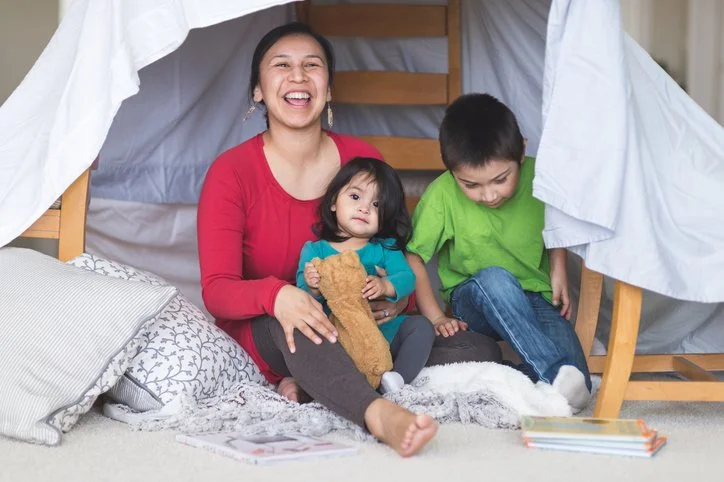
Parent and two children laughing together inside an indoor blanket fort

Rain, rain and more rain, and yet you can still enjoy all of winter with your toddler. Maybe those early winter days of sweet indoor cuddling are gone as more chilly grey days arrive, but having a variety of indoor activities to keep your child busy and stimulated will make for a happy winter for all.  You don’t need fancy or expensive toys. There are lots of fun and safe playthings you can find with everyday objects in your home:

  • Create a simple scavenger hunt. Place three red objects around the room — a red apple, a red cup and red toy fire truck. Your child will love exploring and finding the objects and will learn about colors (shapes or sizes) too.

  • Use empty egg cartons and make long trains with them. Try decorating them.

  • Make a simple bread dough (or buy some pre-made) and create interesting shaped breads to bake. Then eat your work!

  • Make music! Tambourines or shakers work, as do wooden spoons and pots.

  • Make pretend snow.

  • Build an inside fort or tent to cozy up in.

  • Use toilet paper rolls to make binoculars 

Winter Safety

If your child is busy with fun activities, they are less likely to get into mischief. Of course, even if your child is occupied, it’s still critical to take general safety precautions like keeping knives, sharp objects, and medicine out of reach. There are extra winter safety issues to be aware of too:

  • Never put space heaters in a child’s room or where they are sleeping. Keep anything that can burn at least three feet away from space heaters.

  • Winter can mean more open flames in your home. Whether it’s a kerosene lamp, a fireplace, candles or other open flames, make sure they are well out of reach of children – remember toddlers are very resourceful when trying to get to something that sparkles or glows.

  • Don’t use electric blankets or heating pads with young children, and if you have an infant, use sleeping sacks or warm sleepers instead of blankets in sleeping areas.

Out and About

Even when it’s cold or rainy, it’s still a good idea to get out of the house with your little one. Sometimes just stepping out the front door is enough to change a mood. Between rainstorms, kick a ball back and forth, or encourage your toddler to throw the ball across the yard, retrieve it, and throw it again. If you really want to enjoy the outdoors with your child, Mt. Pisgah has fun, interactive stations where kids can learn about nature. Hedricks Park is a fun place to look at native flowers and trees, or just run around in the big, open grassy area. Your neighborhood park is a great place to look for worms in puddles, or watch the wind blow leaves.When you do head outdoors, be sure to: 

  • Dress your child in layers. A good rule of thumb is to dress babies and young children in one more layer than an adult is wearing.

  • Make sure places on your child’s body that can get particularly cold or damp are covered — hands and feet, head and ears.

  • Don’t overdress! Children can get sweaty and overheated, causing problems like skin irritations.

  • If you are outside for an extended period, check if layers need to come off or on.

  • If it’s frightfully cold, avoid taking your child, especially infants, outside as much as possible.

  • Do not put your child in a winter coat or snowsuit while buckled in their car seat. Instead, put an extra blanket over the straps if it is especially cold outside.

  • Strings or scarves can get caught and strangle small children, so choose other warm items to wear.

  • Use sunscreen for babies over six months of age; we can still get burned on cloudy or cold days.

  • Keep them hydrated; offer warm drinks and water often. We lose moisture through our breath.

Winter doesn’t have to be filled with weariness or worry! There are lots of exciting and safe things to do indoors and outdoors and around town, too. You might even miss winter when it’s over – especially if you remember to let yourself join your child in jumping in puddles.

This article is brought to you by Parenting Now! Parenting Educators and authors Amanda Bedortha, Claire Davis and Lynne Swartz, and consultant Jay Thompson. Parenting Now offers parenting groups and drop-in programs for families with children 0-8, and is passionate about happy, healthy families. For more information about Parenting Now, please visit their website or contact us at info@parentingnow.org.

Triple P – Positive Parenting Program

Are you interested in receiving more parenting advice? Triple P Online – Positive Parenting Program could be for you! This online parenting program allows you to take a parenting class in the comfort of your own home!

If you live in Lane County, you can get Triple P Online for free by filling out the form on the Triple P page. A staff person from Parenting Now will send you an access code within 24 hours and you’ll be able to start using the program right away! For more information about the program and to sign up visit the Triple P page.